
Travelling by train across Europe has a unique charm. It’s not merely point-to-point movement, but the gentle clatter of wheels; the leisurely sipping of coffee as Alpine villages blur past the window; the convenience of stepping straight into a new city centre upon arrival. You can forget the sterile grind of airport security, the cramped confines of a budget airline, and embrace the journey itself.
But truth be told, planning your first extended rail journey can feel like staring at a bowl of spaghetti – a tangled mess of routes, booking sites, and various rail passes. This guide is your ticket to planning that perfect trip and discovering some of the best train rides in Europe.
How to Plan Your Europe Train Journey
How to Book Train Travel in Europe
Essential Tips for an European Train Trip
15 Best Train Rides in Europe
Now for the fun part. I’ve pulled together a list of what I consider the best train rides in Europe, based on a blend of stunning scenery, unique experiences, and sheer, unadulterated travel joy.
The Bernina Express (Switzerland & Italy)
The Alpine Fairytale
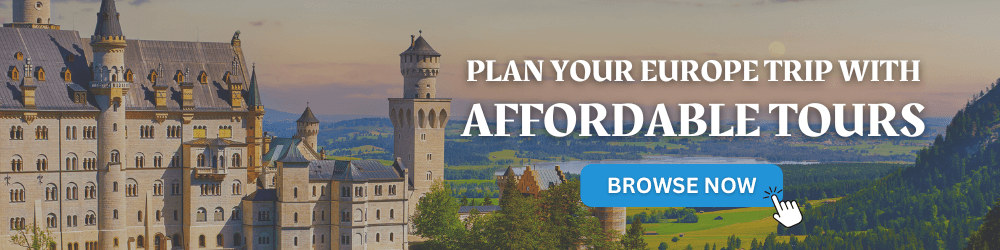
It’s a UNESCO World Heritage route that feels like a real-life snow globe. The train, with its giant panoramic windows, climbs effortlessly over the Alps, crossing 196 bridges and passing through 55 tunnels. The highlight is the Landwasser Viaduct, a massive, curved bridge that the train snakes across before disappearing straight into a mountain tunnel.
The magic is in the transition. You start in the icy, glacier-filled mountains of Switzerland and, in just a few hours, descend into the sunny, palm-tree-lined valley of Tirano, Italy. It’s an engineering and visual marvel.
Route: Chur-Tirano
Length: About 4 hours (from Chur, Switzerland to Tirano, Italy)
How to book: This is a special scenic train run by the Rhaetian Railway (RhB). You can book tickets directly on their website. A seat reservation is mandatory, even with a rail pass. Pro Tip: Regular, local trains run on the exact same tracks. They don’t have the panoramic windows, but you can open the regular windows for glare-free photos, and you don’t need a reservation!
The Bergen Line & Flåm Railway (Norway)
From High Plateau to Deepest Fjord
This is consistently voted one of the best train rides in the world. The main Bergen Line connects Oslo and Bergen, crossing the Hardangervidda, Europe’s highest mountain plateau. For hours, you’re in a stark, beautiful, and wild landscape of snow and rock.
The real magic, though, is the detour. At the mountain station of Myrdal, you transfer to the Flåm Railway (Flåmsbana). This is one of the steepest railway lines in the world, a 20km branch line that drops you from the high plateau down to the tiny village of Flåm, nestled at the end of the Aurlandsfjord. It’s a breathtaking 50-minute journey of switchbacks, tunnels, and waterfall views.
Route: Oslo-Bergen
Length: 7 hours for Oslo-Bergen; 50 minutes for the Flåm Railway.
How to book: Book with Norway’s national carrier, Vy. The Flåm Railway is a separate ticket that often sells out, so book in advance.
The West Highland Line (Scotland)
The “Harry Potter” Train
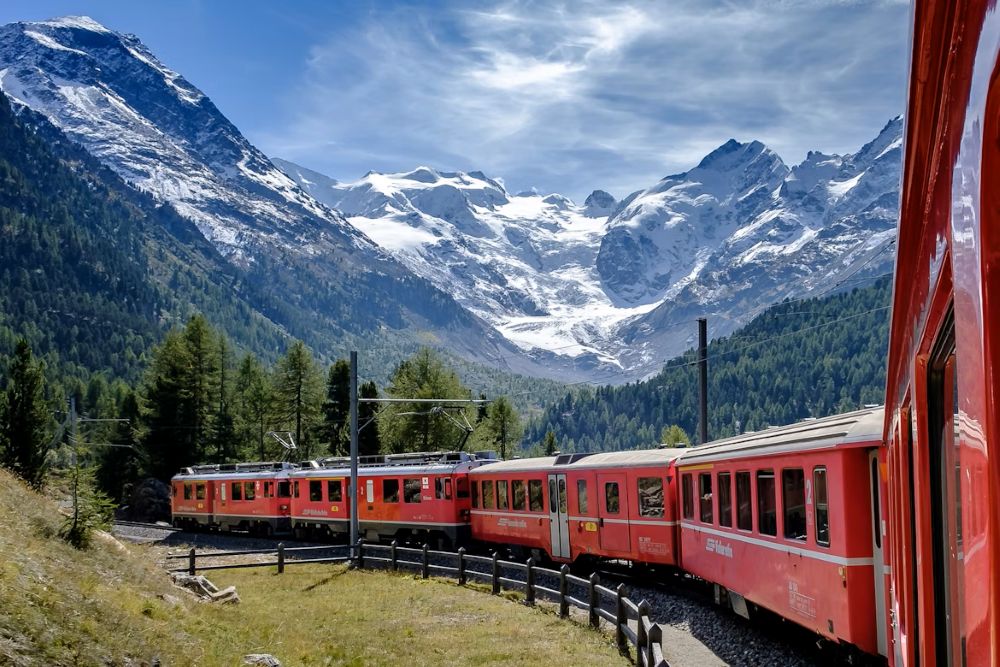
Yes, this is that train. The journey from Glasgow to Mallaig in the Scottish Highlands is a moody, dramatic, and utterly beautiful experience. You’ll pass over the vast, empty wilderness of Rannoch Moor and, most famously, cross the 21-arched Glenfinnan Viaduct, the same one the Hogwarts Express chugs over in the films.
This isn’t just for Potter fans. It’s a journey through some of Europe’s last great wilderness, with views of misty lochs, rugged mountains, and tiny hamlets. The final stop, Mallaig, is a tiny fishing port with ferries to the Isle of Skye.
Route: Glasgow-Mallaig
Length: About 5.5 hours
How to book: Book via ScotRail. In summer, you can also ride the Jacobite Steam Train (the actual one from the movies) for a more vintage experience, but it must be booked months in advance.
The Eurostar (UK, France, Belgium, Netherlands)
The Connector
No, it’s not a scenic mountain pass. But the Eurostar is arguably the most important train for many travelers. It’s the high-speed train that dives into the “Chunnel” under the English Channel, connecting London with mainland Europe in a way that feels like science fiction.
The experience of boarding in London St. Pancras and, just 2 hours and 16 minutes later, walking out into the Gare du Nord in Paris, is pure magic. It has transformed travel. The popular trains from London to Amsterdam (under 4 hours) and the Paris to Brussels train (1.5 hours) have made these capital-hopping trips incredibly easy.
Route: London-Paris; London-Brussels; London-Amsterdam; London-Rotterdam
Length: ~2h 16m (London-Paris), ~3h 52m (London-Amsterdam)
How to book: Book directly on the Eurostar website. Book far in advance, as prices rise dramatically.
The Glacier Express (Switzerland)
The World’s Slowest “Express” Train
If the Bernina is the scenic sprint, the Glacier Express is the epic marathon. It connects two of Switzerland‘s most famous mountain resorts, Zermatt (home of the Matterhorn) and St. Moritz. It proudly calls itself the “slowest express train in the world,” and that’s the whole point.
This is a full 8-hour, daylight-only journey dedicated to pure luxury and sightseeing. You’ll cross 291 bridges (including the Landwasser Viaduct, like the Bernina) and glide through pristine alpine valleys, all while being served a multi-course meal at your seat. It’s expensive, but it’s a true bucket-list travel day.
Route: Zermatt-St. Moritz
Length: ~8 hours
How to book: Book directly on the Glacier Express website. Reservations are essential and can be made months ahead.
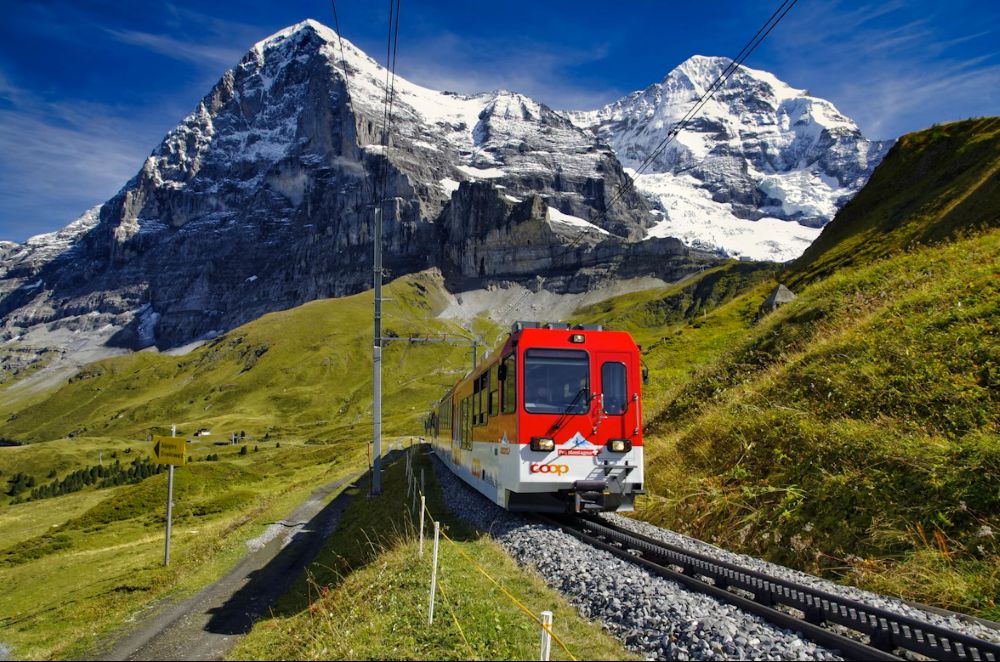
The Classic Italy Route
High-Speed History
Not all “best” routes are slow and scenic. Some are just incredibly practical and cool. Traveling in Europe by train is perfected in Italy. Their high-speed Frecciarossa (“Red Arrow”) trains link the country’s “big three” cities with effortless speed and style.
You can have breakfast by the canals in Venice, board a train, and be in Florence in time for a late lunch and a visit to the Uffizi Gallery. Then, hop back on for a 90-minute ride to Rome for a cacio e pepe dinner. It’s safe, comfortable, and turns what would be a stressful travel day into a relaxing, civilized experience.
Route: Venice-Rome
Length: ~2h 15m (Venice-Florence), ~1h 30m (Florence-Rome)
How to book: Book in advance on Trenitalia or Italo (the private competitor – check both for the best price!).
Rhine Valley Line (Germany)
A Real-Life Storybook
This isn’t a fancy “express” train, but it’s one of the most romantic and accessible train journeys on the continent. The most beautiful section of the Rhine River Valley is a UNESCO World Heritage site, and the railway line conveniently runs right along the riverbank. This is the Germany of fairytales, with a different, stunning castle (or castle ruin) perched on a hilltop every few minutes.
You’ll glide past the legendary Lorelei Rock, where a siren was said to lure sailors to their doom, and wave to the riverboats cruising by. The key is to take the slower, regional train (the MRB) that stops in charming wine towns like Bacharach and St. Goar. This allows you to hop off, explore a medieval-walled town, and hop back on.
Route: The best section is Koblenz-Mainz (or Bingen).
Length: Approximately 1 hour (but you should hop off and make a day of it)
How to book: No advance booking needed! Just buy a regional day pass (like the Rheinland-Pfalz-Ticket) from a Deutsche Bahn (DB) machine at the station. It’s cheap and flexible.
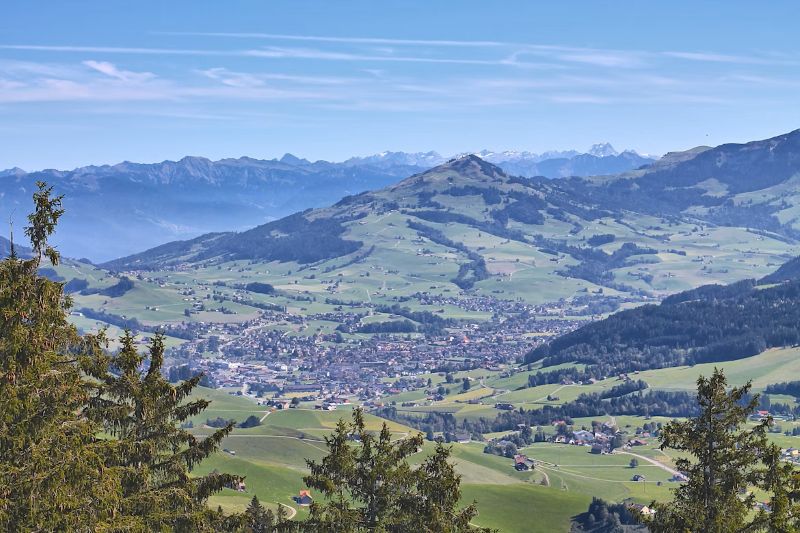
Belgrade to Bar Railway (Serbia & Montenegro)
The Off-the-Beaten-Path Legend
For those who find Switzerland a little too polished, this is the ride. This Cold War-era engineering marvel connects the Serbian capital to the Adriatic coast of Montenegro. For decades, it was a hidden gem, and it’s still refreshingly authentic.
The journey is a 12-hour epic of rugged, raw beauty. The train plunges through the Dinaric Alps, rattling through 254 tunnels and crossing 435 bridges, including the Mala Rijeka Viaduct, once the tallest in the world. You’ll see landscapes – deep canyons, shimmering lakes – that are completely inaccessible by road. It’s long, it’s not luxurious, but it’s one of the last great adventures in European rail.
Route: Belgrade-Bar
Length: ~12 hours
How to book: You can buy tickets at the station in Belgrade or Bar, or try booking online via the Serbian (Srbija Voz) or Montenegrin (ŽPCG) railway sites.
The Semmering Railway (Austria)
The Historic Mountain Pass
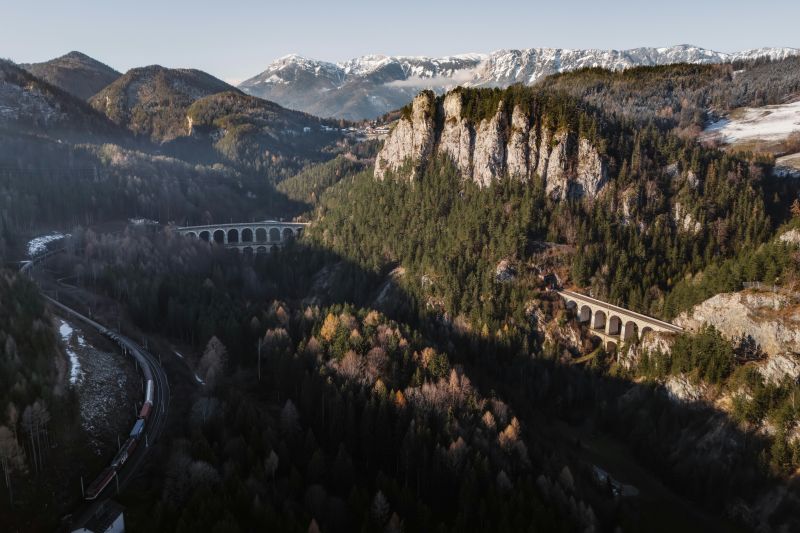
This route, part of the main line from Vienna to Graz (and on to Ljubljana), is another UNESCO WorldHeritage site. Built between 1848 and 1854, it was the first-ever mountain railway and a triumph of its time.
The train winds through the Austrian Alps, passing 16 viaducts and 15 tunnels, and offering gorgeous views of mountains and forests. It’s a great way to experience an “epic scenic route” as part-of-a-practical-journey. You can take this line as part of a fantastic one-week itinerary: Budapest > Bratislava > Vienna > Graz > Ljubljana.
Route: Gloggnitz-Mürzzuschlag
Length: ~2.5 hours (for the main Vienna-Graz journey)
How to book: Book with Austria’s national carrier, ÖBB.
The Santa Claus Express (Finland)
The Arctic Dream
Want something truly different? This is the one. A double-decker night train that runs from Helsinki in southern Finland all the way to Rovaniemi in Lapland, the “Official Hometown of Santa Claus” right on the Arctic Circle.
You board the train in the evening, settle into your private, cozy sleeper cabin, and wake up in a frozen wonderland of snow-covered forests and reindeer. In winter, it’s the perfect way to hunt for the Northern Lights. It’s practical, magical, and unforgettable.
Route: Helsinki-Rovaniemi
Length: ~11-12 hours (overnight)
How to book: Book with Finland’s national carrier, VR.
Cinque Terre (Italy)
Million-Dollar Mediterranean Views
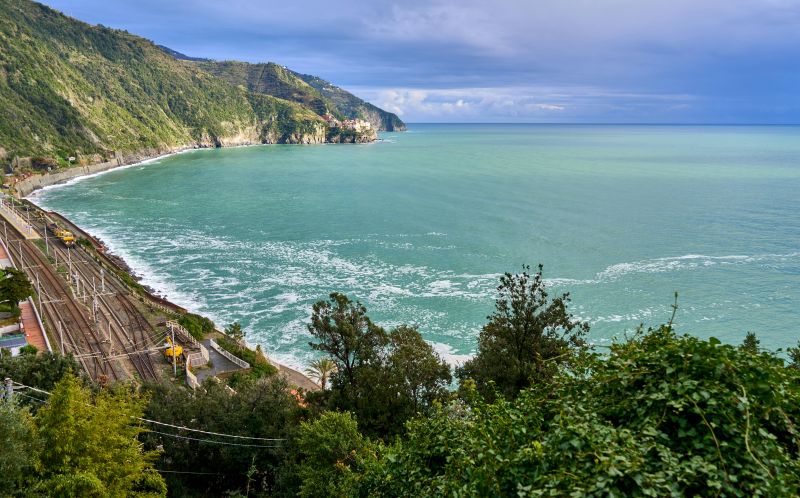
This is one of the shortest but most spectacular train rides. The Cinque Terre (“Five Lands”) are five ancient, colorful villages clinging to the steep cliffs of the Italian Riviera. The train line, built in the 19th century, is what connects them, diving through short tunnels in the cliffs before emerging to breathtaking views of the turquoise Ligurian Sea.
This isn’t a single journey, but a hop-on, hop-off adventure. The ride between each village (Monterosso, Vernazza, Corniglia, Manarola, and Riomaggiore) is often less than five minutes. It’s the most practical and beautiful way to explore the region, as cars are largely banned. It’s safe, easy, and a must-do.
Route: Levanto-La Spezia, stopping at the five villages.
Length: 5-10 minutes between each village.
How to book: Don’t book in advance. At any of the stations, buy the Cinque Terre Treno Card. This gives you unlimited train travel between the villages for the day and includes access to the national park hiking trails.
Bohinj Railway (Slovenia)
Scenic Secret in the Slovenian Alps
Here’s one for those who love to be in on a secret. This stunningly beautiful line connects Slovenia and Italy, but the real star is the Slovenian section. Winding through the Julian Alps, this train passes over the Solkan Bridge, the largest stone-arch railway bridge in the world, and offers breathtaking views of the turquoise (and I mean turquoise) Soča River.
This is the opposite of a high-speed, high-tech train. It’s a gentle, scenic meander through one of Europe’s most underrated landscapes. The highlight for many is the stop at Lake Bled, where you can see the iconic church on the island. It’s a peaceful, beautiful journey that feels like a discovery.
Route: Nova Gorica-Jesenice
Length: Approx. 2 hours
How to book: Tickets are sold by Slovenian Railways (SŽ) at the station. This is a local route, so it’s easy and inexpensive.
Sarajevo to Mostar (Bosnia & Herzegovina)
The Insider’s Pick
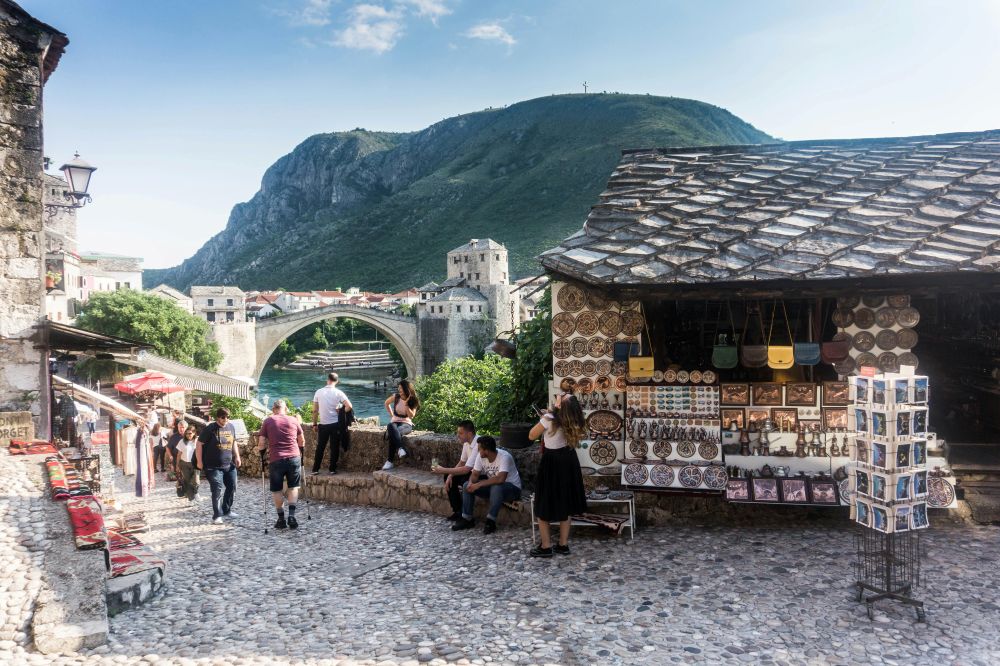
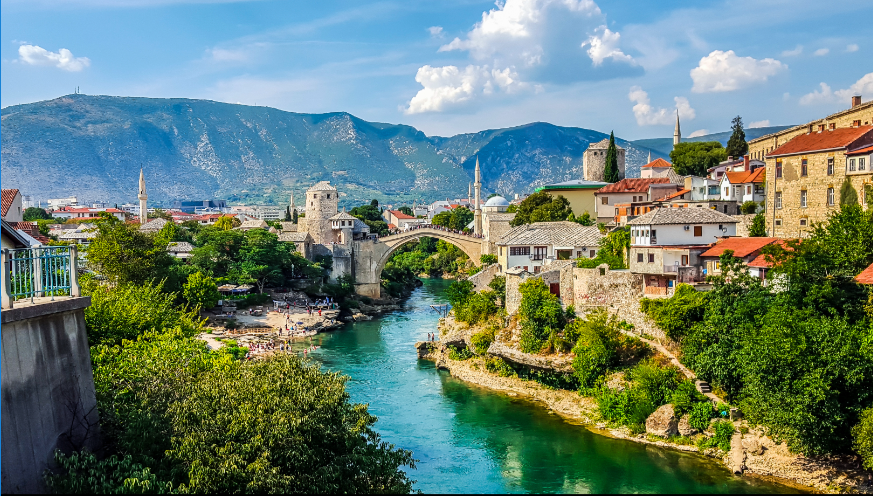
This is a true hidden gem. Rebuilt with modern, comfortable trains, this line follows the impossibly turquoise Neretva River as it carves a path through a dramatic gorge.
In just two hours, this train delivers one of the most stunning, river-valley landscapes on the continent for the price of a few cups of coffee. It’s short, cheap, and utterly spectacular, connecting two of Bosnia’s most historic and fascinating cities.
Route: Sarajevo-Mostar
Length: ~2 hours
How to book: Book with the national carrier, ŽFBH. You can often just buy tickets at the station.
The Douro Line (Portugal)
The World’s Most Beautiful Wine Region
This is a hidden gem, one of the best train routes in Europe that many travelers miss. The line follows the Douro River from the beautiful city of Porto inland to the village of Pocinho. The most spectacular part is from Peso da Régua onwards, where the track is carved right into the valley side, feet away from the shimmering green river.
You’ll glide past the quintas (wine estates) and steep, terraced vineyards where the grapes for Port wine are grown. This is slow travel at its best. The windows on the regional trains open, allowing you to smell the air and take reflection-free photos. It’s peaceful, stunningly beautiful, and feels like a journey back in time.
Route: Porto (São Bento)-Pocinho
Length: Approximately 3.5 hours
How to book: Just buy a ticket at the beautiful São Bento station in Porto from Comboios de Portugal (CP). It’s very affordable. Try to sit on the right-hand side on the way out for the best river views.
Paris to Barcelona (TGV)
Two Popular Cities In One Day
This high-speed TGV Duplex (double-decker) train is a fantastic way to link two of Europe’s most popular cities. In just over 7 hours, it transports you from the gray mansard roofs of Paris, through the rolling vineyards of the Rhône Valley, and along the French Mediterranean coast.
The best part of the journey is after Narbonne, where the train hugs the coastline, offering sparkling views of the sea and coastal lagoons (try to get an upstairs seat on the left side). You’ll then cross the Pyrenees mountains in a high-speed tunnel before arriving in the vibrant capital of Catalonia. It’s a journey that showcases the incredible diversity of landscape you can experience in a single day.
Route: Paris (Gare de Lyon)-Barcelona (Sants)
Length: Approximately 7 hours 5 minutes
How to book: Book in advance on SNCF Connect or Trainline. This is a popular route and prices will be high if you book last-minute.

How to Plan Your Europe Train Journey
Planning your adventure is the first step, which in turn breaks down into a series of specific questions.
The Big Decision: Point-to-Point Tickets vs. a Rail Pass
This is the classic dilemma, and the right answer depends entirely on your travel style.
Point-to-Point Tickets: This is just what it sounds like. You buy a single ticket from, say, Paris to Amsterdam. This is the best option if:
- Your trip is short and you only have a few (2-4) train journeys planned.
- You know your exact dates and times way in advance.
- You are primarily traveling on high-speed trains (like in France, Spain, or Italy) which require expensive, separate reservations even with a rail pass.
- You’re on a tight budget and can lock in cheap, non-refundable advance fares.
Rail Passes (like Eurail): A pass gives you a set number of travel days within a certain period (e.g., 10 travel days within 2 months). This is the best option if:
- You value flexibility. The ability to wake up and just hop on a train is the real magic of a pass.
- You are taking many, or very long, journeys.
- You are traveling in countries with expensive last-minute fares (like Germany, Austria, and Switzerland).
- You are under 28 (the Youth Pass is a fantastic deal).
My rule of thumb: do the math. Roughly plan your big journeys, check the cost of point-to-point tickets (the “advance” price, not the full fare), and compare that total to the price of a rail pass. Don’t forget to factor in reservation fees for high-speed and night trains, which you may have to pay on top of your pass.
What Are the Best European Rail Passes?
A rail pass can be your golden ticket to freedom, but it’s crucial to know how they work.
Eurail Global Pass: This is the big one. It gives you access to train travel in 33 different countries. You buy it for a specific number of travel days (e.g., 7 days in 1 month, or 3 months continuous). This is for the grand, multi-country European tour.
Eurail One Country Pass: Just as it sounds. If you’re planning to only explore Italy or Spain in-depth, this pass can be a good value.
Swiss Travel Pass: A special case. This pass is legendary. It not only covers trains but also buses, boats, and free entry to 500+ museums. If you’re focusing on Switzerland, this is a no-brainer.
The Golden Rule of Rail Passes: Reservations! This is the #1 thing people get wrong. A rail pass is NOT a ticket. It’s a pass that lets you board most trains, but it does NOT guarantee you a seat on high-speed or overnight trains. For those, you must pay an extra fee to make a seat reservation. In France, Spain, and Italy, this is non-negotiable and can add up. In Germany, Switzerland, and Austria, reservations are less-often required on main routes, giving you more flexibility.
Types of European Trains
High-Speed Trains (TGV, ICE, Frecciarossa, AVE): These are the rockstars, zipping between major cities at 300+ km/h. They are sleek, comfortable, and a marvel of engineering. Reservations are almost always mandatory, even if you have a rail pass.
Night Trains (Nightjet, European Sleeper): A fantastic way to save time and money. Board in one city, sleep in a private couchette or cabin, and wake up in another, having saved on a hotel. The ÖBB Nightjet network is reviving this classic way to travel.
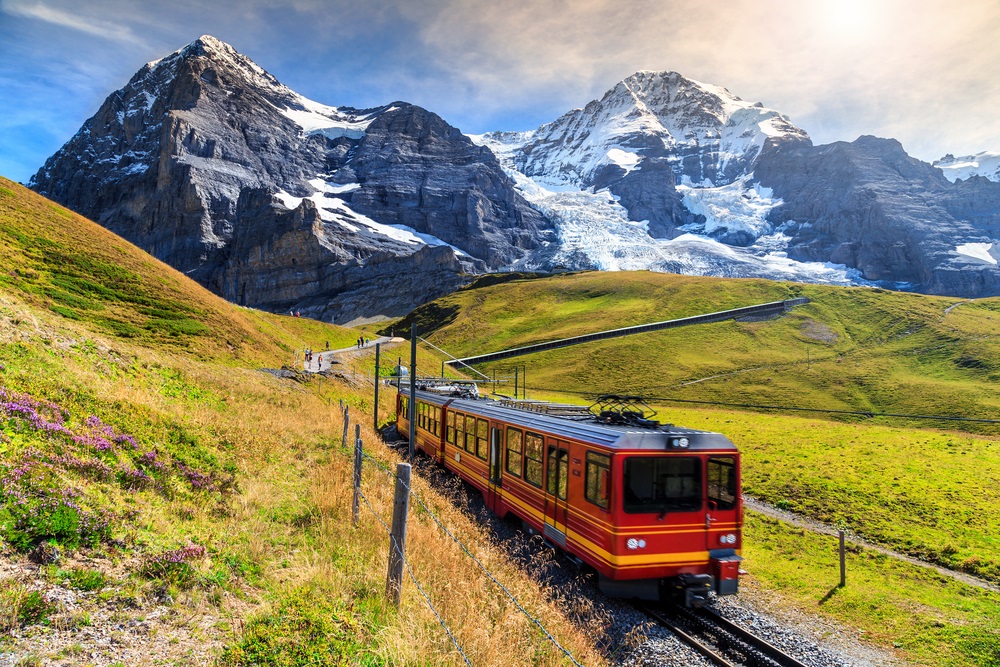
Scenic Trains (Bernina Express, Flåm Railway): These are not about speed; they’re about the view. They often have special panoramic windows and run on routes specifically chosen for their beauty.
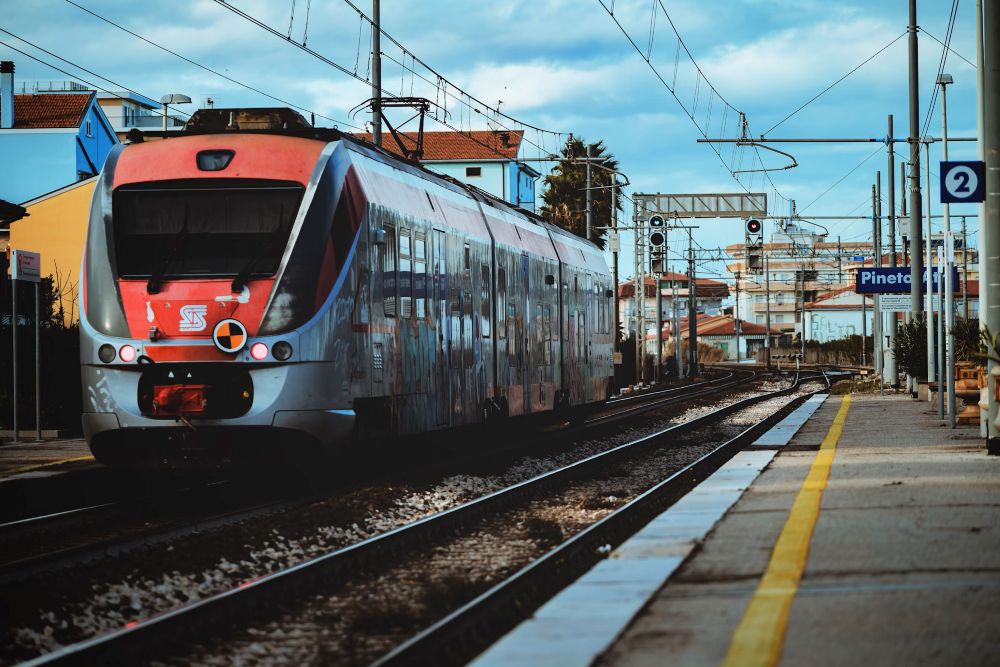
Regional Trains (TER, Regio): These are the local workhorses. They’re slower, stop at smaller villages, and are perfect for exploring a specific region. You almost never need a reservation for these.
First Class vs. Second Class
Honestly, second class on most European trains is cleaner and more comfortable than first class on a plane. It’s the standard for 99% of travelers. First class offers more legroom, wider seats (often in a 2+1 configuration instead of 2+2), and sometimes a quieter car or complimentary drinks/snacks.
In a nutshell – is first class worth it? Sometimes. On a 30-minute regional train? Absolutely not. On a 7-hour scenic journey? Maybe.
If you find a first-class upgrade for a small fee, it can be a nice treat on a long journey.
How to Book Train Travel in Europe
Booking isn’t as simple as one “Expedia for Trains” website. Here’s the insider way to do it:
For Research (and simple bookings): Start with an aggregator like TheTrainline.com or RailEurope.com. They have English-language platforms, accept international credit cards, and are great at showing you routes and times across multiple countries. The downside? They charge a small booking fee and don’t always have every local train or the cheapest possible price.
For Booking (The Best Price): Once you find a route, the best practice is often to book directly with the national railway of the country you’re departing from. This is where you find the lowest fares, with no booking fees. It might require a bit more effort, but it’s worth it.
- Germany: Deutsche Bahn (DB)
- France: SNCF Connect
- Italy: Trenitalia (the state railway) or Italo (a competing high-speed private line)
- Spain: Renfe
- Austria: ÖBB
- Switzerland: SBB
- Portugal: Comboios de Portugal (CP)
For Specific Corridors: For major international routes, book with the company that runs it. The most famous is Eurostar, which runs the popular routes for train travel such as London to Paris, London to Amsterdam, Paris to Brussels, etc.
Essential Tips for an European Train Trip
Book High-Speed Trains in Advance. Don’t just show up. For TGV, Frecciarossa, AVE, and Eurostar, prices are like airline tickets – they skyrocket as the date gets closer. Book 1-3 months out.
Validate Your Ticket. On many regional trains (especially in Italy), you must “validate” your paper ticket by stamping it in a small machine on the platform before you board. Forgetting this can lead to a hefty fine.
Arrive Early, But Not That Early. For a regular train (even high-speed), 20-30 minutes before departure is plenty. The only exception is the Eurostar, which has airport-style check-in and passport control. For Eurostar, arrive 60-90 minutes ahead.
Pack Lighter Than You Think. You are your own porter. You will be lifting your bag onto the train, storing it above your head, and potentially walking 10 minutes from your platform. Pack only what you can comfortably manage.
Don’t Fear the Station. Major European train stations (like Berlin Hauptbahnhof or Milano Centrale) are modern, safe, and easy to navigate. They are destinations in themselves, with great food markets and shops.
Bring Snacks. While many trains have cafe cars, they can be expensive. Part of the joy of train travel in Europe is going to a bakery before you leave, buying a fresh sandwich, a pastry, and a bottle of wine, and having a picnic at your seat.
Download the Apps. Having the apps for the rail carriers you’re using (e.g., the DB Navigator app is amazing) is a lifesaver for checking live schedules and platform changes.
FAQ
What is the best train trip in Europe?
This is subjective, but the most frequently awarded and celebrated scenic routes are the Bernina Express and Glacier Express in Switzerland, and the Bergen Line with the Flåm Railway in Norway. For a practical, high-speed experience, the Venice-Florence-Rome route is hard to beat.
How to book train travel in Europe?
To summarize:
- Research routes on aggregators like TheTrainline.
- Book the cheapest fares directly on the national railway’s website (e.g., SNCF, Trenitalia, DB) 1-3 months in advance for high-speed trains.
- For flexible, multi-country trips, consider a Eurail Pass, but be sure to factor in extra costs for seat reservations.
Can dogs travel on trains in Europe?
The rules vary dramatically by country and even by train company. There is no single “Europe-wide” rule.
Generally, small dogs in a pet carrier that can fit on your lap or by your feet are often allowed, sometimes for free (treating them as hand luggage).
For larger dogs, the rules are much stricter. They almost always require a (half-price) ticket, must be leashed and muzzled, and may not be allowed on all trains (especially in the UK, Spain, and on Eurostar).
You must check the official policy of the specific train operator (SNCF, Trenitalia, etc.) before you travel.
Is it safe to travel by train in Europe?
Yes, overwhelmingly so. Train travel is one of the safest and most reliable ways to get around the continent. Stations are public, well-lit, and patrolled. The main “risk” is the same as in any tourist area: pickpocketing. Just be smart with your belongings, especially during the scramble of boarding and disembarking. Keep your wallet, passport, and phone secure on your person, and don’t leave your bags unattended.
What is the best train pass in Europe?
The Eurail Global Pass is the best and most comprehensive pass for travelers visiting multiple countries. If you are only exploring one country in-depth, the Eurail One Country Pass is the better and more affordable option.

There are no comments.