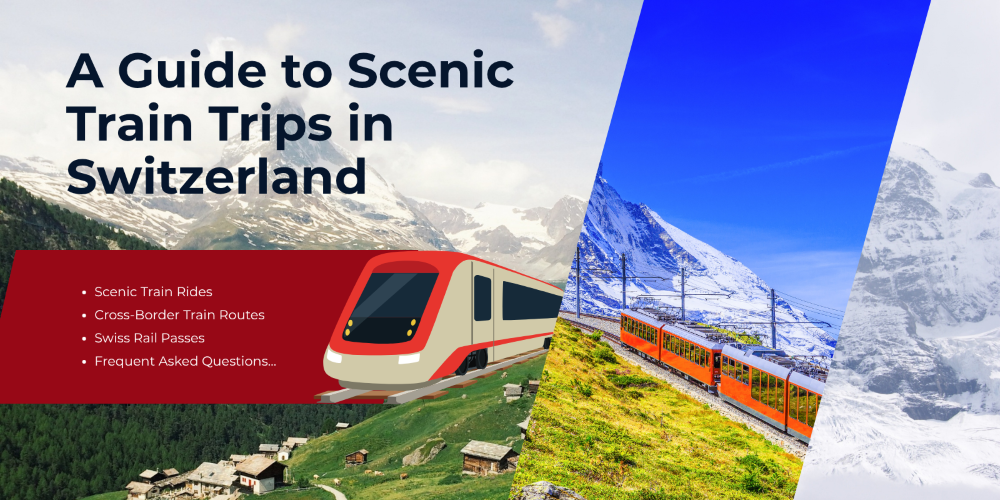

There is no better way to experience the heart of Switzerland than by train. The country’s railway network is a marvel of engineering, a pristine and punctual system that does more than just transport you from one picturesque town to another. It immerses you in the scenery, winding through lush valleys, climbing breathtaking mountain passes, and skirting the shores of crystal-clear lakes.
However, the sheer number of options can be daunting. Which scenic train is the right one for you? Is a rail pass worth it? How do you connect from other European cities? This guide is here offering you a clear and comprehensive guide to the most unforgettable Swiss train trips.
The Most Scenic Train Rides in Switzerland
Switzerland’s rail routes cover alpine peaks, lakeside towns, and postcard-perfect villages. Here’s a breakdown of the most scenic Swiss train trips, with practical info to help you plan.
The Glacier Express: Zermatt to St. Moritz
The Bernina Express: Chur to Tirano
The GoldenPass Line: Lucerne to Montreux
The Gotthard Panorama Express: Lucerne to Lugano
The Voralpen Express: Lucerne to St. Gallen
Jungfrau Railway: Top of Europe
Other Essential Swiss Train Journeys
The Glacier Express: Zermatt to St. Moritz
The Glacier Express is arguably the most famous of all Swiss scenic trains. This legendary journey connects two of Switzerland’s most glamorous mountain resorts, Zermatt and St. Moritz. Don’t let the “express” in its name fool you; this is a leisurely, eight-hour journey that allows you to soak in the dramatic scenery of the Swiss Alps. From the iconic Matterhorn in Zermatt, the train winds its way through pristine valleys, past charming villages, and over 291 bridges and through 91 tunnels.
The highlight for many is the Oberalp Pass, the highest point of the journey at 2,033 meters (6,670 feet), and the dramatic Rhine Gorge, often referred to as the “Swiss Grand Canyon.” The panoramic windows of the Excellence Class offer an unparalleled, luxurious viewing experience.
Duration: Approximately 8 hours
Operating Months: Operates year-round with a short break in late autumn.
Approximate Price: A standard ticket can range from $150 to $250 USD, with seat reservations being mandatory and an additional cost. Excellence Class is significantly more expensive.
How to Buy: Tickets can be purchased online through the official Glacier Express website or SBB (Swiss Federal Railways). This route is fully covered by the Swiss Travel Pass; however, the seat reservation fee is still required.
The Bernina Express: Chur to Tirano
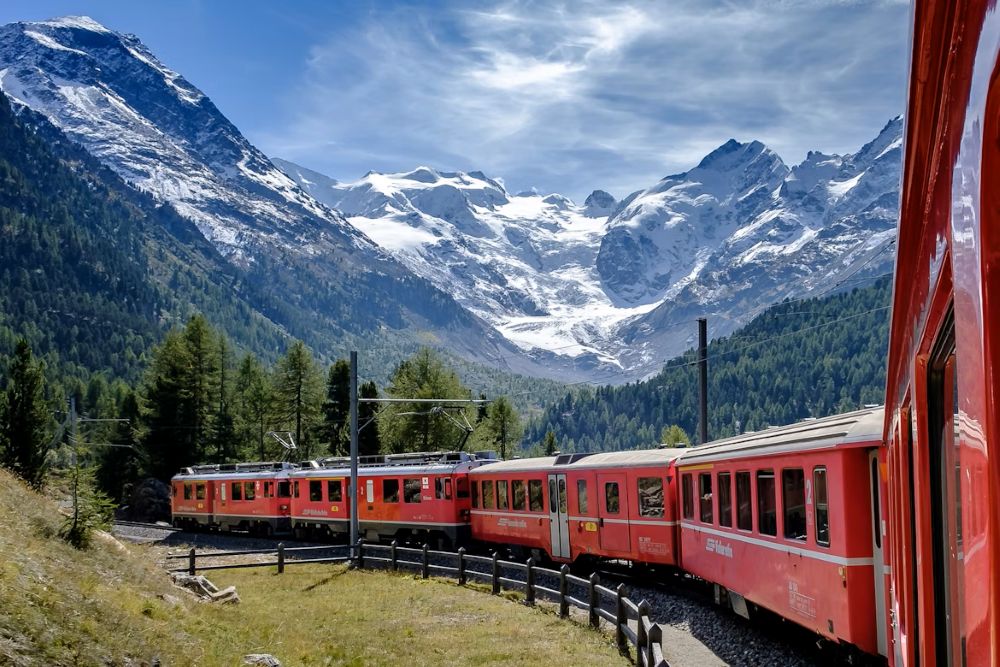
The Bernina Express offers a spectacular journey of contrasts, from the high alpine scenery of the Engadin Valley to the Mediterranean flair of Tirano, Italy. This UNESCO World Heritage route is a masterpiece of railway engineering. The train navigates the Bernina Pass at 2,253 meters (7,392 feet) without the help of a cogwheel, making it one of the steepest railway lines in the world. The most iconic part of the journey is the Brusio Circular Viaduct, a spiral viaduct that allows the train to gracefully descend into the valley.
The open-air carriages in summer provide an even more immersive experience, allowing you to feel the fresh mountain air and take unobstructed photos. This route truly showcases the diversity of the Swiss landscape, making it a favorite for many travelers.
Duration: Approximately 4 hours
Operating Months: Operates year-round, but with different timetables for summer and winter.
Approximate Price: A one-way ticket costs around $70-$90 USD. A seat reservation is mandatory.
How to Buy: Tickets can be booked on the Rhaetian Railway website or SBB. The Swiss Travel Pass covers the entire journey, but the seat reservation fee is extra.
The GoldenPass Line: Lucerne to Montreux
The GoldenPass Line connects Lucerne with Montreux on the shores of Lake Geneva, taking you through the very heart of Switzerland. The journey is broken into three distinct sections, each with its own unique charm.
The first leg takes you from Lucerne, with its beautiful lake and surrounding mountains, to Interlaken, the adventure capital of Switzerland nestled between two stunning lakes. From Interlaken, you’ll journey through the Simmen Valley with its traditional Swiss farms and grazing cows, to Zweisimmen. The final stretch to Montreux offers breathtaking views of the vineyards of the Lavaux region and the sparkling waters of Lake Geneva. This is a classic Swiss train trip that encapsulates the country’s idyllic beauty.
Duration: Approximately 5.5 hours
Operating Months: Operates year-round with varying schedules for each train.
Approximate Price: Around $80-$100 USD for a one-way ticket. Seat reservations are recommended, especially on the panoramic trains.
How to Buy: Tickets can be purchased through SBB or the Montreux Oberland Bernois Railway (MOB). The Swiss Travel Pass covers the entire route, but seat reservations for the panoramic carriages are an additional cost.
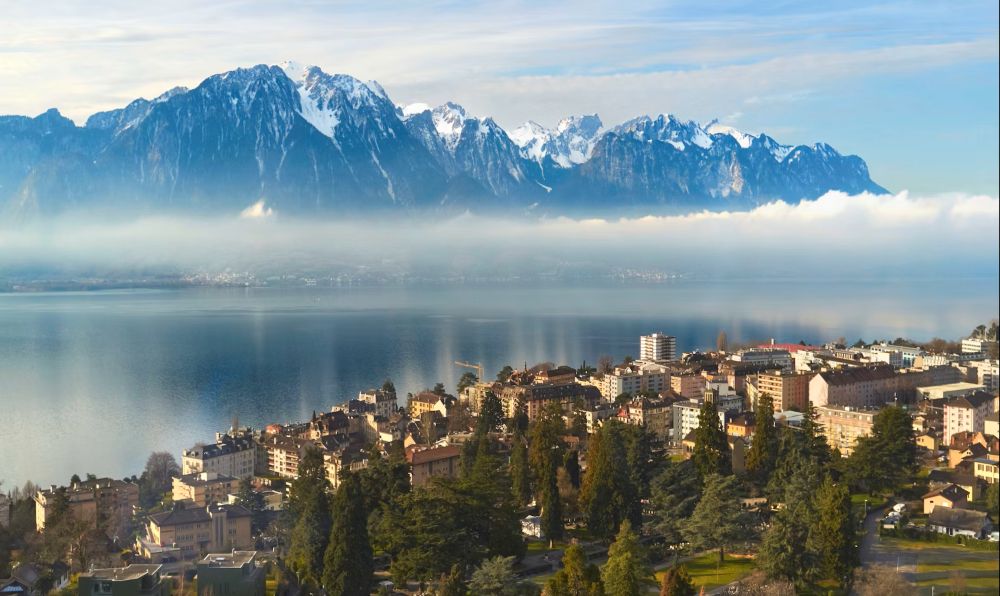
The Gotthard Panorama Express: Lucerne to Lugano
For a truly unique experience, the Gotthard Panorama Express combines a stunning train journey with a leisurely boat cruise. The trip starts with a boat ride across Lake Lucerne, often referred to as the “Fjord of Switzerland,” surrounded by majestic mountains. In Flüelen, you’ll board a panoramic train that takes you on the historic Gotthard route.
This journey through the heart of Switzerland offers fascinating insights into the country’s history and the incredible engineering feat of the Gotthard Tunnel. The train climbs to the church of Wassen, which you’ll see from three different perspectives as the train spirals its way up the mountain. This route is a wonderful blend of relaxing and scenic travel.
Duration: Approximately 5.5 hours (including the boat trip)
Operating Months: Operates from mid-April to mid-October.
Approximate Price: Starts at around $150 USD for a 2nd class ticket.
How to Buy: Bookings can be made through the SBB website. The Swiss Travel Pass covers the entire journey, but a supplement for the seat reservation on the train is required.
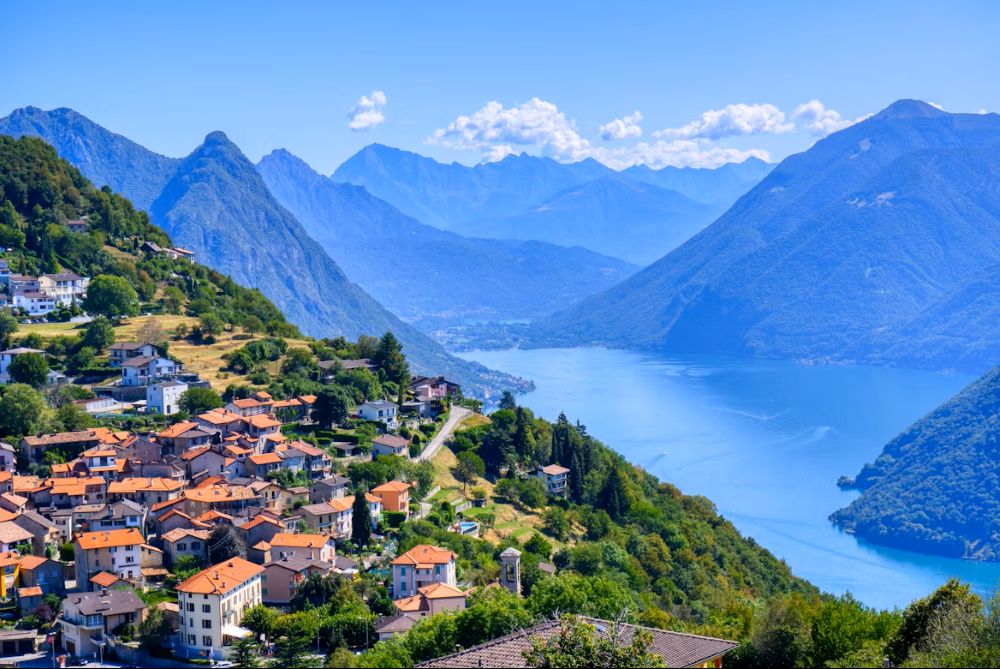
The Voralpen Express: Lucerne to St. Gallen
Often overlooked in favor of its high-alpine counterparts, the Voralpen-Express is a true gem and one of Switzerland’s most charming train trips. Translating to “Pre-Alps Express,” this route connects the historic city of St. Gallen in the east with the beloved lakeside city of Lucerne in the heart of the country. Rather than dramatic, icy peaks, this journey celebrates the idyllic, rolling landscapes that are quintessentially Swiss.
Traveling on the modern, copper-colored “Traverso” trains, you’ll glide over the Sitter viaduct, Switzerland’s highest railway bridge, offering stunning views of the valley below. The train then meanders through the pastoral Toggenburg region and past the high moorlands of Rothenthurm, a protected landscape of national importance. You’ll catch glimpses of Lake Zurich before the train skirts along the shores of Lake Zug and finally arrives in Lucerne, with Mount Pilatus and Rigi framing the scene.
Duration: Approximately 2 hours and 15 minutes
Operating Months: Operates year-round, with hourly departures.
Approximate Price: A standard one-way ticket costs approximately $55-$65 USD.
How to Buy: Tickets can be purchased at any SBB station, on the SBB app, or online. No seat reservations are required. The route is fully covered by the Swiss Travel Pass with no additional supplements needed.
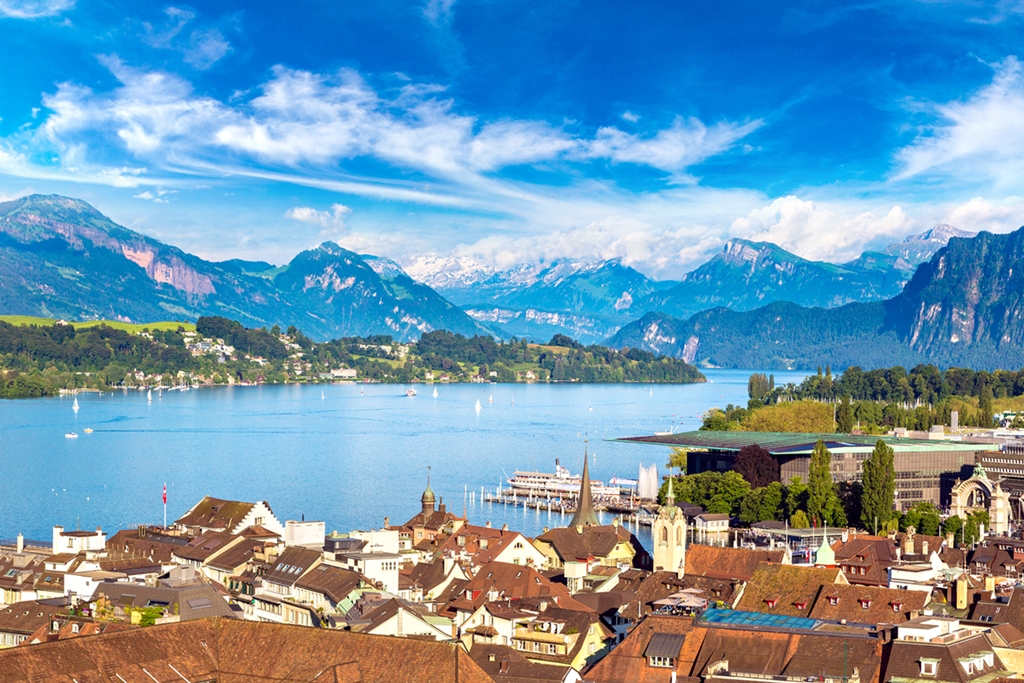
Jungfrau Railway: Top of Europe
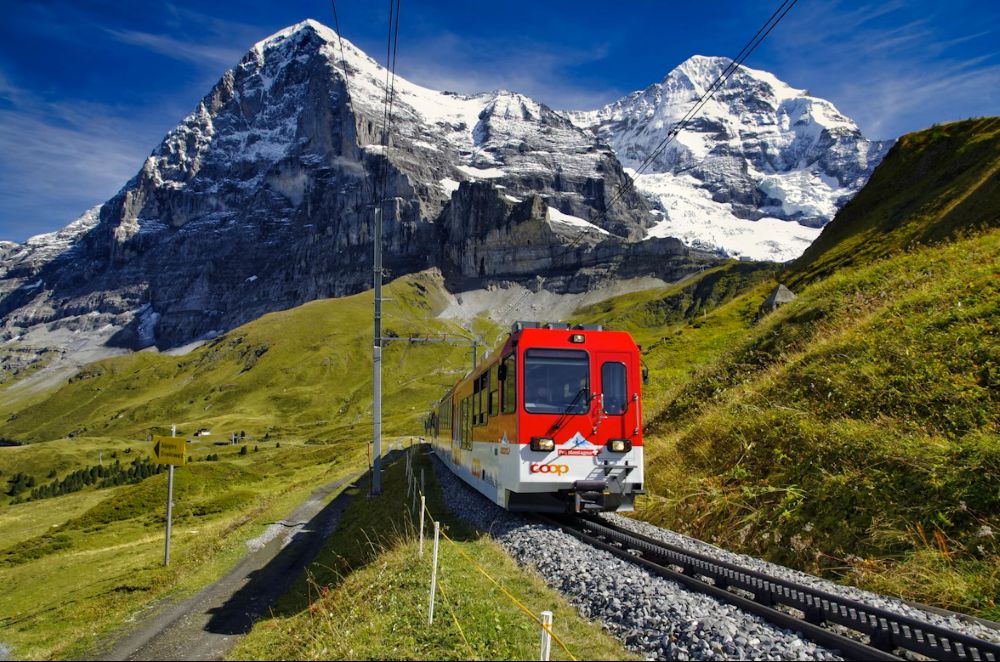
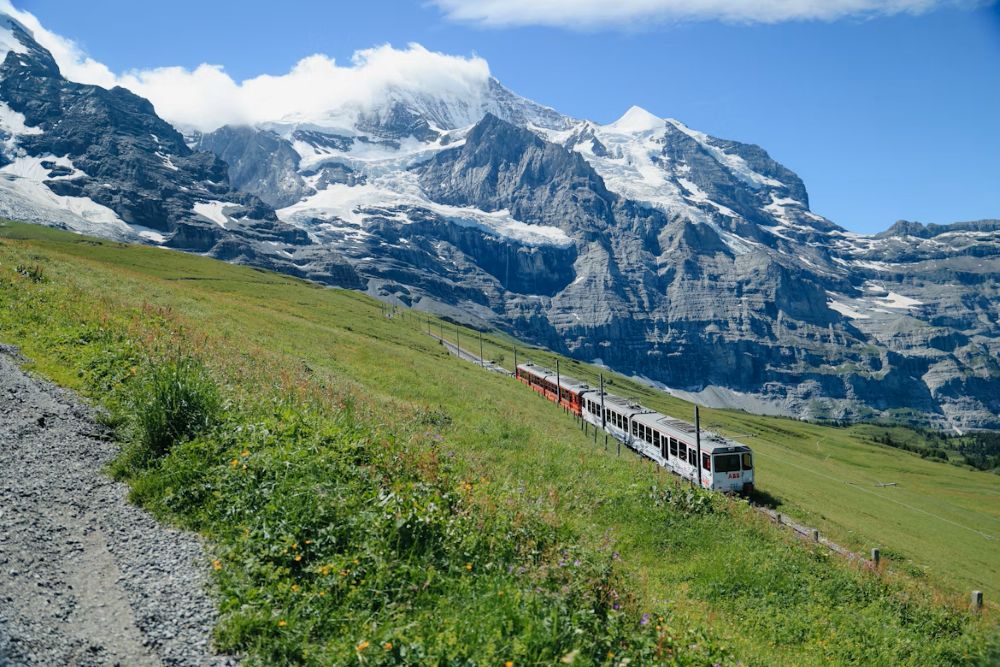
No list of Swiss train trips would be complete without mentioning the Jungfrau Railway. While not a long-distance scenic route in the same vein as the others, this is an unforgettable alpine adventure. The journey starts in Interlaken and takes you via Grindelwald or Wengen to Kleine Scheidegg. From there, the historic cogwheel train begins its steep ascent, traveling through a tunnel carved into the Eiger and Mönch mountains.
The final destination is the Jungfraujoch – Top of Europe, the highest railway station in Europe at 3,454 meters (11,332 feet). The views from the Sphinx Observatory are simply breathtaking, offering a 360-degree panorama of snow-capped peaks and the Aletsch Glacier, the longest glacier in the Alps. This is a must-do for any Swiss Alps train tour from Zurich or other major cities.
Duration: Approximately 2 hours from Interlaken Ost.
Operating Months: Operates year-round.
Approximate Price: This is one of the more expensive excursions, with round-trip tickets from Interlaken costing upwards of $200 USD.
How to Buy: Tickets can be bought at any SBB station or online. The Swiss Travel Pass offers a 25% discount on the section from Wengen/Grindelwald to Jungfraujoch.
Other Essential Swiss Train Journeys
Beyond the famous panoramic routes, Switzerland’s regular train network offers countless scenic journeys that are just as rewarding.
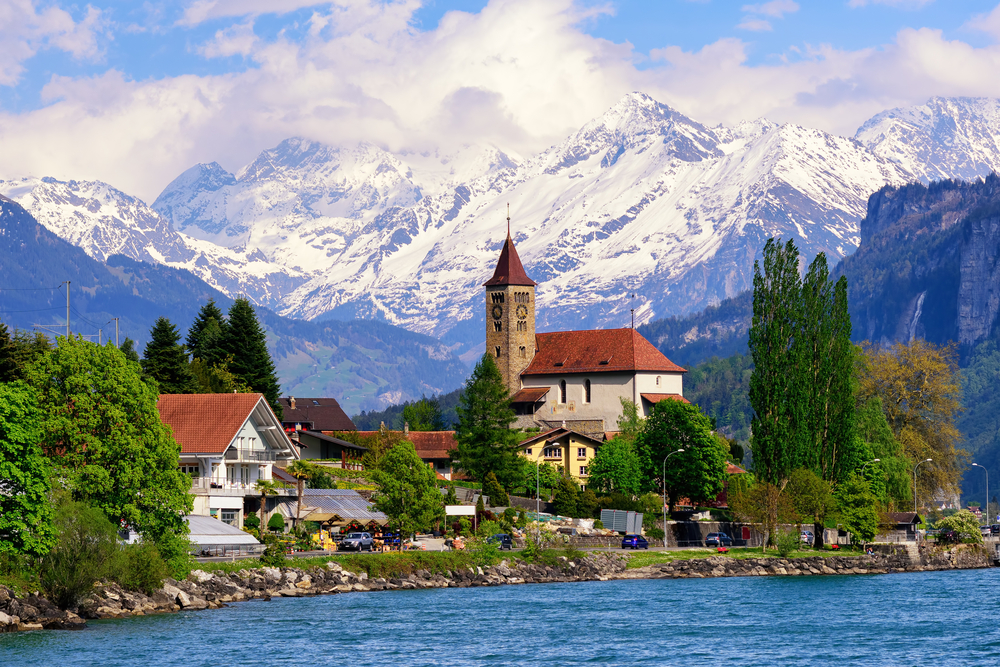
Zurich to Lucerne Train: The Zurich to Lucerne train is a short but beautiful one-hour journey that takes you past rolling hills, picturesque villages, and the shimmering waters of Lake Zug and Lake Lucerne. It’s the perfect introduction to the beauty of central Switzerland.
Train from Zurich to Interlaken: The train from Zurich to Interlaken is another classic route, taking around two hours. The journey offers stunning views of Lake Thun and the surrounding mountains, providing a perfect appetizer for the adventures that await in the Jungfrau region.
Train from Zurich to Zermatt: To reach the car-free village of Zermatt, the train from Zurich to Zermatt is your best option. The journey takes approximately 3.5 hours and involves a change in Visp. The final leg of the journey on the Matterhorn Gotthard Bahn is particularly scenic, as the train climbs into the valley with the iconic Matterhorn gradually coming into view.
The Swiss Grand Train Tour is a magnificent way to experience all these highlights and more. It’s a suggested itinerary that combines eight of the most scenic train routes into one epic 1,280-kilometer journey. You can complete the entire tour or just select a few stages that interest you most.
Swiss Rail Passes: What You Should Know
Choosing the right rail pass is a critical step in planning your Swiss train trips, and the best choice can save you a significant amount of money and hassle. While individual point-to-point tickets are always an option, Switzerland’s integrated travel system offers several passes designed for tourists.
The Swiss Travel Pass: The All-in-One Option
This is the flagship, all-inclusive pass designed for maximum convenience, making it a favorite for many planning a comprehensive Switzerland train tour. It’s an all-you-can-ride ticket that covers nearly every form of public transportation.
What’s Included:
- Unlimited travel on the entire Swiss Travel System network, which includes all national trains, buses, and public boats.
- Unlimited use of public transport in more than 90 towns and cities.
- Free travel on most premium panoramic trains, including the Glacier Express, Bernina Express, and GoldenPass Line (note: mandatory seat reservation fees are an additional cost).
- Free admission to over 500 museums and castles throughout the country.
- Up to 50% discount on most mountain excursions and cogwheel railways (e.g., Gornergrat, Mount Pilatus). A key exception is the Jungfrau Railway, which is only a 25% discount from Wengen/Grindelwald. The trip to Rigi, however, is fully included.
Validity: Available for 3, 4, 6, 8, or 15 consecutive days of travel. There is also a Swiss Travel Pass Flex, which offers the same benefits for a chosen number of days within a one-month period, providing more flexibility if you plan to stay in one place for several days at a time.
Best For: First-time visitors and travelers who plan to travel extensively, visit many museums, and value convenience above all. If you have a packed itinerary with multiple long journeys, this pass almost always pays off.
The Swiss Half Fare Card: The Flexible Saver
The Half Fare Card operates on a simple, powerful principle: buy the card once, and then get 50% off almost every ticket you purchase for an entire month.
What’s Included:
- A 50% reduction on tickets for trains, buses, boats, and most city transport networks.
- A 50% discount on most mountain railway and cable car tickets, including more expensive excursions like the Jungfrau Railway and Schilthorn. This is its single biggest advantage over the Swiss Travel Pass for alpine-focused trips.
Validity: The card is valid for one month from your chosen start date.
Best For: Travelers who are staying in Switzerland for a longer period but not traveling every day, or those whose itinerary is heavily focused on expensive mountain excursions. If you are doing just a few key journeys, the upfront cost of the Half Fare Card plus the half-price tickets can often be cheaper than a Swiss Travel Pass.
The Saver Day Pass: The Day-Tripper’s Deal
The Saver Day Pass is a fantastic option for travelers who have one or two days of very intensive travel planned. It functions like a one-day Swiss Travel Pass, offering unlimited travel for a single day.
What’s Included: Unlimited travel for one day on trains, buses, and boats within the Swiss Travel System network, just like the Swiss Travel Pass.
How it Works: The key to the Saver Day Pass is to book early. Prices are dynamic and start as low as 52 CHF (without a Half Fare Card) if purchased up to 60 days in advance. The price increases as the travel date gets closer and as availability runs out. Holders of the Swiss Half Fare Card can purchase the Saver Day Pass at an even lower price.
Best For: Budget-conscious travelers who can plan their long-distance travel days far in advance. It’s perfect for a long day trip, such as a train from Zurich to Zermatt and back, which would be very expensive on a standard ticket.
Regional Passes: For In-Depth Exploration
If your trip is concentrated in one specific area, a regional pass can offer the best value and most comprehensive coverage for that location.
What’s Included: These passes offer unlimited or heavily discounted travel on trains, buses, boats, and mountain excursions within a defined geographical boundary. Popular options include:
- Berner Oberland Pass: Excellent for the region around Interlaken, Thun, and Brienz, with fantastic coverage for mountain trips.
- Jungfrau Travel Pass: Focuses specifically on the Jungfrau region, covering trains and cable cars to places like Grindelwald First, Männlichen, and Kleine Scheidegg.
- Tell-Pass: Covers the Lake Lucerne region (Central Switzerland), including full coverage for trips up Mount Rigi and Mount Pilatus.
Validity: Typically available for a range of consecutive days (e.g., 3 to 10 days).
Best For: Travelers who are setting up a base in one location (like Interlaken or Lucerne) for several days and want to explore that specific region thoroughly without worrying about ticket costs for every little trip.
Cross-Border Train Routes to Switzerland
Switzerland’s central location in Europe makes it easily accessible by train from several major cities. This offers a fantastic opportunity for multi-country European adventures.
Paris to Switzerland Train
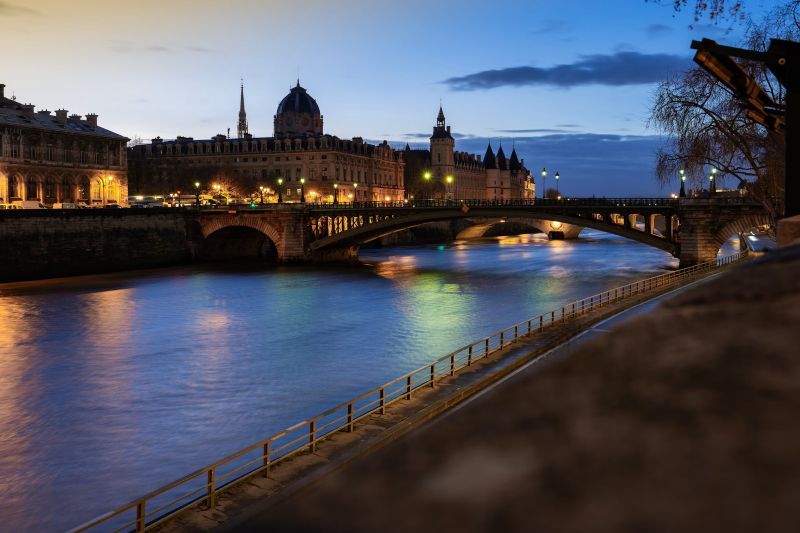
The high-speed TGV Lyria connects Paris (Gare de Lyon) to several Swiss cities, including Geneva, Lausanne, and Zurich. The journey from Paris to Switzerland by train is efficient and comfortable, taking as little as 3 hours to Geneva and around 4 hours to Zurich. The scenery on the French side is one of rolling countryside, which gives way to the dramatic Jura mountains as you approach the Swiss border.
Milan to Switzerland Train
Traveling from Milan to Switzerland by train is another popular and scenic option. The EuroCity trains connect Milan with cities like Zurich, Geneva, and Lucerne, passing through the stunning Simplon or Gotthard routes.
The journey from Milan to Zurich takes approximately 3.5 to 4 hours and offers incredible views of the Italian lakes and the Swiss Alps. The new Gotthard Base Tunnel has significantly reduced travel times, but for a more scenic experience, consider the regional trains that traverse the old Gotthard route.
London to Switzerland Train
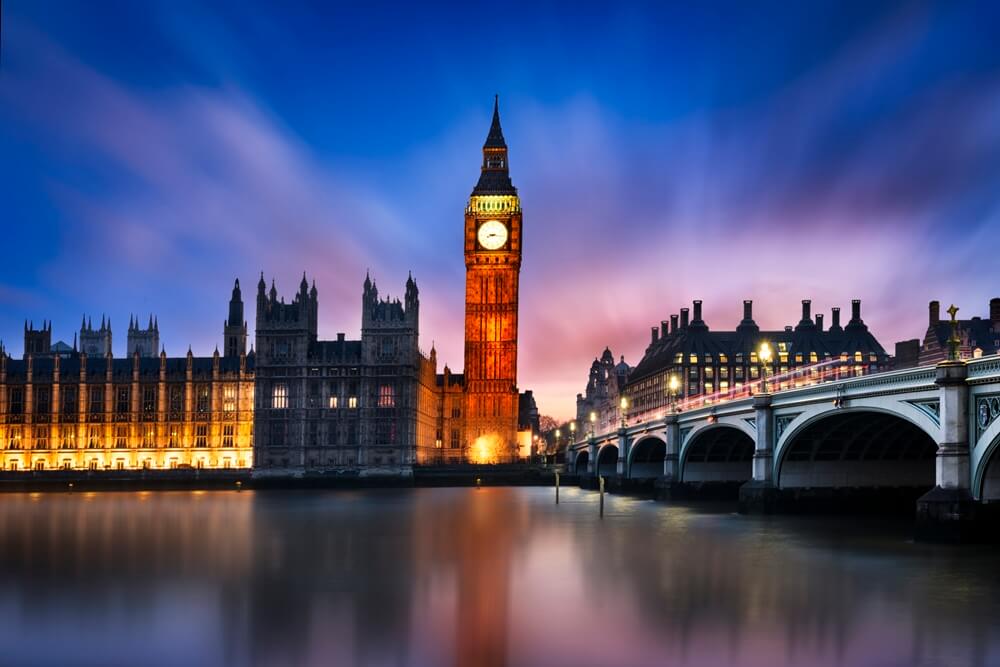
While there is no direct London to Switzerland train, the journey is straightforward and can be a delightful experience in itself. The most common route involves taking the Eurostar from London St. Pancras to Paris Gare du Nord, and then a short transfer to Gare de Lyon to catch the TGV Lyria to Switzerland. The entire journey can be completed in around 7 to 8 hours, making it a viable and more sustainable alternative to flying.
When to Go for Swiss Train Trips
Every season paints the landscape in a different light, offering a unique experience from the window of your carriage. While there is no single “best” time, your preference for scenery, weather, and crowds will guide your decision.
Summer (June to August)
Summer is the classic and most popular time for Swiss train trips. The days are long and warm, the valleys are a vibrant, lush green, and alpine meadows are dotted with wildflowers. This is the season when the entire Swiss Travel System is in full swing. All scenic routes, mountain excursions, and lake steamers are fully operational, including special open-air carriages on some routes for a truly immersive experience. It’s the ideal time for combining train travel with high-altitude hiking.
The trade-off, however, is that this is peak season. Expect larger crowds and higher prices for accommodation. You’ll need to book seat reservations for popular scenic trains like the Glacier and Bernina Express well in advance.
Autumn (September to October)
For many, autumn is the most beautiful season in Switzerland. The summer crowds disperse, the air becomes crisp and clear, and the forests transform into a breathtaking tapestry of gold, orange, and red. The Engadin valley, traversed by the Bernina Express, is particularly famous for its golden larch trees. Along the GoldenPass Line, you’ll witness the grape harvest in the Lavaux vineyards.
While the weather is generally pleasant, be aware that the season is transitional. Some high-altitude cable cars may close, and a few scenic routes, notably the Glacier Express, typically take a maintenance break from mid-October until early December. Always check schedules if traveling late in the season.
Winter (December to March)
A Swiss train trip in winter is nothing short of magical. The landscape is covered in a thick blanket of pristine snow, turning the journey into a real-life fairy tale. Cozy inside a warm panoramic carriage while gliding past frozen forests and snow-laden villages is an unforgettable experience. The major scenic routes are fully operational and designed to showcase the winter wonderland scenery.
This is the perfect time to visit Christmas markets in December or combine your train journey with skiing. The days are shorter and colder, and boat services are significantly reduced, but the enchanting snowscapes more than make up for it.
Spring (April to May)
Spring is a season of dramatic renewal. As the snow in the mountains begins to melt, it feeds the country’s waterfalls, which are at their most powerful and spectacular. The valleys burst into life with fresh green grass and blooming flowers, all while the highest peaks remain brilliantly white with snow. This beautiful contrast makes for stunning photography.
However, spring is also the most unpredictable “shoulder season.” The weather can change quickly, and many high-altitude hiking trails and mountain railways may still be closed, either due to snow or for maintenance between the winter and summer seasons.
Frequently Asked Questions
What is the most scenic train ride in Switzerland?
This is a matter of personal preference, but the Glacier Express and the Bernina Express are consistently ranked among the most beautiful. The Glacier Express offers classic, high-alpine scenery, while the Bernina Express provides a stunning contrast of glaciers and palm trees.
Is the Swiss Travel Pass worth it?
If you plan to take multiple long-distance trains or scenic routes, it usually pays off. Factor in museum entries and boat rides too.
Do I need to reserve seats on scenic trains?
Some like Glacier Express and Bernina Express require seat reservations, even with a rail pass.
Can I take luggage on Swiss trains?
Yes, you can take luggage on all Swiss trains. There are designated luggage racks at the end of each carriage and often space between the seats. For larger items, some long-distance trains offer a luggage shipping service for a fee.
Are scenic trains wheelchair accessible?
Yes, most are accessible, but advanced notice is recommended for assistance.
Conclusion
Switzerland’s rail system is an essential part of the travel experience. It lets you slow down and appreciate landscapes that are otherwise hard to reach. Whether you’re boarding the Glacier Express from Zermatt or connecting to Milan on your way south, traveling Switzerland by rail makes the journey as memorable as the destination.
With the right pass, a well-planned route, and realistic expectations, your Swiss Alps tour from Zurich or beyond could be the highlight of your trip. Don’t just go to Switzerland—ride through it.

There are no comments.