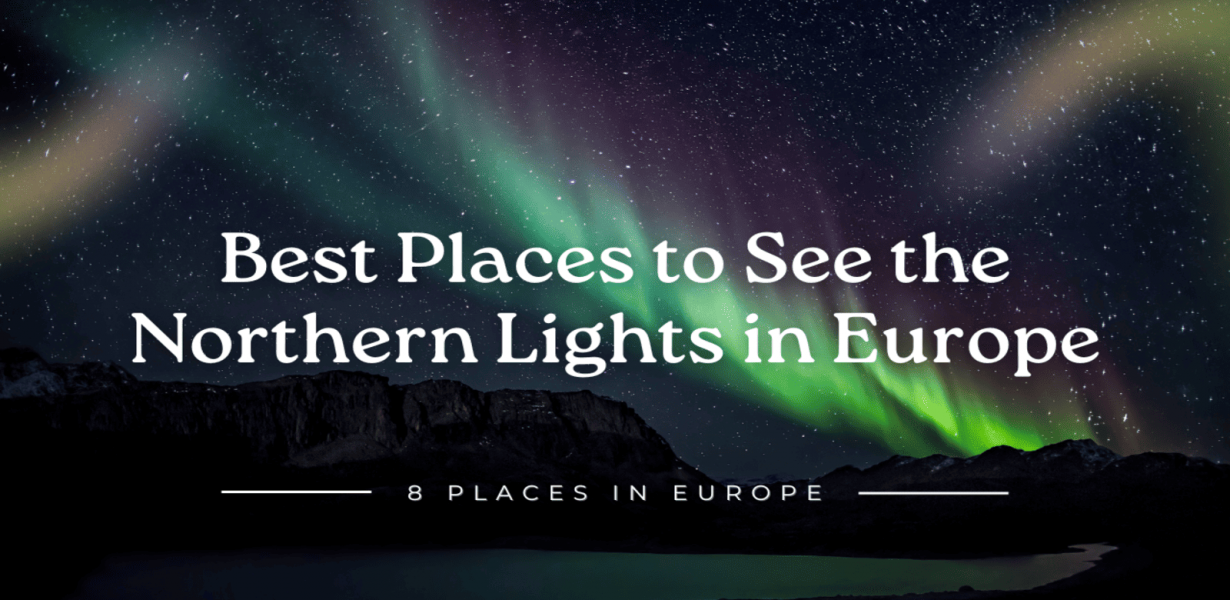

The Northern Lights seem to be a distant dream that belongs to winter, and few natural phenomena can be as attractive as they are. This dazzling display of colors in the polar skies is a wish-list experience for many, drawing visitors from all around the world. If you’ve ever dreamed of standing under a sky of vibrant greens, purples, and reds, then some European countries are waiting for you to visit.
Northern Lights Europe, and in particular some Northern European countries, are among the best places to view the Northern Lights. This is because they are in the center of the Auroral Oval, and the period of the polar night here also provides a much darker period for aurora viewing.
So with so many incredible destinations, how do you choose the perfect place to chase the Northern Lights in Europe? Don’t worry, we’ve prepared for you. You’ll learn the best places and times to see the Aurora Borealis in Europe. Get ready to turn your Northern Lights dreams into an amazing reality!
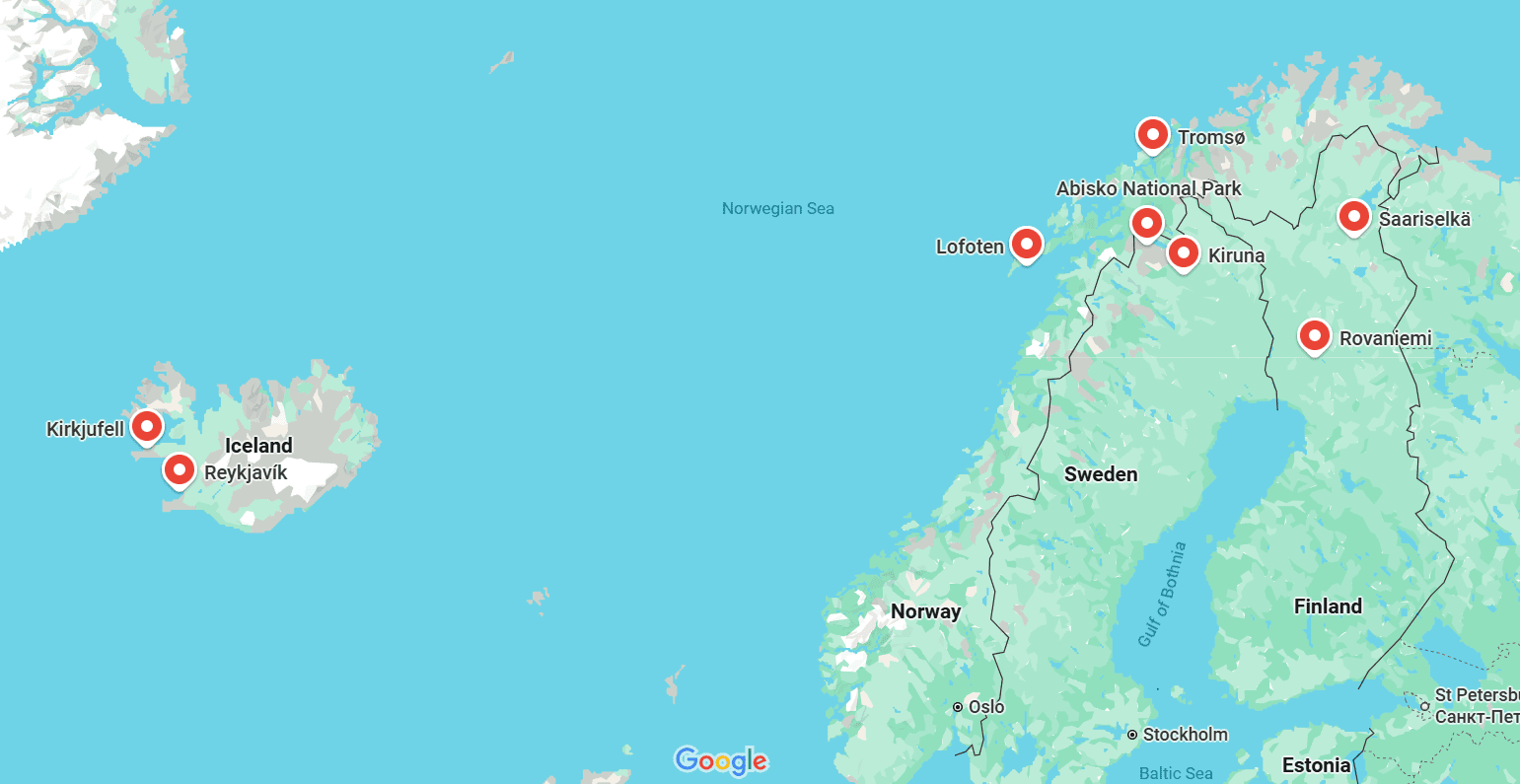
Where to See Northern Lights in Europe
- Tromsø, Norway
- Lofoten Islands, Norway
- Kiruna, Sweden
- Abisko National Park, Sweden
- Saariselkä, Finland
- Rovaniemi, Finland
- Reykjavík, Iceland
- Kirkjufell, Iceland
What to Pack for the Northern Lights
Best Time to See the Northern Lights
Fortunately, 2025-2026 is a peak period during high solar activity years, when auroras are most frequent and intense. The year 2026 marks the tail end of an aurora-active period, making it an exceptionally worthwhile time for an Aurora tour.
- Best months for viewing the Northern Lights in 2026: January to March, September to November. The nights are long during these months, providing an ideal opportunity for the aurora to appear.
- The exact time of day, then, is between 9 p.m. and 2 a.m. when the aurora is most active.
Since the appearance of the aurora is dependent on solar activity, it is recommended that you stay at least 3-5 nights at your destination to increase the probability of seeing the aurora.
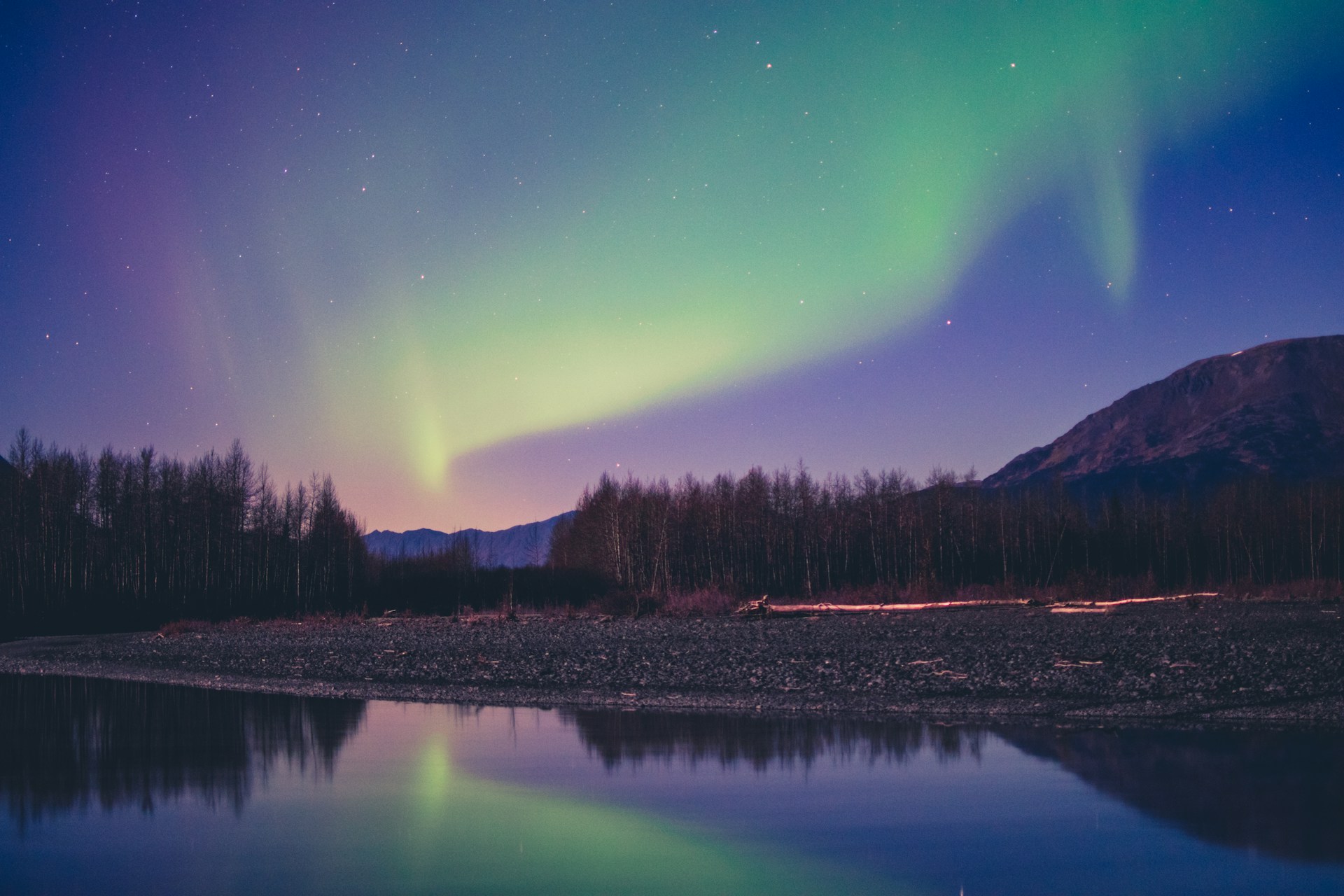
Where to See Northern Lights in Europe
Countries in the north of Europe, such as Norway, Finland, Sweden, and Iceland, are perfect areas for aurora chasing due to their geography. In these countries, there are specific locations with a high probability of auroras and unique cultural and natural attractions.
Tromsø, Norway
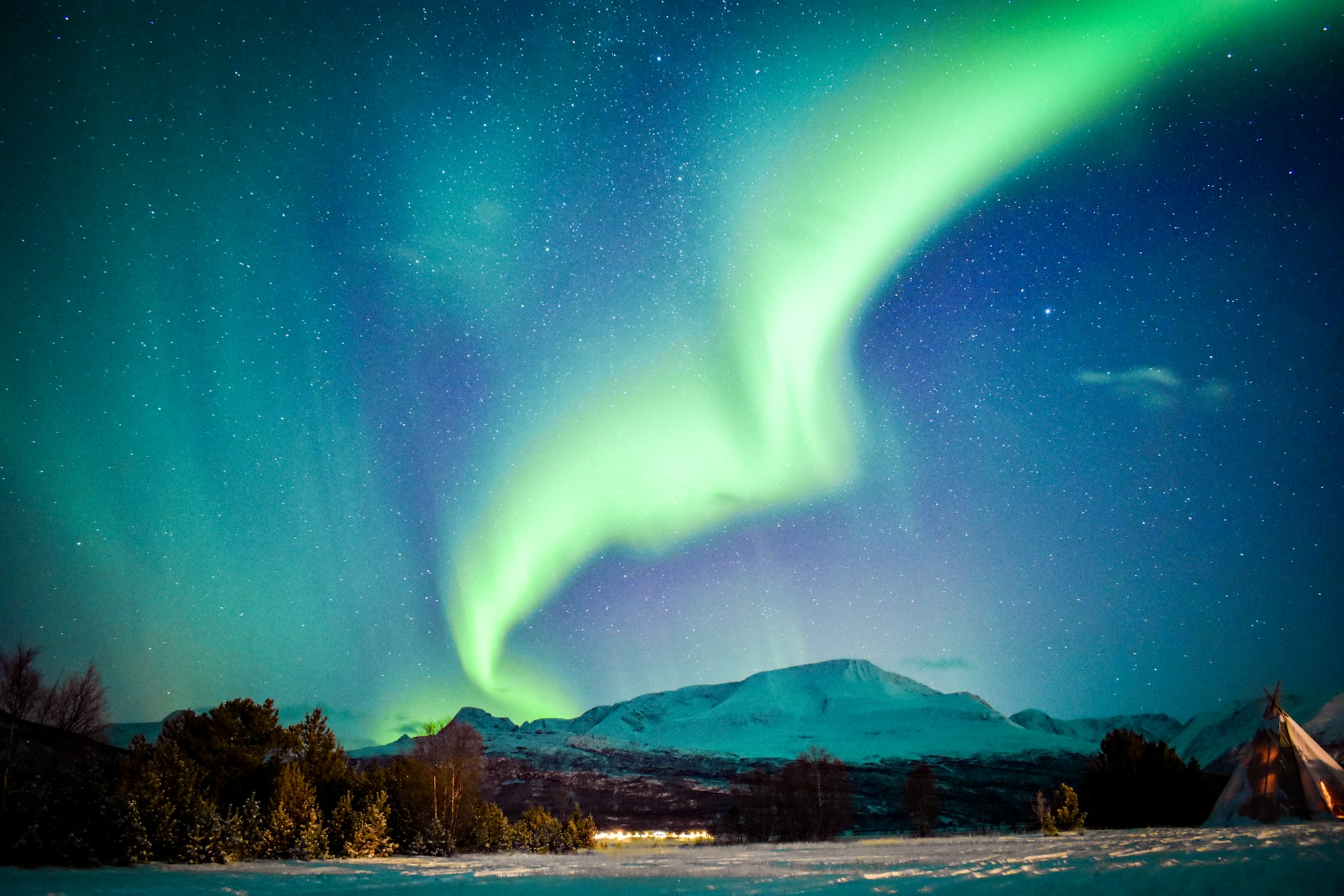
Tromsø located in the north of Norway, is also known as the Gateway to the Arctic. It is the best place to see Northern Lights in Norway, and its location well above the Arctic Circle, coupled with relatively mild coastal temperatures due to the Gulf Stream, makes it an ideal base for aurora hunting.
Aurora tourism is well established here, and you can easily find Northern Lights tours in Norway from Tromsø. This can range from bus tours chasing clear skies to dog sledding or snowmobile tours that combine adventure with aurora viewing.
Other things to do
Of course, there are plenty of activities to do in Tromsø besides waiting for the Northern Lights. You can enjoy panoramic views of the city and surrounding fjords on the Fjellheisen cable car. Visit the Arctic Cathedral or learn about the archaeological artifacts here at The Polar Museum.
Whale-watching tours are also popular, especially from November to January, for the chance to see orcas and humpback whales. If you’re here in the third week of January, you can also attend the Tromsø International Film Festival for a unique artistic experience.
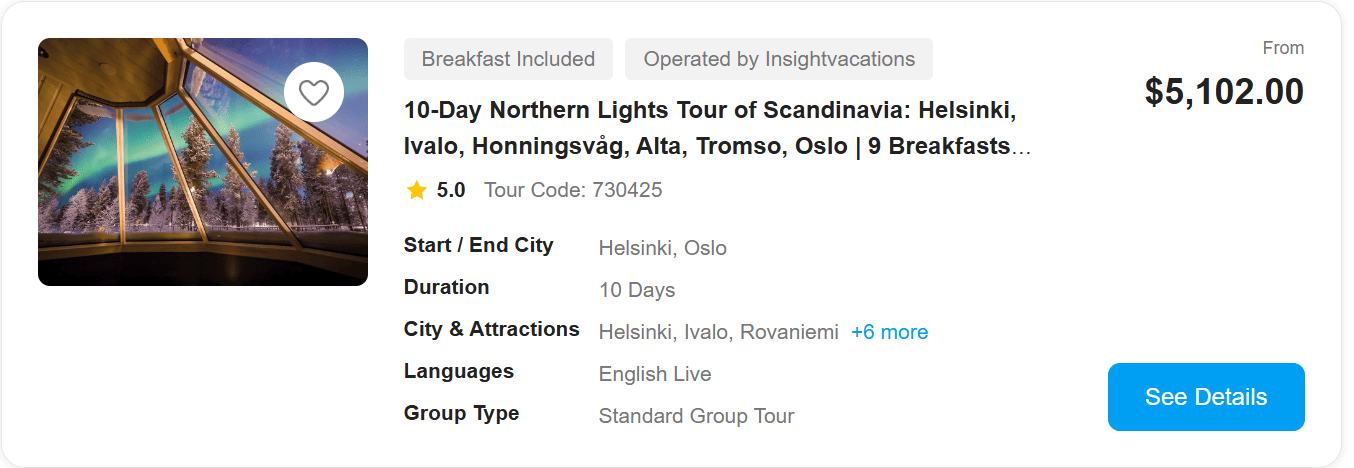
Tours4fun recommendation:
Lofoten Islands, Norway
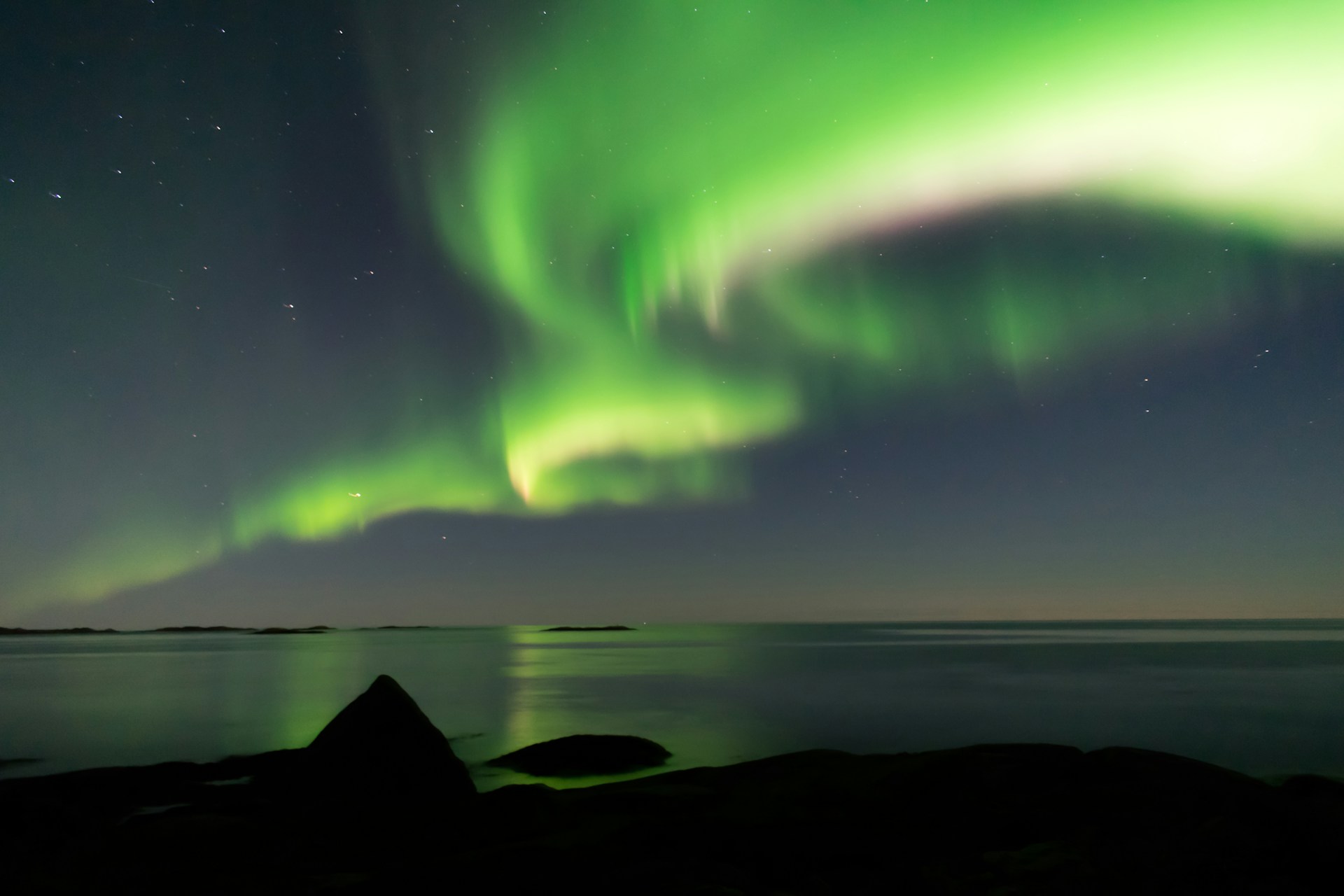
Lofoten is another great place to see the Northern Lights in Norway. Located off the northern coast of Norway, the island features jagged mountains, picturesque fishing villages, and turquoise waters. The location is a little further south than Tromsø, but the lack of light pollution here gives a better chance of seeing the Aurora Borealis. This, coupled with the natural beauty, has led many photographers to visit.
Chasing the aurora here usually involves finding a secluded beach or a quiet spot along the coastline. These open, light-free places are perfect for viewing the Northern Lights.
Other things to do
The Lofoten Islands offer a wealth of activities. You can hike, kayak, or just drive along the E10 highway to get around the islands. Villages such as Reine and Hamnøy are well worth a visit. Don’t miss the Lofotr Viking Museum in Borg, a reconstruction of a large Viking longhouse.
Kiruna, Sweden
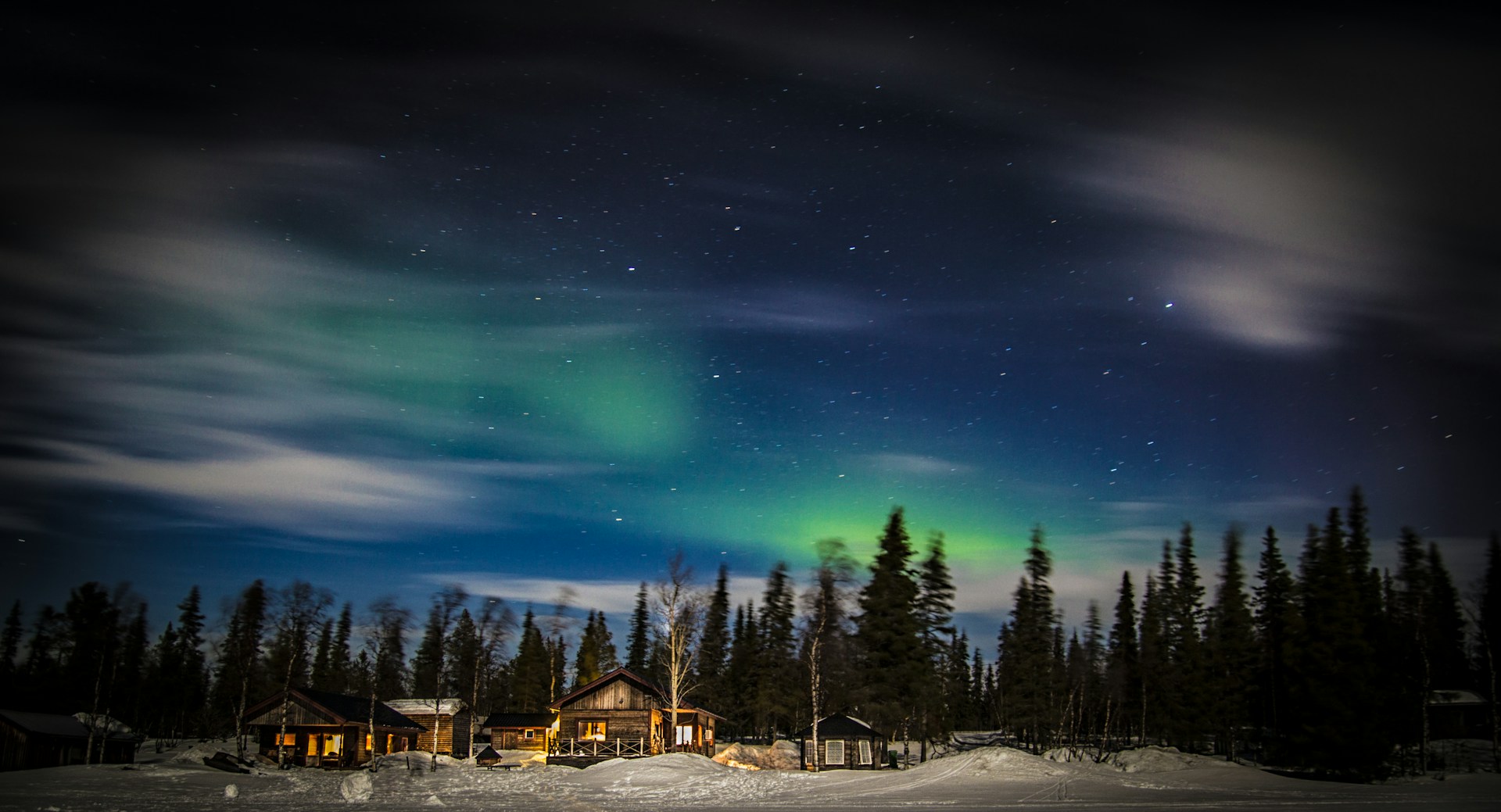
Kiruna is a small town in northern Sweden, located deep in the Arctic Circle, which offers excellent conditions for viewing the Aurora Borealis due to its cold, dry climate and minimal light pollution.
The area’s wooded campgrounds are often where people wait for the Northern Lights, and experiencing dog sledding can make the whole trip even more fun.
Other things to do
Kiruna is not a big town, and the best place to visit is the Kiruna Church, a wooden structure built with the financial support of the local mining company. Next is the ICEHOTEL, a 20-minute drive away, which is a building rebuilt every year from snow and ice.
Tours4fun recommendation:
Abisko National Park, Sweden
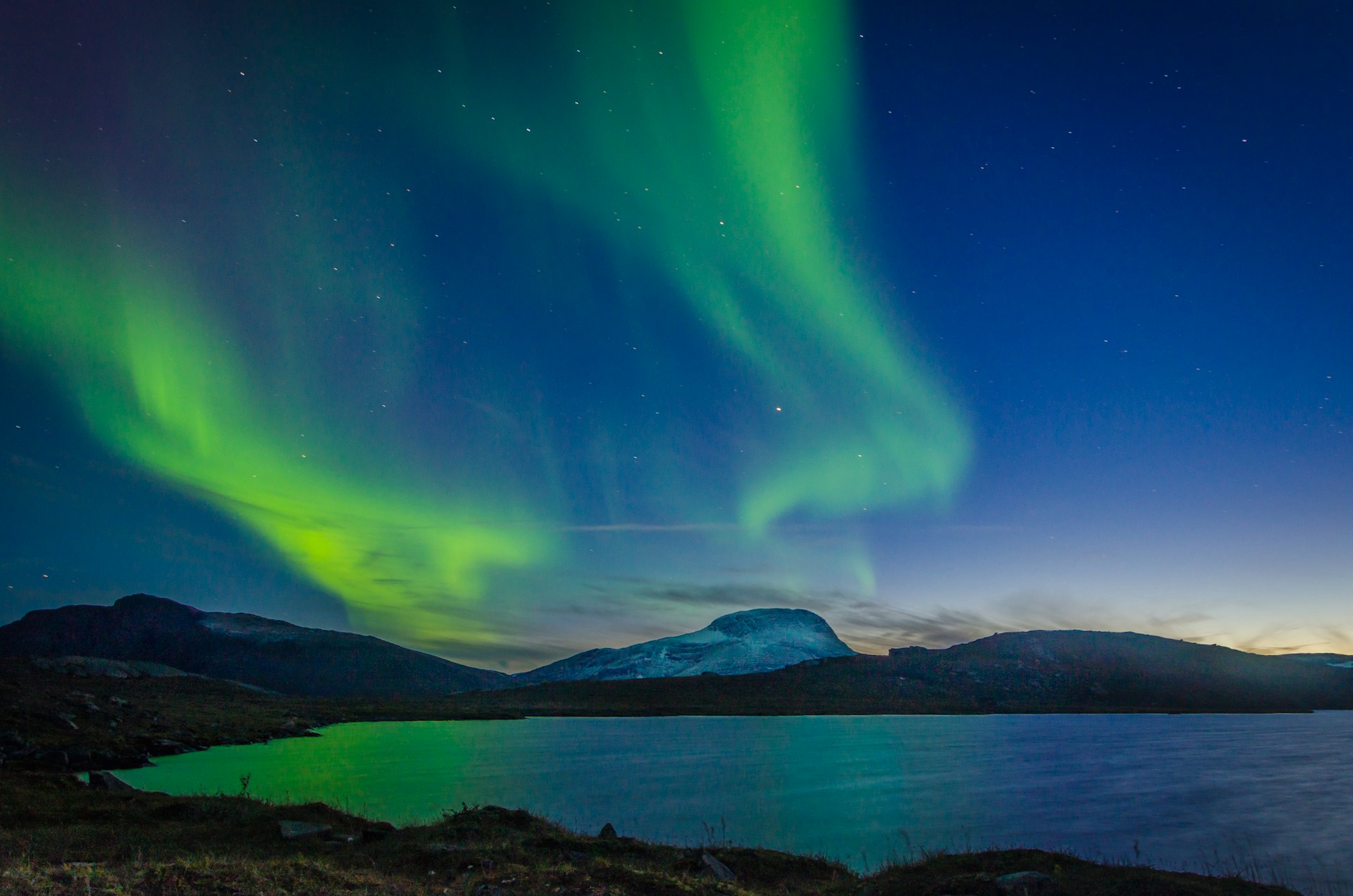
Abisko National Park is often considered the best place to see Northern Lights in Sweden and is an hour’s drive from Kiruna, located in the north of Sweden. Being in the Blue Hole region, it boasts clearer nights than the surrounding areas. You can reap the benefits of clearer views of the Aurora Borealis.
Aurora Sky Station within the park is a famous vantage point. Accessible by cable car, it offers magnificent panoramic views and is designed for aurora viewing, with a café and exhibitions. It is an excellent choice for those seeking a focused and comfortable aurora experience.
Other things to do
Abisko National Park also offers great opportunities for hiking, skiing, and ice fishing. You can also explore the frozen Abisko Canyon. During the day, the desolate beauty of the Arctic landscape is breathtaking.
Saariselkä, Finland
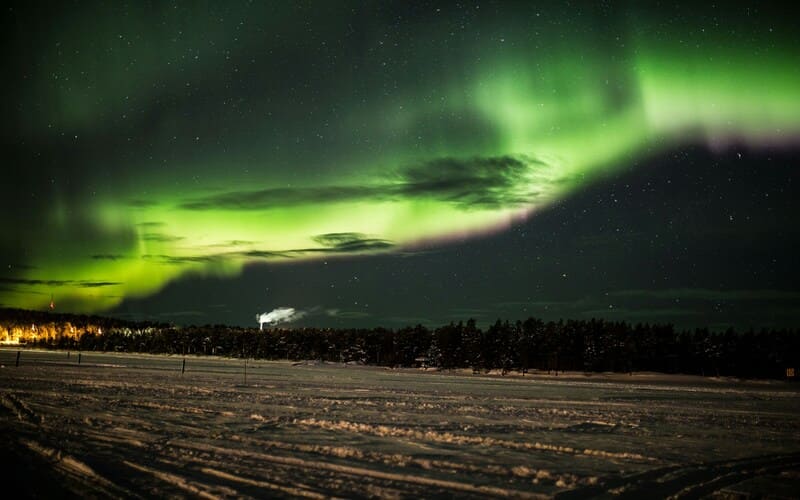
Saariselkä in Finnish Lapland is another great opportunity to witness the Northern Lights in Finland. This charming waterfall village is set in a vast wilderness with clear skies and little light pollution. It also has an extensive network of cross-country ski trails, making it a winter sports paradise.
Compared to other Finnish cities in the Lapland region, Saariselkä offers a laid-back atmosphere. Many of the accommodations here are designed to maximize your view of the Aurora Borealis, and some even offer glass igloos or aurora huts where you can watch from the comfort of your bed.
Other things to do
Saariselkä itself is a famous resort offering winter sports such as skiing. Try walking on snowshoes through pristine forests, take a husky safari, or experience the thrill of a reindeer sleigh ride. You can also visit Urho Kekkonen National Park for Arctic hiking.
Rovaniemi, Finland
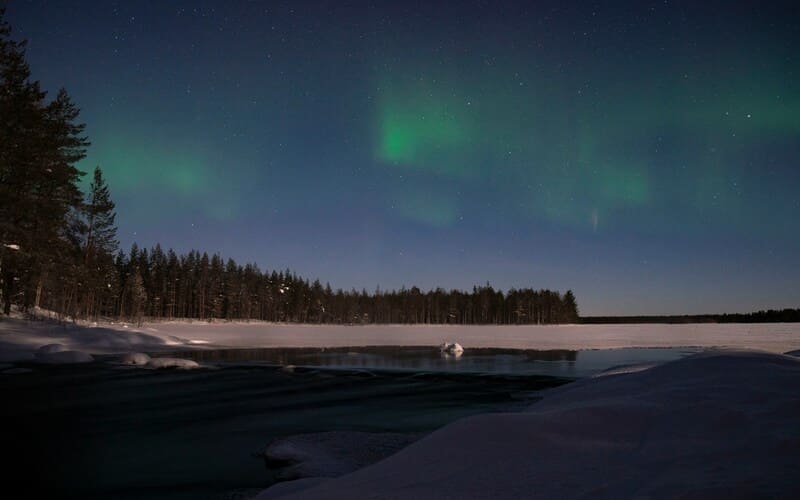
Rovaniemi is a popular tourist city in Finland because it is the home of Santa Claus. This makes it a very popular destination for families, combining the magic of Christmas with the potential to see the Northern Lights.
Rovaniemi is a larger town with more infrastructure and activities, making it a comfortable base, especially if you are traveling with children. It’s best to head away from the city lights and consider taking one of the specialized Northern Lights tours.
Other things to do
There are many more activities to do in Rovaniemi, with the main attraction being Santa Claus Village, where you can meet Santa Claus, send postcards from the official post office, and visit Santa’s office. It is also possible to visit the Arktikum Arboretum to gain an insight into life and history at the North Pole, or visit various reindeer and husky farms. You can also try ice karting or snowmobiling.
Reykjavík, Iceland
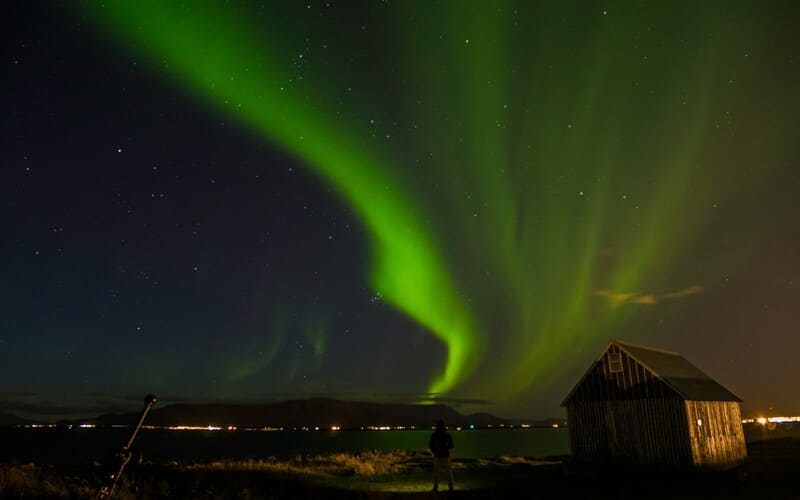
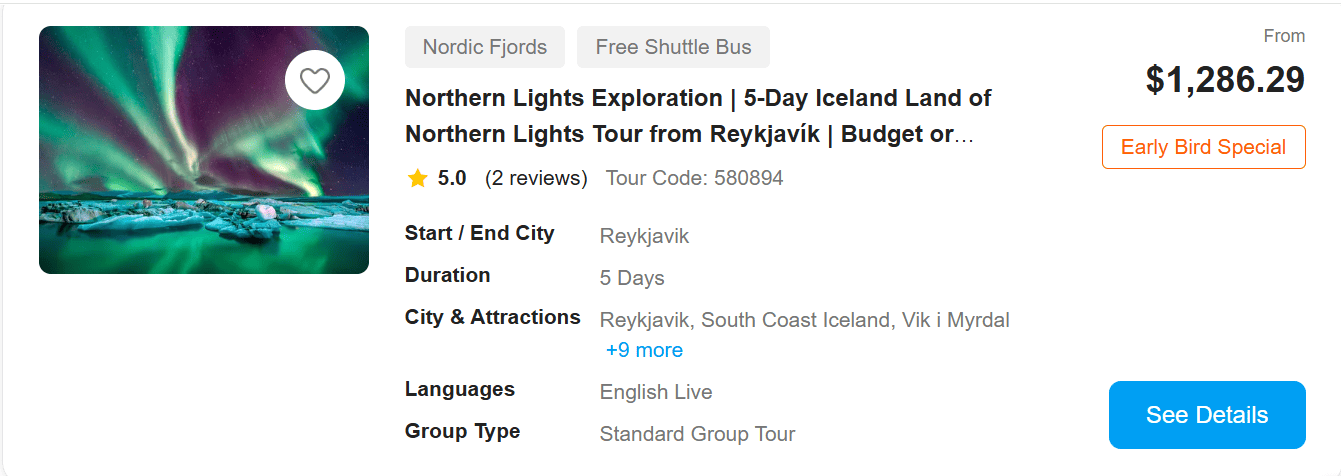
Reykjavik, the capital of Iceland, is a great gateway for those looking to see the Northern Lights in Iceland. While there can be some light pollution within the city, it’s easy to take organized tours that will take you away from the glow of the city to darker, more remote locations known for their aurora activity.
Among them is the Grótta Island Lighthouse, a ten-minute drive from the city center. You will have the opportunity to see the stunning view of the Northern Lights reflecting on the sea level. Then there’s the landmark Perlan, whose glass dome is the best place in the city to see the Northern Lights. Finally, there’s Blue Lagoon, where you can watch the Northern Lights while relaxing in a cozy spa.
Other things to do
Reykjavík has a thriving art and food scene. You can visit Hallgrimskirkja, head to the towers here for panoramic views, explore the Harpa Concert Hall, or just take a few photos on Skólavörðustígur Rainbow Street. A trip to the Golden Circle is a must-do, visiting Gullfoss waterfall, Geysir geothermal area, and Thingvellir.
Tours4fun recommendation:
Kirkjufell, Iceland
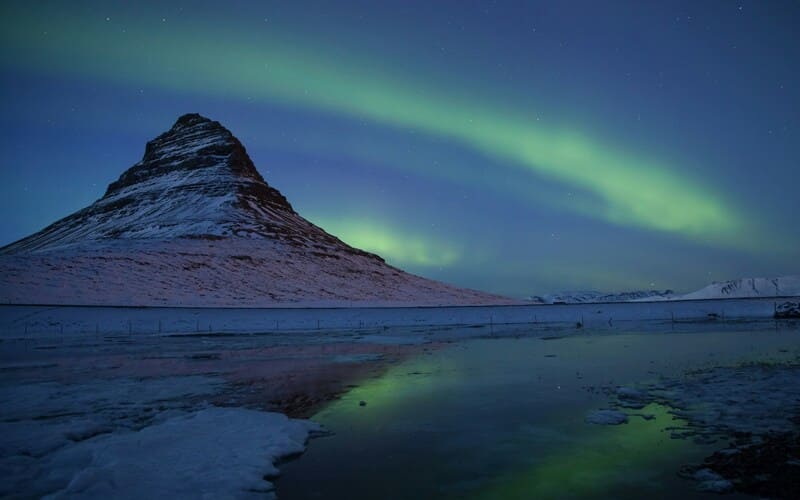
Kirkjufell, a two-hour drive from Reykjavík, has a distinctive cylindrical peak, often referred to as “ Church Mountain ”, and is one of Iceland’s most photographed landmarks. The surrounding area is beautiful and offers many vantage points to capture the Aurora Borealis with the mountain in the foreground.
If you’re lucky enough to encounter the Northern Lights, Kirkjufellsfoss is the best place to take a picture of a waterfall and a mountain in the same frame. Ideal for a day trip here, and for an extra day, Grundarfjörður is the nearest town to stay in.
Other things to do
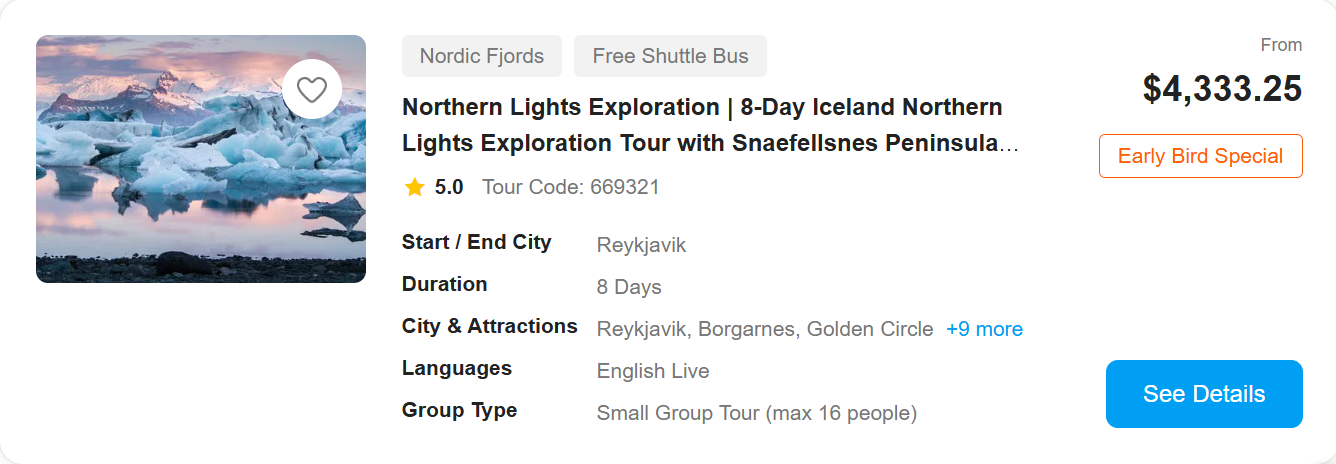
In the area, you can visit the basalt columns of Gerðuberg, the black church of Búðir, or stroll along the cliff paths of Arnarstapi and Hellnar. Whale watching is also offered at nearby Grundarfjörður.
Tours4fun recommendation:
What to Pack for the Northern Lights
Viewing the Northern Lights means traveling to cold, snowy conditions. Being prepared with the right gear is vital to your comfort and fitness. Pack your bags according to this list.
- The right clothes: The golden rule of cold-weather dressing is to dress in layers. Start with a warm base layer; merino wool or synthetic fibers are best. Choose wool or down for the middle layer. Finish with a warm, waterproof, and windproof shell jacket and pants. Remember to bring a couple more pairs of thick wool or warm socks.
- Warm hat and gloves: A good-quality hat that covers your ears is vital. Waterproof insulated gloves are best.
- Insulated boots: Waterproof, insulated winter boots with good grip are essential. Look for boots rated to at least -20°C (-4°F).
- Neck brace or scarf: Protect your neck and lower face from the cold and wind.
- Warm patches: these patches provide hours of warmth and are a lifesaver in extreme cold.
- Front light or flashlight: Ensures your visibility and safety when walking at night.
- Small backpack: Carry extra clothes, snacks, and camera gear.
- Snacks and hot drinks: A thermos filled with hot tea, coffee, or hot chocolate would be very cozy. High-energy snacks are also a good idea.
- Camera equipment (if required): Camera with manual settings, wide-angle lens, sturdy tripod, spare batteries, and remote shutter release.
FAQ
How many hours does the Aurora Borealis last?
The Northern Lights can vary from a few minutes to a few hours, with an average time of 30 minutes or less. Sometimes it is very faint, while other times it bursts into a strong light that lasts for a long time. It depends entirely on the level of solar activity and specific conditions.
Do you need special glasses to see the Northern Lights?
No, you don’t need special glasses to see the Northern Lights. The Northern Lights are a natural light phenomenon visible to the naked eye. Usually, cameras can capture colors and details that are more vivid than the human eye.
How do you increase your chances of seeing the Northern Lights?
First of all, you need to choose the right time of year, which is late September to late March, between 10 pm and 2 am. After that, stay north in the “aurora oval”, preferably staying a few days to improve your chances. Finally, head to remote areas, national parks, or join an organized tour that will take you to locations with wider skies.
You can also use aurora forecasting websites and apps, such as NOAA’s Space Weather Prediction Center and the My Aurora Forecast app, to monitor solar activity and cloud cover.
How far in advance should I predict the Northern Lights?
The solar activity that leads to auroras is inherently unpredictable, so predicting the Northern Lights far in advance is impossible. The most reliable forecasts are usually available 1-3 days in advance, providing location-specific KP indices and cloud forecasts. Many apps and websites update these forecasts hourly.



There are no comments.