

For a unique experience of Mexican festivals and culture, welcome to Mexico’s Day of the Dead, or Día de los Muertos in Spanish, a festival that embodies the cultural phenomenon that makes Mexico all the more mysterious. But it’s more than just a holiday; it redefines our relationship with death, transforming grief into an affirmation of life and memory. Here, the departed are not feared, but warmly welcomed home, if only for a brief and magical visit. As the movie Coco says, death is not the end of life, being forgotten is.
As you plan your trip for the fall of 2026, consider witnessing this tradition. You’ll be rewarded with ancient rituals and lively processions, and also get to sample the cuisine dedicated to nourishing the dead. This definitive guide will take you to the heart of Mexico’s Day of the Dead, delving into its rich history, traditions, and best places to celebrate, and offering practical tips for your Mexico Day of the Dead tour.
Table of Contents
Where To Celebrate Day Of The Dead In Mexico
Day Of The Dead Food
Day Of The Dead Costume Ideas
When is Day Of The Dead 2026
For the Day of the Dead 2026, the main celebrations traditionally take place on November 1 and 2. November 1 is often called Día de los Angelitos and is dedicated to the memory of departed children. November 2 is Día de los Difuntos and is dedicated to the memory of adults. However, in many places, celebrations begin as early as October 31 and can last for several days, especially in popular tourist destinations that host parades and cultural events. If you’re planning a Day of the Dead Mexico trip, it’s best to be in the country from late October through the first few days of November to get the full festive spirit.
The Day Of The Dead In Mexico History
These ceremonies date back thousands of years to the Spanish civilizations of Mesoamerica. Long before the arrival of the Spanish conquistadors, indigenous cultures such as the Aztecs, Mayans, and Toltecs practiced ceremonies to honor the dead. These ancient peoples honored Mictēcacihuātl, the goddess of death in the Aztec religion, through elaborate, weeks-long ceremonies. They viewed death as an integral part of the life cycle, a natural process that should be embraced rather than feared.
The arrival of the Spanish and the introduction of Catholic cultural elements into it created a fusion with the original culture. Aboriginal beliefs about the afterlife and the return of the soul merged with Catholic observances such as All Saints’ Day (Nov. 1) and All Souls’ Day (Nov. 2). This combination gave birth to what we know today as the Day of the Dead.
Where To Celebrate Day Of The Dead In Mexico
There are many cities in Mexico where you can experience the Day of the Dead, each with its unique flavor. From bustling cities to small artsy towns, you’ll be rewarded with different versions of the Day of the Dead.
Mexico City
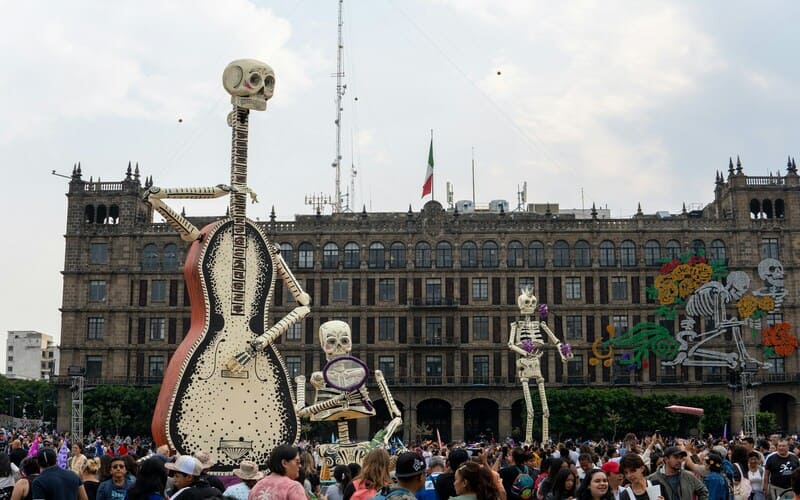
If you are traveling to Mexico for the first time, then the capital city of Mexico City will be the right destination. This is because the events related to the Day of the Dead here will be massive and visually stunning. Although the massive Day of the Dead parade (inspired by the James Bond movie “Ghostbusters”) has only been going on since 2016, it has quickly become a must-see event.
The Day of the Dead parades in Mexico City are tentatively scheduled for October, featuring three distinct processions: the Alebrijes Parade on October 18, the Mega Procession of Catrinas on October 26, and the main grand parade on November 2.
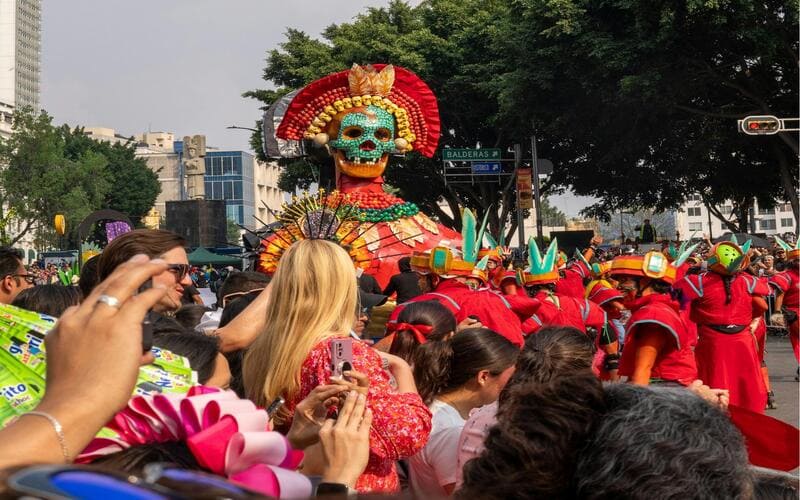
There will be live bands, elaborate floats, giant Katrina puppets, and people dressed in amazing Day of the Dead costumes. The parade route starts at Puerta de Leones in Chapultepec Park, then the Paseo de la Reforma continues towards the Zócalo parade, the city’s main square. The parade runs from 2:00 pm until about 6:30 pm. It is recommended to watch the parade at its beginning and end points, such as the streets of the Reforma.
Besides the parade, there are many other things to do in Mexico City to celebrate the Day of the Dead:
Ofrenda Displays: There are public shrines in major squares and museums throughout the city, such as the Zócalo, Chapultepec Park, and Frida Kahlo Museum.
Xochimilco: This is a half-hour drive from the center of Mexico City. It is home to a canal that is a UNESCO World Heritage Site. As part of Mexico City’s Day of the Dead program, visitors can take a special nighttime cruise through the canal! This is a Day of the Dead event that has been taking place in Mexico City for more than 25 years, called “La Llorona en Xochimilco.”
Coyoacán: This is an artsy neighborhood with many ornate public altars to display in the main plaza adjacent to Coyoacán. Stages have also been set up for cultural performances, orchestras, and even the Catrina contest.
Panteón San Andres Mixquic: This was once a convent, but is now one of the most popular cemeteries for the Day of the Dead. There will be tons of ceremonies, vendors, and activities, and it’s an important cultural landmark for the festival.
Guadalajara
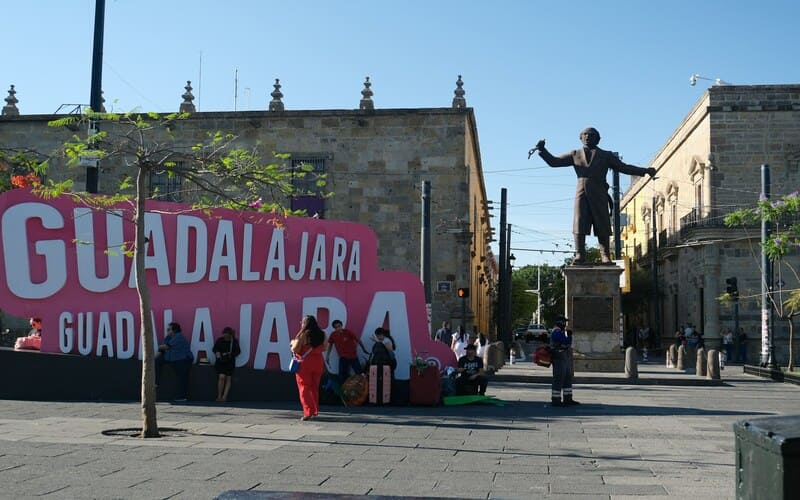
Guadalajara, the capital of Jalisco, offers visitors a unique Day of the Dead experience, featuring art and cultural exhibitions.
Tlaquepaque: Located just outside Guadalajara, it is filled with altars during the festival. Shrines and street performances are often a sight to behold, as well as people painted Catalina.
Calaverandia: This theme park in Guadalajara is like entering the world of the movie Coco. The park is full of performances, neon lights, and decorations, and adult admission is $25.
Catedral de Guadalajara: A Catholic church built in 1618. This is a landmark building in Guadalajara. Incorporating Baroque and Neo-Gothic styles, it is a church full of legends and mysteries.
Go to Tequila: This is the birthplace of tequila, where you can observe the production process and learn about its history at the National Tequila Museum.
Guanajuato
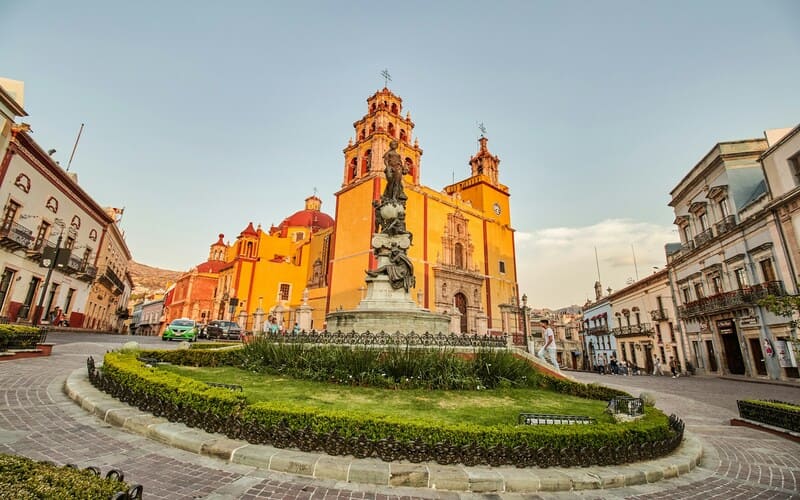
Guanajuato is the city on which the movie Coco was based, and its old town and surrounding mining areas are a UNESCO World Heritage Site. The city has colonial architecture, winding cobblestone alleys, and artistic aesthetics everywhere.
While Oaxaca may be known for its deep indigenous spirit, and Mexico City for its grand parades, Guanajuato stands out for its beautiful aesthetics and the way art and remembrance are intertwined.
Guanajuato Day of the Dead Parade: The loud parade here will begin at dusk with performances, floats, and giant skeletons. If you want to view the altar, head to the Universidad de Guanajuato and go up the steps to the multi-level altar. You’ll be able to get the most glamorous photos from above.
Check Out the Sand Artwork: artists use colored sawdust, flower petals, seeds, and other natural materials to create intricate murals in the streets. The entire length of Centro’s main street is lined with works of creativity. Each painting will have a theme and a specific object of remembrance, and there are many female-themed pieces.
Watch the Sunset: Monumento al Pipila has a monument to El Pípila, be sure to take the cable car to the top! It’s a great view of the city, and you can see the bright yellow Basílica Colegiata de Nuestra Señora de Guanajuato, red roofs, and little candy-colored houses strewn across the hillside.
Taste the Food: Mercado Hidalgo is the largest market in the area and offers a wide range of souvenirs and meals at reasonable prices.
San Miguel de Allende
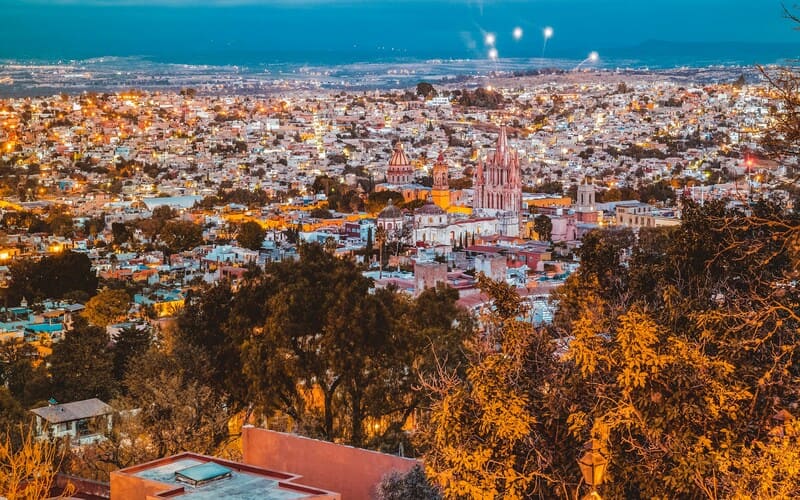
San Miguel de Allende has topped the list of the world’s ten most beautiful cities by world travel magazine CN Traveller. Although it is a small city, it has been around for over 500 years and offers a deeper experience of local Mexican life. San Miguel de Allende from Mexico city is a three and a half hour drive and can be added to your trip depending on the situation.
La Calaca Festival: San Miguel de Allende is the birthplace of “La Calaca Festival”, an artistic and cultural festival that coincides with the Day of the Dead. The festival hosts a variety of workshops, performances, art installations, and the popular Catalina Parade.
Parroquia de San Miguel Arcángel: The iconic site of San Miguel, also known as the Church of the Pink Angel, is beautiful at sunset! It’s also a gathering point for Day of the Dead events, with various decorations and altar displays in the plaza or outside the church.
Centro Histórico: Strong colors make the small town come alive. Going up and down the hillside, you will see many beautiful old colonial buildings. Again during the Day of the Dead, every little house is decorated, as well as Katrina-dressed pedestrians coming and going.
Souvenir Shopping: The Mercado de Artesanías has a wide range of handmade crafts, perfect for buying souvenirs towards the end of your trip.
Oaxaca
Oaxaca is one of the most culturally rich states in Mexico and is the birthplace of corn and pumpkins. Often considered the ultimate place to witness the Day of the Dead, Oaxaca offers a more traditional experience than the capital.
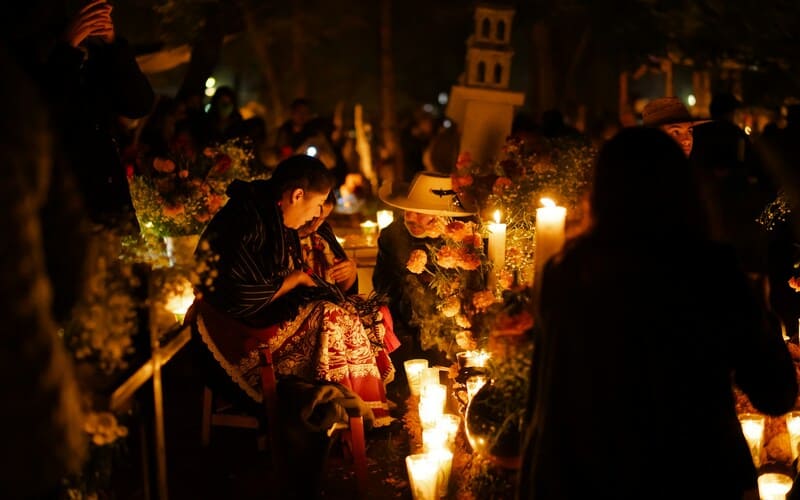
Visit the Cemeteries: The cemeteries around the city of Oaxaca, especially those located in Xoxocotlán and Etla, are famous for their nightly vigils. Families gather to decorate their graves with countless Day of the Dead flowers, candles, and offerings. An example is Panteón Mictlancíhuatl.
Oaxaca Artisan Market: Here you can find a large selection of food, spices, and handmade fabrics. On the Day of the Dead, you can also find more specialized products.
Processions and Comparsas: Oaxaca hosts many lively processions (comparsas) where people dress up in intricate Day of the Dead costumes, dance to music, and carry effigies.
Mole and Mescal Testing: Oaxaca is famous for its cuisine, especially the seven species of mole. During the Day of the Dead, you’ll savor a wealth of traditional dishes and, of course, mescal to toast the returning dead.
Watch Sand Paintings: These works of art are created with colored sand, sawdust, and flower petals. Depicting religious themes, pre-Hispanic imagery, or funny death scenes.
Things Do & Don’t
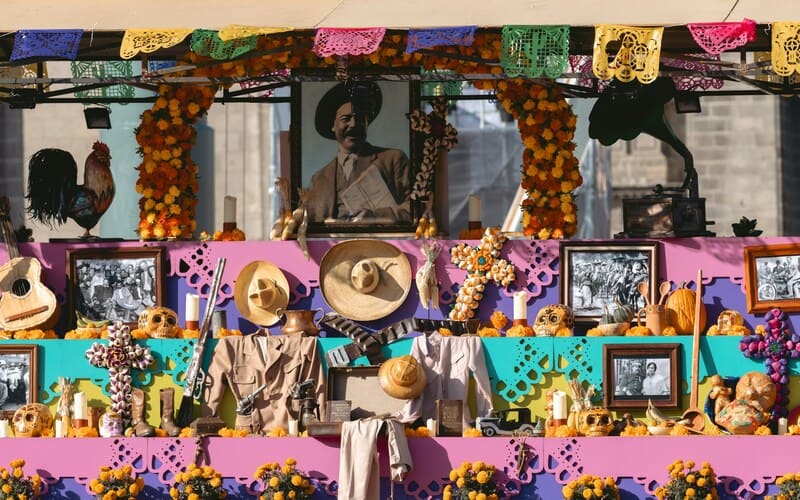
So what exactly does Día de los Muertos involve? At the center of the celebration are the ofrendas. These ofrendas are not used for worship, but to honor the dead. They are usually placed in homes, cemeteries, and even public places. According to the Day of the Dead tradition, things on the ofrendas will represent the four elements which are earth, wind, water, and fire:
- Photographs of the deceased: Photographs of the deceased remind everyone who the altar honors.
- Candles and Incense: Candlelight illuminates the path of the departed, while the Copal’s scent draws the deceased to their family.
- Food and Water: Putting up the deceased’s favorite fits and drinks from their life is like a welcome home for them. You’ll usually see people with tequila, beer, etc. on it.
- Personal items and favorites: Adding a personal touch makes it more meaningful and lets the deceased know that it is for them.
- Religious Icons: This is a Catholic influence and usually features a crucifix or a statue of a saint.
- Day of the Dead Flowers: Marigolds are the most common flowers used on the Day of the Dead, these orange and yellow flowers are known as cempasúchil. It is believed that their intense color and fragrance attract souls and help them find their way home. You’ll see marigold petals paving a path that leads from the altar to the door.
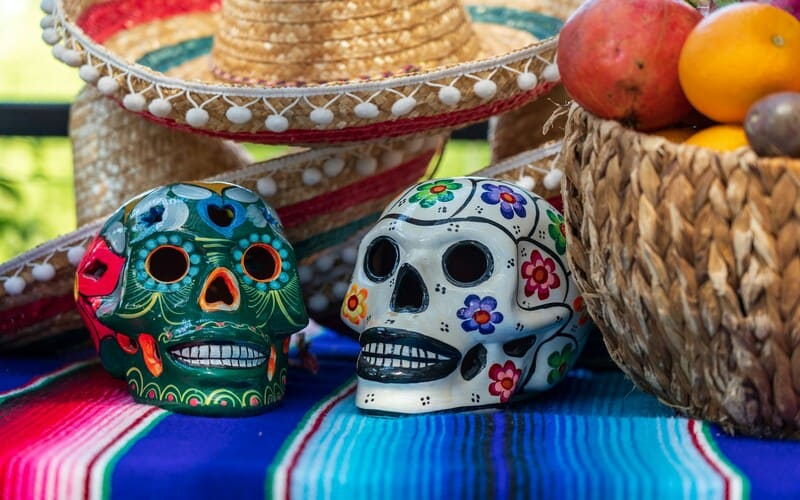
- Sugar Skulls (Calaveras de Azúcar): These skulls made of sugar and alfeñique paste are often brightly colored and personalized as a way of remembering the deceased.
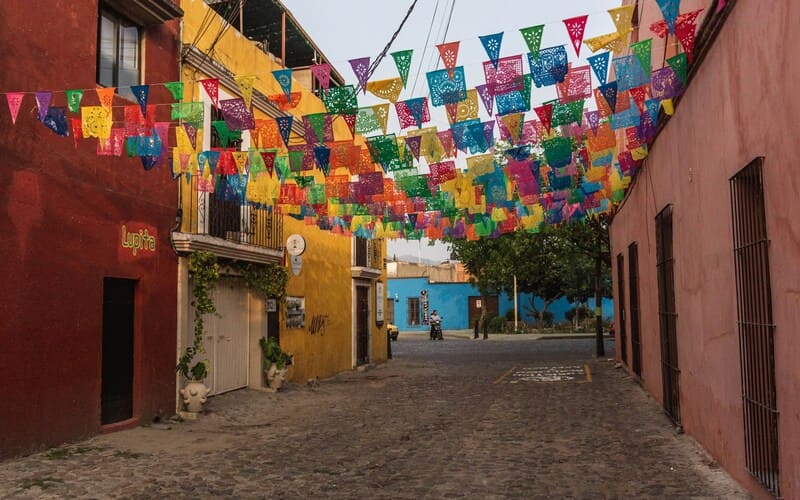
- Papel Picado: Delicate cut-out flags that represent the wind and symbolize the presence of the soul.
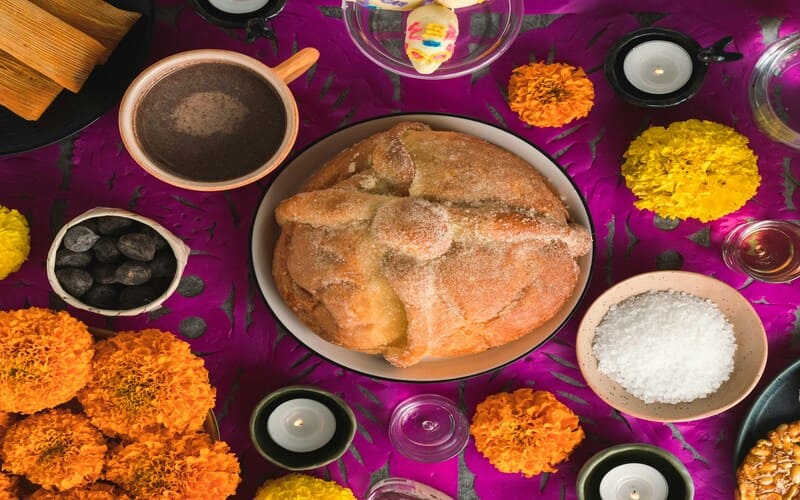
- Pan de Muerto: This is a sweet bread, similar to a crumpet, usually decorated with dough in the shape of a bone and covered with sugar.
Do
- Prepare gifts: Especially food, which is an important component of the Day of the Dead. You can bring Pan de Muerto, sugar skulls, and tortillas.
- Visit the cemetery: Many families spend the night at the cemetery, cleaning and decorating the graves. You can bring candles and flowers to the graves.
- Wear decent clothing and makeup: If you want to dress up, you can choose the elegant Catrina or Catrín look. This requires artistic paint on the face that resembles a sugar skull and Day of the Dead flowers in the hair or on the clothes.
- Always ask permission before taking a photo: Particularly at cemeteries or people’s homes, where the hearse is very private.
- Participate in festivals: You can enjoy music and dancing at festivals, as well as visiting parades.
Don’t
- Not to be confused with Halloween: the Day of the Dead is not Halloween. It is not about being spooky, scary, or getting a treat. It is a deeply spiritual remembrance and celebration of a deceased loved one. Leave the scary masks and monster costumes at home.
- Be respectful of the holiday: Despite the festive atmosphere, Day of the Dead is a family-centered, spiritual holiday. Avoid excessive drinking or disrespectful behavior that may detract from the solemnity of the observance.
- Do not touch the Ofrendas without invitation: These Ofrendas are personal offerings. Do not touch the items unless you have been invited to do so by the family.
- Don’t expect a large procession everywhere: While Mexico City has a famous procession for the Day of the Dead, not every town or city will have a large public spectacle. Many celebrations are more intimate, taking place in homes or cemeteries.
- Be mindful of manners while at the cemetery: Cemeteries are places of remembrance and quiet reflection, so please be mindful of your noise level and movements. And don’t come to the cemetery in costumes and face paint either.
Day Of The Dead Food
Food is at the heart of Día de Muertos, and it’s all about bringing back the spirits. Here are some foods to try when visiting Mexico during Día de Muertos:
- Pan de Muerto: We mentioned it before, but we’ll say it again! This sweet bread, often flavored with anise and orange blossom, is a must-try. It’s easily recognizable by the crossbones on top.
- Calaveras de Azúcar: These edible skulls made of sugar or chocolate are more than just decorations; they’re often placed on offerings or given as gifts to loved ones.
- Mole: Mole is a rich, complex sauce that comes in dozens of different variations and is a staple in Mexican cuisine. It’s often made during Día de Muertos. You might come across mole poblano, mole negro, or mole verde.
- Tamales: These corn dough wraps are filled with a variety of meats, cheeses, or sweet fillings and are steamed in corn husks or banana leaves.
- Pozole: A hearty traditional soup made with hominy and meat, often topped with lettuce, radishes, onions, limes, and chilies. Perfect for the cold weather of the Day of the Dead.
Day Of The Dead Costume Ideas
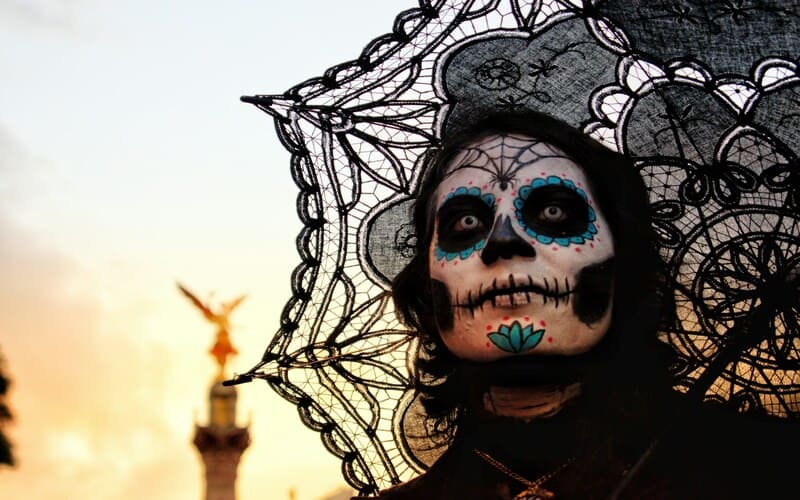
Attending the Day of the Dead usually involves dressing up, but the key is to understand its unique style. It’s not about blood or horror. It’s about elegance, artistry, and symbolic representation of death, as represented by the iconic La Catrina.
Created by artist José Guadalupe Posada and popularized by Diego Rivera, La Catrina is the image of an elegant skeleton wearing an ornate hat. When considering Day of the Dead costume ideas, consider these:
- Elegant Catrina: For women, this usually consists of a long, flowing dress, black, white, or brightly colored. A crown of flowers adorned with Day of the Dead flowers, also known as marigolds and intricate face paint that resembles a sugar skull. For men, a Charro suit with a wide-brimmed hat and similar skull face paint creates an elegant look.
- Sugar Skull Makeup: This is the key! Sugar skull face paint is not intimidating, but rather artistic and beautiful with delicate patterns around the eyes. You can find professional makeup artists at popular celebration locations and prices can range from $10-$20!
- Traditional Mexican Costumes: Embroidered tops, rebozos, and traditional charro clothing are great ways to get into Mexican culture.
- Calaveras: Along with the Catrina, you’ll see many people dressed as playful skeletons, often wearing colorful clothing and cheerful expressions.
Dressing up for the Day of the Dead can get you into the festive mood quickly and is one way to experience that unique culture of death. It’s an activity well worth trying if you’re traveling to Mexico during this time.
FAQ
Is Halloween And El Día De Los Muertos The Same Thing?
Not! Although both holidays occur during the same time of year and are both related to death. Their origins, purposes, and expressions are very different.
Halloween focuses more on ghosts, monsters, and macabre themes, often involving costumes, trick-or-treating, and horror elements. The core purpose of the Day of the Dead is to honor, remember, and welcome back the spirits of loved ones who have passed away. It celebrates life, family, and the ongoing connection between the living and the dead. The atmosphere of the holiday is joyful, reverent, and personal, rather than scary.
Is Day Of The Dead In Mexico City Safe?
Yes, it is generally safe. But you still need to be aware of your surroundings during large festivals where people gather. Keep your wallet and phone safe, and it is best to travel with friends. Finally, remember to respect local customs and culture.
Is Day Of The Dead a Good Time To Visit Mexico City?
The Dia de los Muertos is a great time to visit Mexico City as you’ll experience a unique culture of death. There are annual parades and festivals during this time. But be prepared for crowds and higher prices!





There are no comments.