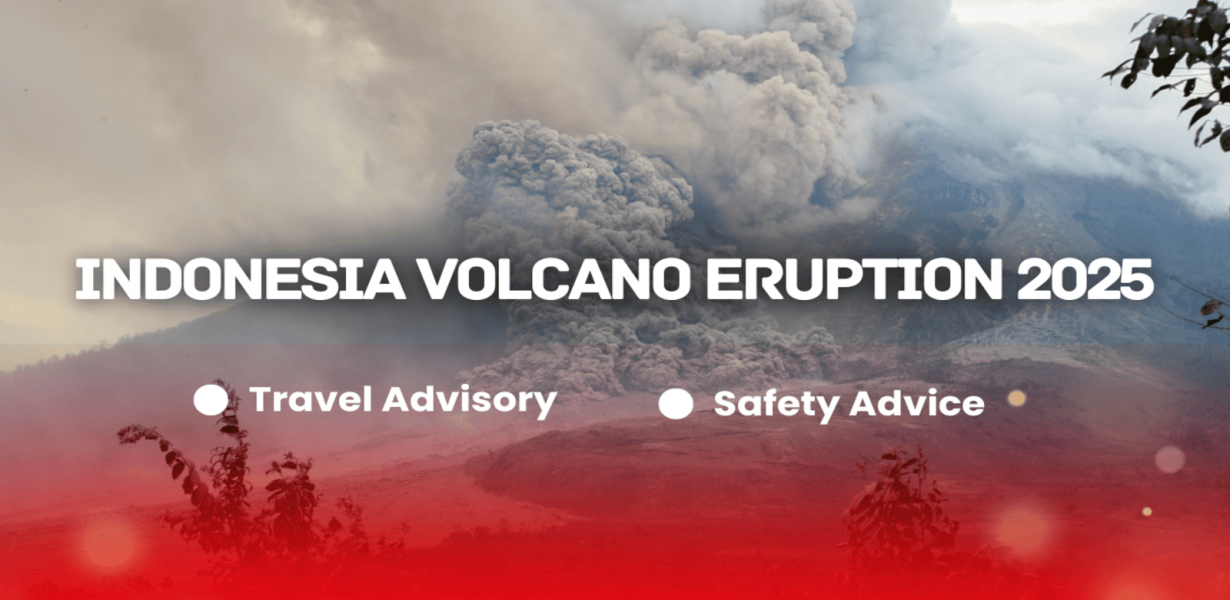

Indonesia has a wide variety of natural beauty, especially volcanic landscapes. It is one of the most volcanic countries in the world, with 400 volcanoes, of which about 129 are active. That means a lot of volcanic activity, and on July 7, 2025, the country once again experienced significant volcanic activity, especially the eruption of Lewotobi volcano in East Flores Regency. This event has certainly prompted many travelers to ask, “Is it still safe to travel to Indonesia?”
We understand this concern very well, which is why it’s important to stay up-to-date on the latest information. While the Indonesian volcano eruption 2025 can be destructive, it rarely affects the entire vast archipelago of Indonesia. You’ll find the latest news and safety tips on this Travel Advisory to ensure your trip is secure.
Table of content
Latest News On Indonesia Volcano Eruption
Impact on Tourism
Safety Tips for Travelers
Unaffected Destinations in Indonesia
Latest News On Indonesia Volcano Eruption
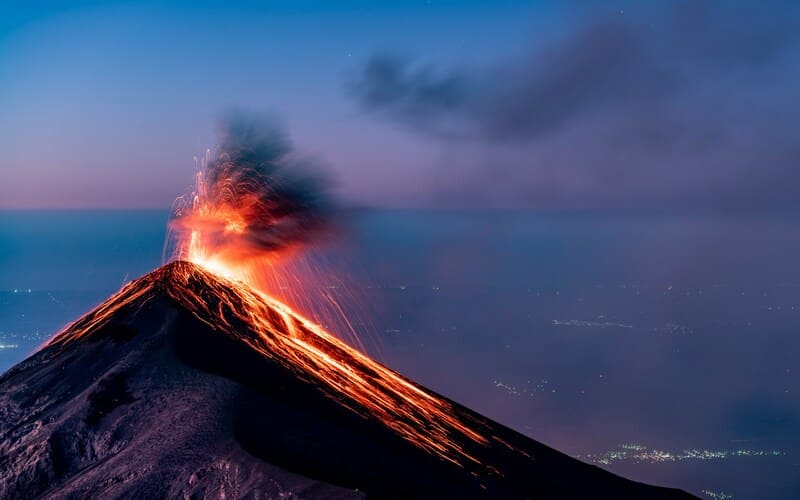
On July 7, 2025, Mount Lewotobi Laki-Laki, one of the twin stratovolcanoes on Flores Island in East Nusa Tenggara, erupted, sending a colossal ash plume an astonishing 18 kilometers (11 miles) into the sky. This eruption deposited ash in nearby villages and generated pyroclastic flows. These fast-moving streams of hot gases and volcanic debris traveled down the mountainside for several kilometers.
According to local authorities, the Lewotobi volcano eruption was not unexpected. The volcano’s alert status was already at its highest level a few weeks ago, indicating the possibility of an eruption, due to increased seismic activity and ground expansion.
This event was a continuation of the activity that began in late 2023, with a period of significant explosions in November 2024 regrettably resulting in deaths and forcing the evacuation of thousands of people. Local communities have been warned of the potential for volcanic mudslides – dangerous mudslides – if heavy rain combines with volcanic debris. But there’s no need to be overly alarmed; Indonesia has a strong volcano detection agency that can provide timely alerts.
Impact on Tourism
When an Indonesian volcano eruption, especially one as dramatic as Lewotobi volcano. Naturally, there are a number of impacts on travel, the first being flights. Volcanic ash can have a serious effect on airplane engines. As well as temporary evacuations and travel warnings in areas directly adjacent to the volcano.
Flight Disruptions
The volcano’s eruption in Indonesia did cause noticeable flight disruptions. Flights to and from Bali and Labuan Bajo on Flores Island were affected, either delayed or canceled. Jetstar, Qantas, Virgin Australia, and Indonesia AirAsia have all confirmed flight disruptions.
If you happen to need to commute from Bali during this period, you will need to monitor the status of your flights, find out the airline’s contact information, and consider purchasing travel insurance.
Affected Regions
The areas most directly affected by the Lewotobi volcano eruption are Flores Island and the surrounding places in the Lewotobi Laki-Laki Mountains. In particular, the villages of Boru, Hewa, Animal, and Watobuku, where volcanic ash has fallen. Local authorities have established exclusion zones, urging residents and travelers to keep a safe distance from the volcano’s crater.
Other impacts are mainly the spread of ash, which is determined by the direction of the winds. In the July 7 eruption, the ash plume drifted westward, affecting airspace including popular tourist destinations such as Bali.
Safety Tips for Travelers
If you’re planning a trip to Indonesia during this time, or are already vacationing there. These safety tips for a volcanic eruption are what you need to know:
- Keep informed and follow official advice: Always follow the advice of the local authorities, the Indonesian Meteorology, and the National Geology Agency during your travels. They have up-to-date information on alert levels, exclusion zones, and potential hazards. Of course, the official government travel advice for your country or region is also important information.
- Stay away from restricted areas: If the volcano becomes active, the area around the crater will be set up as a restricted area. Do not attempt to enter these areas, even if they look calm from a distance. Volcanic activity can quickly escalate without much warning.
- Prepare for volcanic ash: If there is ashfall in your area, even if it is minor, you should take precautions. Wear a mask to avoid inhaling ash, and avoid rubbing your eyes. If there is too much ash, stay indoors if you can.
- Monitor flight status: Flights are the most likely area to be affected by a volcanic eruption. Contact your airline regularly for flight status updates. Be prepared for delays or cancellations.
- Choose the right travel insurance: Consider a travel insurance that specifically covers natural disasters and the disruptions they cause, such as accommodation costs due to flight cancellations and delays. Read the policy carefully.
- Pack the essentials: When traveling in more remote areas, pack the basics such as bottled water, snacks, and any necessary medications in case of unexpected delays or limited access to services.
- Learn about emergency plans: Ask your hotel or guesthouse about their emergency procedures in the event of a natural disaster.
Potential problems with traveling in Indonesia during periods of volcanic activity can be addressed with these safety tips.
Unaffected Destinations in Indonesia
Like we said before, Indonesia is vast, and many popular travel destinations were not affected by the Indonesian volcano eruption. Below are some of the major centers and islands that often remain viable options even during a volcanic event:
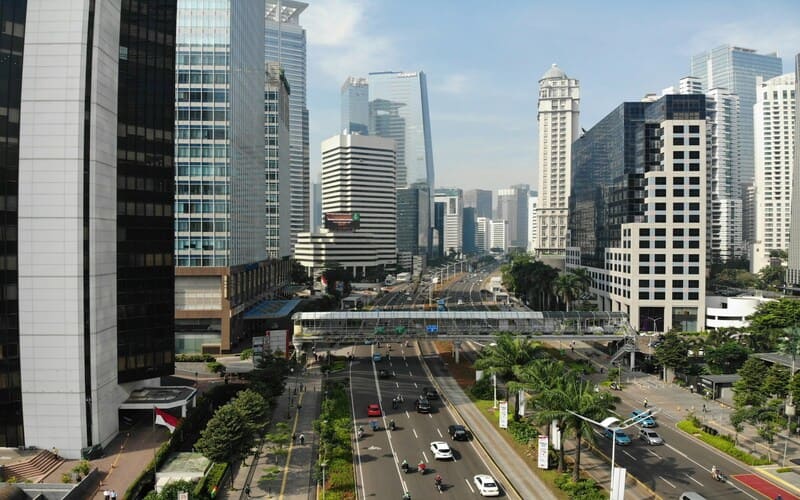
Jakarta
Jakarta is the capital of Indonesia and is located on the island of Java, far from the Lewotobi volcano. Its international airport, Soekarno-Hatta Airport (CGK), operates without interference from distant volcanic eruptions. If you are traveling to Indonesia for the first time, this would be an excellent starting point.
Best time to visit
June through September is the best time to visit during the dry season. During these months, you will experience clearer skies, lower humidity, and less chance of heavy rainfall, making it ideal for exploring the city’s many attractions.
Things to do
National Monument: This is Jakarta’s landmark, towering over the city center. The monument honors Indonesia’s independence and has an observation deck on the top floor that offers a panoramic view of downtown Jakarta.
Kota Tua: This is Jakarta’s old town with its colonial-era architecture of Fatahillah Square. Visit the Jakarta History Museum or rent a colorful vintage bicycle and ride around.
Taman Mini Indonesia Indah: This full-size replica of traditional houses, museums, and gardens showcases the diverse cultures and traditions of Indonesia’s many islands.
Istiqlal Mosque: This is the largest mosque in Southeast Asia and is well worth a visit. Opposite it is the Gothic church, Our Lady of the Assumption Cathedral, Jakarta. Witness the harmony of different religions.
Pasar Baru: This is the place to go for shopping and street food, and as Jakarta’s oldest market, it’s full of vendors.
Bandung
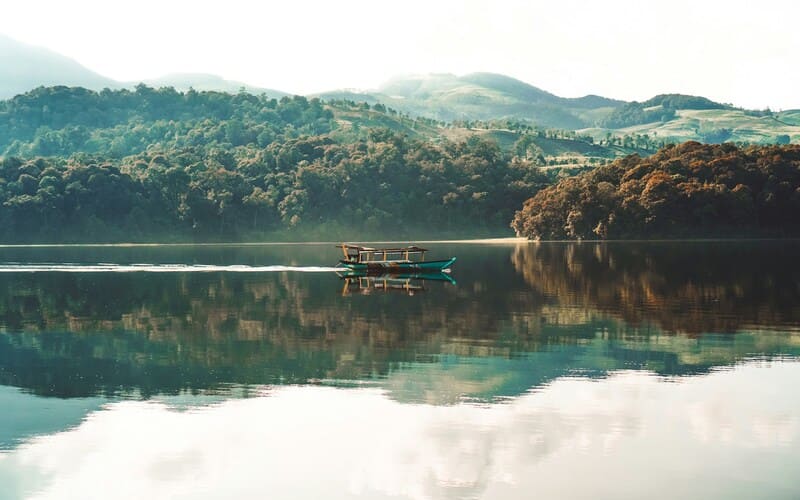
Bandung is not far from Jakarta, in West Java, which also has spectacular volcanic scenery and famous tea plantations. Like Jakarta, it is usually far enough away from most eruption sites to be unaffected by ash clouds or direct hazards.
Best time to visit
The dry season from June to September is also the best time to visit Bandung, with clear skies and pleasant weather for outdoor sightseeing.
Things to do
Tangkuban Perahu Volcano: This is a famous active volcano, and you can take a volcano day tour to see the steaming crater.
White Crater: This is a turquoise colored crater lake where you can see the mountains.
The Lodge Maribaya: An outdoor adventure park with unique photo ops such as a hot air balloon replica, zip line bikes, and giant swings, all with a beautiful forest backdrop.
Tea Plantations: The hills around Bandung are covered with lush green tea plantations. You can visit the Ciwidey Tea Plantation to enjoy the view and taste the fresh tea.
Gedung Sate: This was once a colonial building and is now a government house. You can take photos in the square in front of the building or enter to see the history of the building.
Yogyakarta
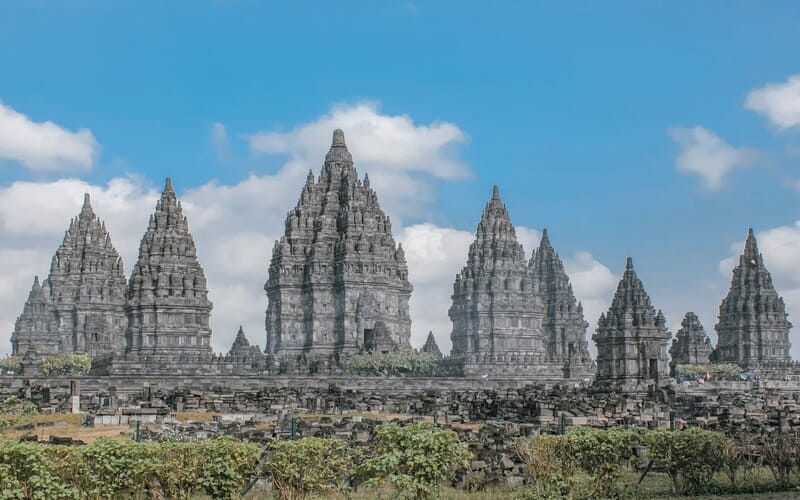
Yogyakarta has a traditional art and cultural heritage, especially the 18th-century royal complex here, which is visited by many tourists. It is also home to the majestic Borobudur and Prambanan temples, which are listed as UNESCO World Heritage Sites.
Best time to visit
April to October, the dry season, is often considered the best time to visit Yogyakarta. This time offers clear skies, comfortable temperatures, and minimal rainfall, making it perfect for exploring outdoor wonders such as ancient temples and for adventurous activities.
Things to do
Borobudur Temple: Dating back to the 9th century, this temple is the largest Buddhist temple in the world and a UNESCO World Heritage Site. You can see ancient architecture, intricate reliefs, and sculptures of Buddha.
Prambanan Temple: This is the largest Hindu temple complex in Indonesia, dedicated to Trimurti (Brahma, Vishnu, and Shiva).
Kraton Ngayogyakarta Hadiningrat: Once the royal residence of Indonesia, you can now see traditional performances and learn about the royal history.
Jl. Malioboro: This is a busy street in Yogyakarta, a good place to buy traditional batik clothes and try local snacks.
Jomblang Cave: This is a vertical sinkhole cave that you must use caving equipment to enter. Witness the dazzling light shining in afterward.
Lombok
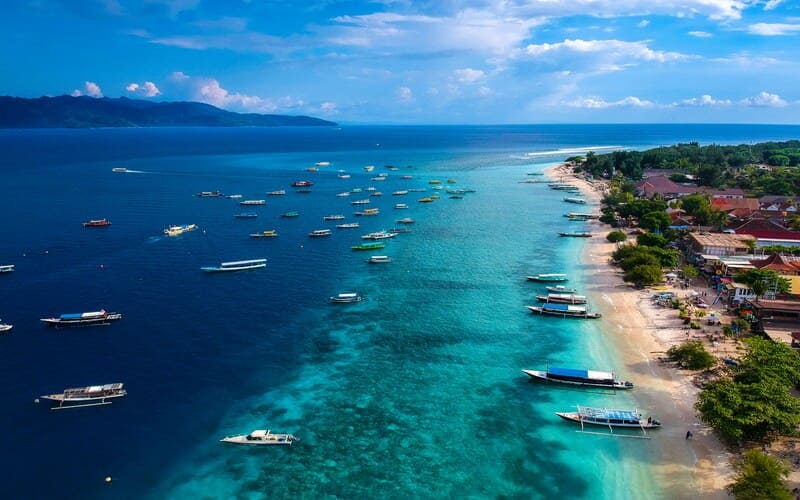
Lombok is known as a resort island close to Bali with a more laid-back atmosphere, stunning beaches, the majestic Mount Rinjani, and the unique Sasak culture. Here you can experience a variety of water activities such as diving, snorkeling, and surfing.
Best time to visit
May to September, the dry season, is the most popular time to visit. These months offer clear skies, calm waters, and ideal conditions for beach activities, snorkeling, scuba diving, and hiking Mount Rinjani.
Things to do
Mount Rinjani National Park: Mount Rinjani is the second-highest mountain in Indonesia, where trekking is the most popular outdoor activity. After climbing to the top of the mountain, you will be rewarded with incredible views of the crater lake.
Gili Islands: located northwest of Lombok, accessible by boat. These islands are perfect for snorkeling, diving with turtles, relaxing on white sandy beaches, and enjoying the vibrant nightlife.
Kuta: A destination for surfers, the town has many beautiful and clean beaches. Facilities are well developed, and there are many cafes and restaurants.
Tiu Kelep Waterfall and Sendang Gile Waterfall: These magnificent waterfalls are located in the north, close to Mount Rinjani. Enjoy the sound of water flowing from the falls in nature. You also have a chance to see wild monkeys here.
Sasak Traditional Villages: such as Sade Village and Sembalun Village, where you can see towering woven huts and learn about the indigenous Sasak culture and traditions.
The key to this Indonesian volcano eruption is to stay abreast of specific travel advisories for the area you plan to visit, and consider the geographic proximity to any active eruptions. Adjust your travel plans accordingly to ensure safety.
FAQ
Is it safe to visit Bali after a volcanic eruption?
It’s safe; the main impact of the Lewotobi volcano eruption on Bali is the disruption of flights due to ash clouds in the atmosphere. But Bali itself is safe to visit.
How often do volcanoes erupt in Indonesia?
Indonesia is one of the most volcanically active countries in the world and is located on the “Ring of Fire”. On average, Indonesia experiences at least one major volcanic eruption per year. There are 129 active volcanoes in the country, and while large-scale eruptions such as the 2010 eruption of Mount Merapi are less frequent, small but frequent eruptions are common.
How long does the ash cloud take to clear?
Ash tends to dissipate more quickly if it is from a lower altitude or smaller eruption, usually within a day or two. Larger, more explosive eruptions, on the other hand, send ash into the stratosphere and can result in ash clouds that last for days or even weeks. The time of dissipation will depend on factors such as the size and intensity of the eruption, the altitude at which the ash reaches, and the direction of the winds.





There are no comments.