

Chasing the aurora borealis is a life-changing experience. You might ask: Can Canada really see the northern lights? Yes – and in large parts of northern Canada, especially across the Yukon, Northwest Territories, and northern British Columbia, you’re inside the auroral oval where conditions often deliver spectacular displays.
TOP PICKS: 3-Day Northern Lights Tour from Yellowknife | 4-Day Northern Lights Tour from Yellowknife
Best Time to See the Northern Lights in Canada
Generally, the prime viewing window is from mid-November to early April, when nights are longest, and skies are clearest. A secondary season runs from late August to October, offering a milder fall experience with good aurora chances and colorful landscapes.
Nighttime viewing is best between 10 PM and 2 AM, peaking around midnight local time. Avoid nights near a full moon, and aim for new-moon phases for the darkest sky.
In 2026, solar activity continues to stay at its Solar Maximum, the peak of Solar Cycle 25. Scientists predict that 2026 will be one of the final years to witness this level of intensity before activity begins its gradual 11-year decline. March remains a standout month; the “equinox effect” typically causes more geomagnetic activity, significantly boosting your odds of seeing vibrant curtains of purple and red.
Fall vs. Winter Aurora Trips
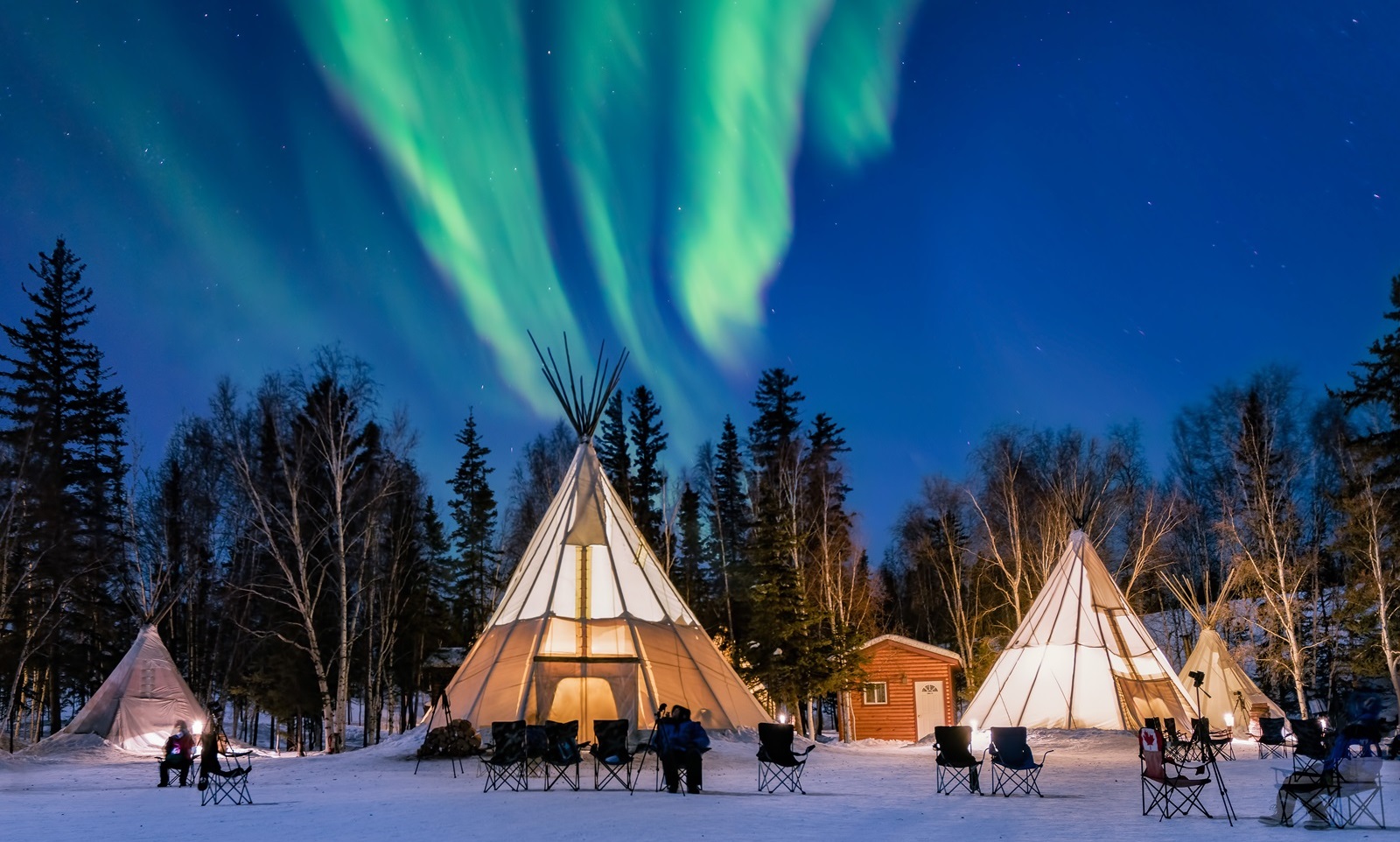
Fall (September to early November): Offers milder temperatures, thinner crowds, and scenic views with autumn colors. Lakes may still be unfrozen, allowing for beautiful aurora reflections on the water.
Winter (late November to March): Longer nights and crisp, dry air make winter ideal for consistent aurora sightings. While temperatures drop well below freezing, this is peak aurora season in the north.
Where to See Northern Lights in Canada
Wondering where the best place to see the northern lights in Canada is? While many northern locations offer solid chances, top recommendations are Yellowknife (NWT), Whitehorse (Yukon), and even parts of the Banff area during high geomagnetic events. Each destination has its own appeal; let’s look closer.
Yellowknife, Northwest Territories
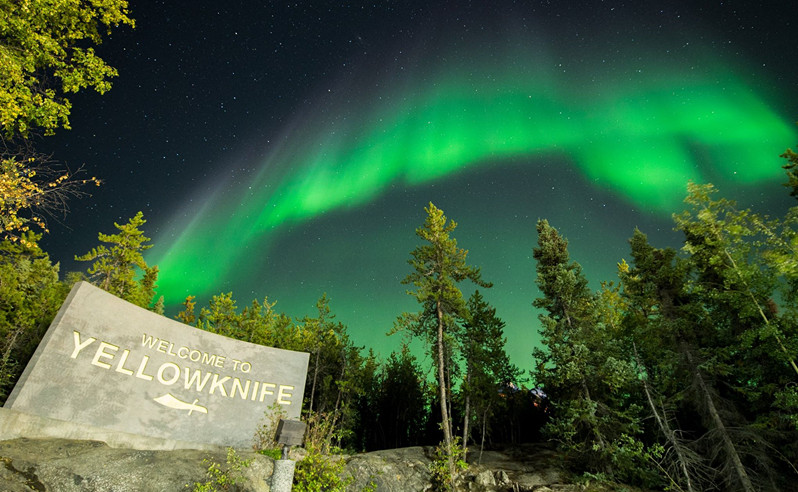
If there’s one place that has earned its reputation as the capital of Canada Northern Lights viewing, it’s Yellowknife. Sitting directly under the auroral oval, the city boasts an incredibly high probability of seeing the lights, offering up to 240 nights per year of aurora potential. Local operators claim you have a 90-95% chance of a sighting on a three-night trip. The landscape here is a huge advantage; it’s predominantly flat with countless lakes, offering vast, unobstructed views of the sky.
The experience in Yellowknife is geared towards aurora tourism. You can drive a short distance out of the small city to escape its lights, or join a tour to a dedicated viewing site. The most famous of these is the Aurora Village, a collection of traditional teepees where you can warm up with hot chocolate by a wood stove between sky-gazing sessions. It’s a comfortable and iconic way to await the show.
- Best month: Late August to early October for water reflections; late November to early April for a winter wonderland experience
- Temperature range:In fall (Sept-Oct), expect from +10°C down to -5°C (50°F to 23°F). In winter (Dec-Mar), be prepared for averages between -20°C and -35°C (-4°F to -31°F).
- How to get there: Fly into Yellowknife via Edmonton or Calgary, then short drive to local lodges or AuroraMax viewing centre
- The AuroraMax Project, hosted by the Canadian Space Agency & Astronomy North, offers live forecasts and an educational centre right in town
Whitehorse, Yukon (including Yukon Canada northern lights experiences)
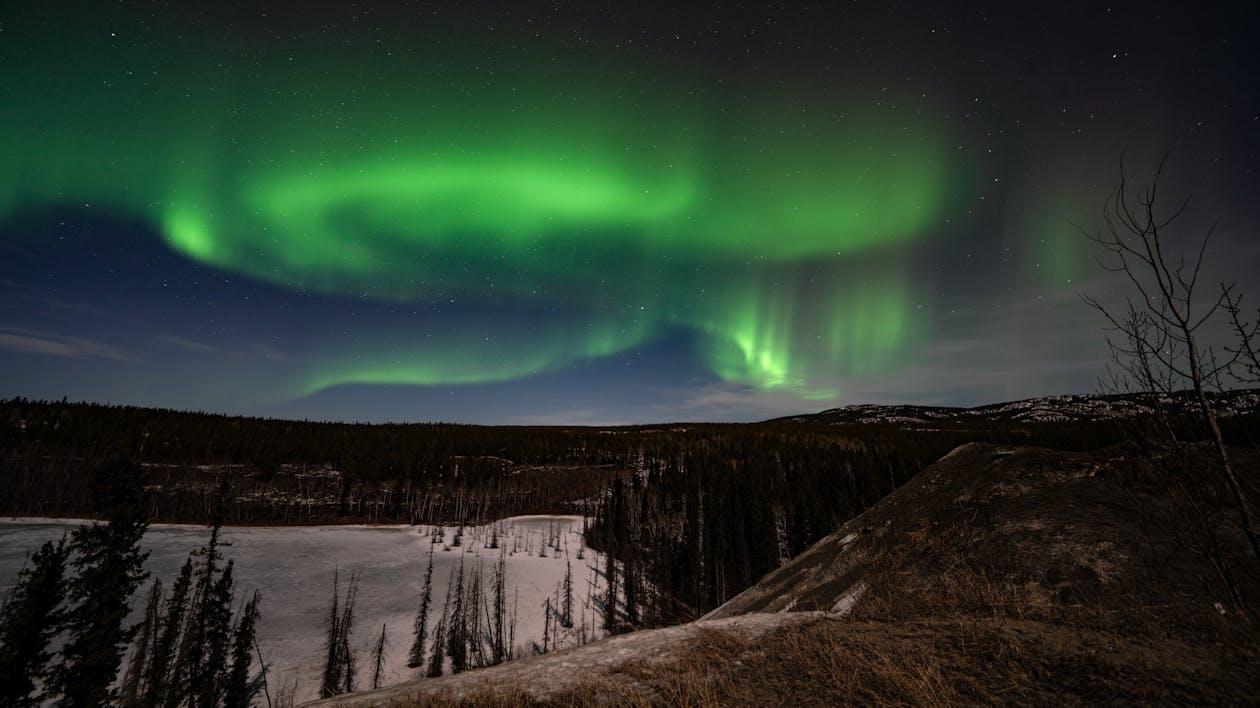
The Yukon is a land of legends, from the Klondike Gold Rush to its vast, untamed wilderness. It’s this raw, rugged beauty that makes a Yukon Northern Lights trip so special. Whitehorse, the territory’s capital, serves as the perfect basecamp for your adventure. While the city itself has some light pollution, you only need to drive 20-30 minutes out of town to find pristine darkness.
What sets the Yukon apart is the sense of adventure. Viewing here feels less like a packaged tour and more like an authentic expedition. You can sit in a rustic cabin, a prospector-style tent, or even a steaming outdoor hot pool while the lights swirl above.
A particularly magical experience is viewing from the Takhini Hot Springs, where you can stay warm in the mineral-rich water while the frigid air frosts your hair and the aurora dances over the surrounding boreal forest. The mountainous terrain also provides a dramatic backdrop for photos. For those wondering, is Whitehorse or Yellowknife better for the Northern Lights? Yellowknife offers a higher statistical probability due to its flatter terrain and clearer skies, but Whitehorse provides a more rugged, wilderness-centric adventure.
- Best month:Late August to September for fall colours and milder temperatures; January to early April for deep winter adventures
- Temperature range:Fall is pleasant, ranging from +12°C to 0°C (54°F to 32°F). Winter is very cold, with typical temperatures from -15°C to -30°C (5°F to -22°F).
- How to get there:Fly into Whitehorse from Vancouver; local tours run into the wilderness or lodges like the Northern Lights Resort & Spa near Tagish Lake
- Allows pairing aurora watching with activitieslike dog-sled trips, hot tub views, and Indigenous cultural programs
Churchill, Manitoba
Churchill is world-famous for one thing: polar bears. But what many don’t realize is that its prime polar bear season overlaps with the start of the aurora season. This offers one of the planet’s most unique travel combos: searching for the world’s largest land carnivore by day and gazing at the Aurora Borealis by night. Located on the western shore of Hudson Bay, Churchill sits directly under the auroral oval, providing brilliant and frequent shows.
The experience here is unlike anywhere else. You might be staying in a remote lodge specifically designed for wildlife viewing, or riding in a custom-built Tundra Vehicle. Imagine finishing a day of watching polar bears spar and then stepping outside your lodge to see the sky painted in ethereal green.
Because of its unique offerings, Churchill is a bucket-list destination that requires booking far in advance. The winter months (January to March) are also fantastic for dedicated aurora tours, without the polar bear crowds but with equally spectacular lights.
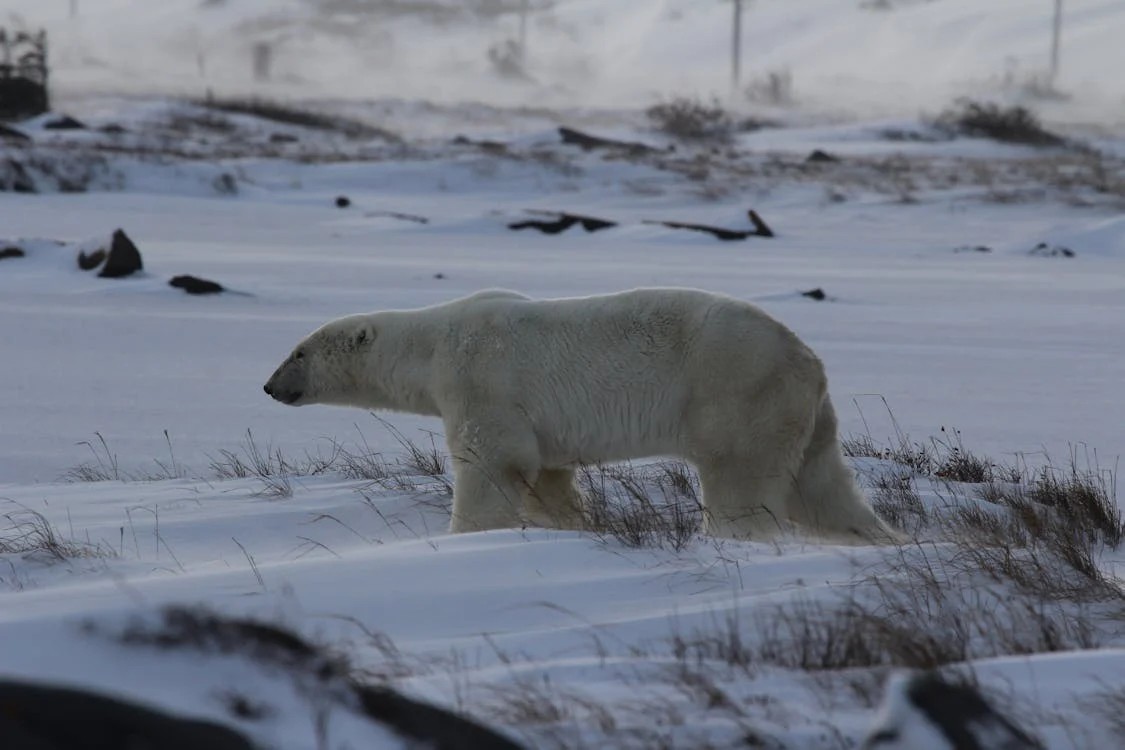
- Best month:October and November to combine aurora with polar bear season. January to March for dedicated, intense aurora viewing
- Temperature range:The fall polar bear season (Oct-Nov) is already cold, from -5°C to -20°C (23°F to -4°F). The dedicated winter aurora season (Jan-Mar) is intensely cold, averaging -25°C to -35°C (-13°F to -31°F)
- How to get there: There are no roads to Churchill. You must either fly from Winnipeg (YWG) or take the two-day train journey, also from Winnipeg
Can you see the northern lights in Banff?
Banff lies south of the auroral oval, so aurora sightings are rare and usually only during strong events (like in high solar years). It’s possible to glimpse faint northern lights on strong nights, especially when Kp index is high, but don’t expect regular shows.
Unique Ways to Experience the Aurora in Canada
Beyond simply standing and watching, Canada offers some truly inventive and comfortable ways to enjoy the show.
Aurora pods and glass chalets
Several modern resorts, particularly in the Yukon and Northwest Territories, offer heated viewing pods, domes, or chalets with floor-to-ceiling or sky-facing windows. You can stay cozy and watch the entire sky in comfort.
From a hot tub
As mentioned, the Takhini Hot Springs in the Yukon provides perhaps the most relaxing way to watch the lights.
Dog sledding or snowmobiling
Join a nighttime tour where you travel across the frozen landscape via traditional dog sled or modern snowmobile, stopping in a remote, dark location to watch the skies. The journey becomes part of the adventure.
Photography workshops
Join a multi-day tour led by a professional photographer who will not only take you to the best locations but also teach you how to perfectly capture the aurora on your camera.
Aboard a train
The train journey to Churchill, Manitoba, crosses the vast, dark expanse of the northern prairies. On a clear night, it’s possible to see the aurora directly from the train’s viewing cars, a truly romantic and old-world experience.
How to Plan a Trip to See the Northern Lights
A successful aurora trip requires planning. Here’s how to maximize your chances and ensure a great experience.
Predicting the aurora
First, you need to know how to predict the lights. The aurora is caused by charged particles from the sun (solar wind) interacting with the Earth’s magnetic field. Stronger solar winds mean more intense auroras.
Scientists measure this activity using the Kp-index, a scale from 0 to 9. A Kp-index of 1-3 is common, while a Kp of 4 or higher often means a visible and active display, especially in prime locations like Yellowknife.
Download a reliable aurora forecast app like My Aurora Forecast or check websites like the NOAA Space Weather Prediction Center a few days before and during your trip.
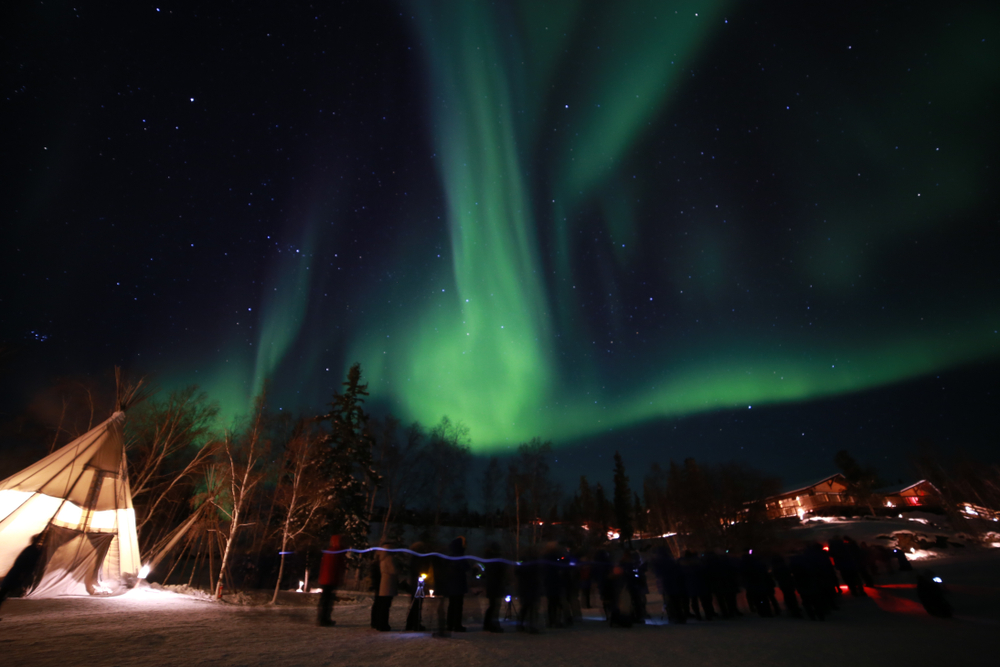
Trip preparation checklist
- Book travel for mid-Nov to early Apr, ideally around March or during a new-moon phase.
- Dress in warm layers, use hand and foot warmers; many tours provide parkas and boots. Avoid full‐moon nights.
- Stay at least 3 nights.This increases your chances of seeing the lights during clear weather.
- Choose remote accommodations or book viewing tours that minimize light pollution.
- Pack a camera with manual exposure control: use wide‑angle lens, low f‑stop, high ISO, and long shutter speeds. Tripods are essential.
- Include daytime adventures like dog-sledding, snowshoeing, or Indigenous cultural experiences to enrich the trip.
Frequently Asked Questions
What part of Canada can you see the northern lights?
Prime regions include Yellowknife (NWT), Whitehorse & Dawson City (Yukon) and Churchill (Manitoba). Occasional glimpses may extend to Alberta, Saskatchewan, or even southern British Columbia during strong solar events.
What time are the northern lights visible in Canada?
Generally between 10 PM and 2 AM local time, often peaking around midnight. Viewing windows span roughly 9 PM to 3 AM depending on activity level and cloud cover.
What month is the best time to see the northern lights in Canada?
For 2025, the standout months are December through February, with March delivering high geomagnetic activity and late August through October as a shoulder season with appealing visuals and milder weather.
Where is the best place to see the northern lights in Canada?
Yellowknife rates highest for consistent visibility, followed by Whitehorse, Dawson City, and Churchill. All offer infrastructure, forecasts, and high success rates.
Can you see the northern lights in Banff?
Only during rare, strong solar storms. Regular winter nights in Banff generally don’t offer enough geomagnetic activity for visible aurora. Best to plan aurora trips further north.
How cold does it get during aurora season?
Temperatures can drop to -30°C (-22°F) in winter, especially in Yellowknife and Churchill. Dress accordingly.
Conclusion
To stand beneath a sky alive with light is to feel a profound connection to the cosmos. It’s a humbling, magical, and deeply personal experience. Seeing the Northern Lights in Canada is an encounter with one of nature’s most magnificent performances. And the good news is, it’s more accessible than you might think. With the current solar cycle ramping up to a spectacular peak, there has never been a better time to stop dreaming and start planning. The northern sky is waiting.





There are no comments.