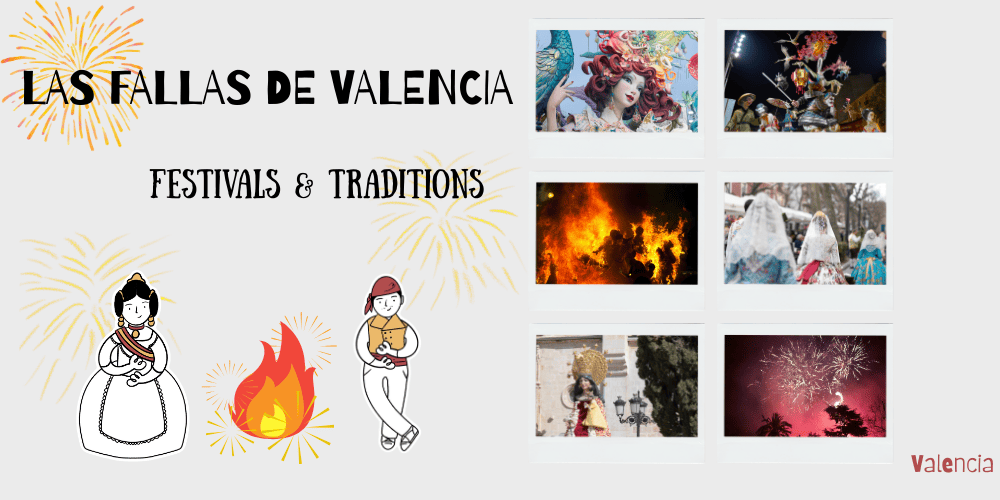

When you think you know Spanish street parties inside out, just wait until you see Las Fallas de Valencia. During the festival, the entire city transforms into an open-air art gallery, with towering sculptures rising above apartment buildings. The air is perpetually filled with the scent of gunpowder and fried dough, while nights are illuminated by spectacular fireworks displays.
Las Fallas sweeps through Valencia, Spain every March. Whether you’re an art enthusiast, a lover of loud noises, or simply want to witness history’s most spectacular bonfires firsthand, what exactly is this spectacle, and how do you navigate the chaos? Let’s dive into everything you need to know about Las Fallas de Valencia 2026.
Table of Contents
When Is Las Fallas 2026
What Happens During Las Fallas
How to Celebrate Las Fallas as a Tourist
Las Fallas Traditional Food
Tips for Attending Las Fallas
What Is Las Fallas
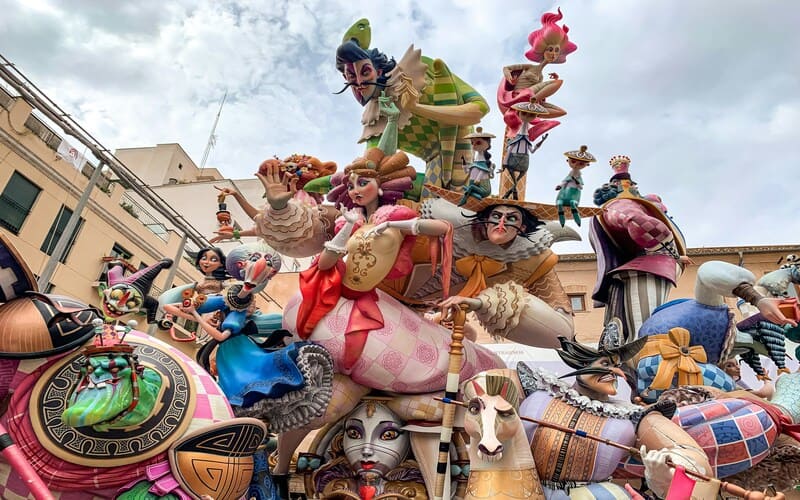
The tradition started centuries ago. Back then, carpenters would clear out their workshops for spring, burning the wooden scraps and “parots”. And nowadays the festival revolves around the creation and eventual destruction of “fallas.” These are massive monuments made of wood, papier-mâché, and wax. Some are so tall they require cranes to assemble, and they often depict satirical scenes. Think of it as a giant, 3D political cartoon. No one is safe from the satire; politicians, celebrities, and even local figures are caricatured in these intricate displays.
The individual figures that make up a falla are called ninots. Every year, hundreds of these monuments are built across the city, ranging from small “infantile” fallas for children to the “Special Section” giants that cost hundreds of thousands of Euros.
Where Is Las Fallas Celebrated
The celebrations take place in Valencia, Spain, but extend to many surrounding towns in the Valencian Community, where smaller versions of the festival are held.
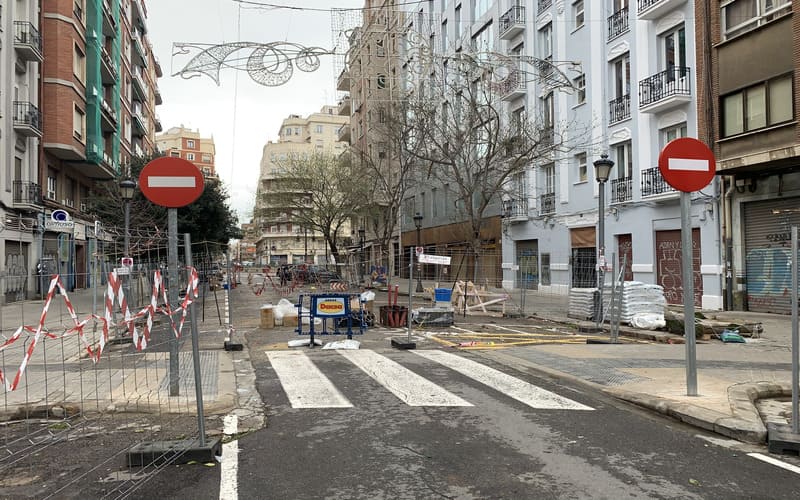
Within Valencia itself, the festival is everywhere. Every neighborhood has its own Fallas committee. They spend the entire year raising money, planning their monument, and organizing events. This means that if you walk through the city during the festival, you’ll run into a monument at almost every major intersection.
The epicenter of the action is usually the Plaza del Ayuntamiento, where the daily firecracker shows and the final burning of the main municipal falla take place. Other popular spots include the Ruzafa neighborhood, known for its incredible street light displays, and the El Carmen district, where narrow streets provide a cozy backdrop for smaller, more artistic monuments.
When Is Las Fallas 2026
Understanding when is Las Fallas celebrated is crucial for tourists. Although the main festivities last only five days in total, the festive atmosphere begins building up from the start of the month.
- March 1 to March 19: The daily Mascletà (firecracker show) begins at 2:00 PM every single day in the Town Hall Square.
- March 15: This is the Plantà. In the early morning hours, the falleros work through the night to finish setting up all the monuments. By dawn, the city is a museum.
- March 16 to 18: These are the peak days for parades, flower offerings, and late-night fireworks.
- March 19: The grand finale, known as La Cremà. This is when every single monument in the city, except for one lucky “pardoned” ninot, is set on fire.
If you plan to visit Valencia during this period, it’s best to arrive before March 15th so you have the opportunity to watch the fireworks and see the monuments illuminated.
What Happens During Las Fallas
Las Fallas de Valencia is like a grand festival, with the entire city buzzing with excitement during this period. Understanding the events and festive traditions will help you immerse yourself more fully in the experience.
The Mascletà: A Symphony of Sound
During the festival, every day at 2:00 PM, thousands of people gather in the Plaza del Ayuntamiento. At the signal of the Fallera Mayor (the festival queen), the pyrotechnicians ignite a string of firecrackers that lasts for several minutes. It isn’t a firework show with colors; it’s an auditory experience. The ground literally shakes, and the rhythm of the explosions feels like a heartbeat.
La Ofrenda: The Flower Offering
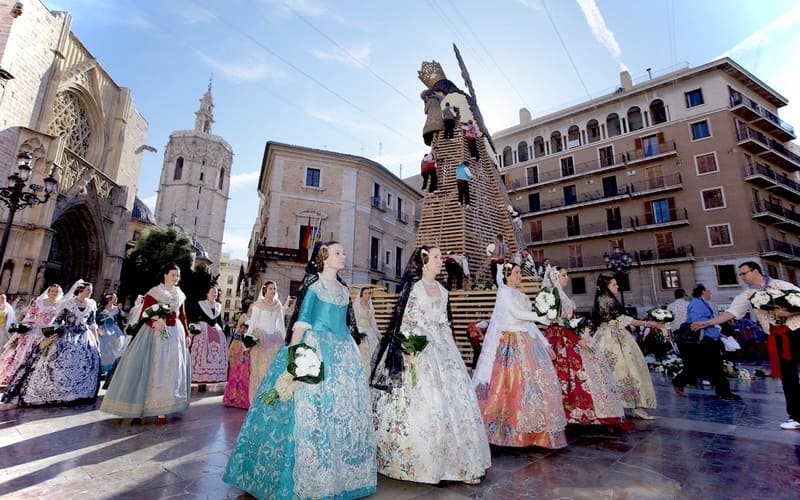
This is the most emotional part of the festival for locals. On March 17 and 18, thousands of falleros and falleras in traditional 18th-century costumes parade through the streets carrying bunches of carnations. They bring these flowers to the Plaza de la Virgen, where a giant wooden statue of the Virgin Mary stands. Volunteers take the flowers and weave them into the Virgin’s cape, creating a stunning tapestry of red, white, and pink flowers.
La Nit del Foc: The Night of Fire
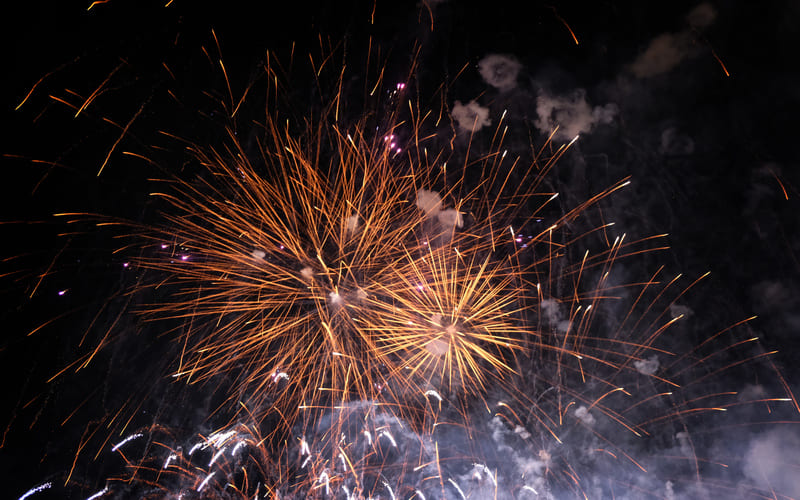
On the night of March 18, the city hosts its biggest firework display, known as La Nit del Foc. It’s one of the most spectacular pyrotechnic shows in the world, often lasting over 20 minutes and lighting up the entire Turia Riverbed park.
La Cremà: The Final Burn
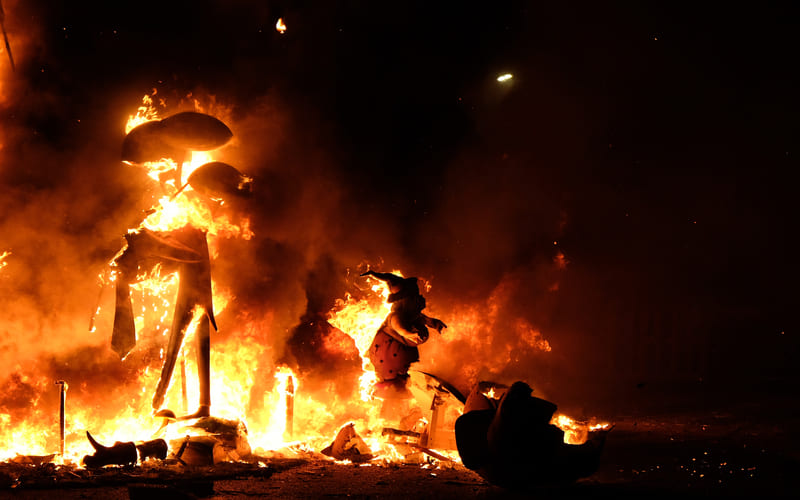
On the night of March 19th, the festival drew to a close. Starting with the children’s fallas at 10:00 PM and moving to the main monuments at midnight, the fire festival in Valencia reaches its climax. The sculptures are stuffed with fireworks and lit up. As the flames roar, the falleros often cry, marking the end of a year’s hard work. But as soon as the ashes cool, they start planning for the next year!
How to Celebrate Las Fallas as a Tourist
For first-time visitors to Las Fallas, we recommend starting your experience early in the morning. By 8:00 AM, the Despertà begins, with brass bands and firecrackers echoing through the streets. Grab a map from a tourist office to locate the “Special Section” fallas. These are the giants, and seeing them up close is a must. At the same time, you can avoid the crowds to capture the best travel photos.
For the 2:00 PM Mascletà, aim to arrive at the Plaza del Ayuntamiento at least an hour early. It gets packed, but the energy of the crowd is half the fun. At night, the party moves to the streets with verbenas and mobile discos that go until dawn.
Other Things to Do in Valencia
Although Las Fallas de Valencia will take up most of your time, there are still many places in Valencia worth setting aside time to explore.
- City of Arts and Sciences: This futuristic complex is a stark contrast to the traditional fallas. Visit the Oceanogràfic or just walk around the stunning white architecture designed by Santiago Calatrava.
- The Turia Gardens: This long park, situated along the diverted riverbed, serves as the city’s recreational hub, offering an ideal spot for cycling or quiet picnics away from the crowded squares.
- The Beach: Hop on the tram to the Malvarrosa or Las Arenas beach. Even in March, the Mediterranean sun is usually warm enough for a stroll along the promenade.
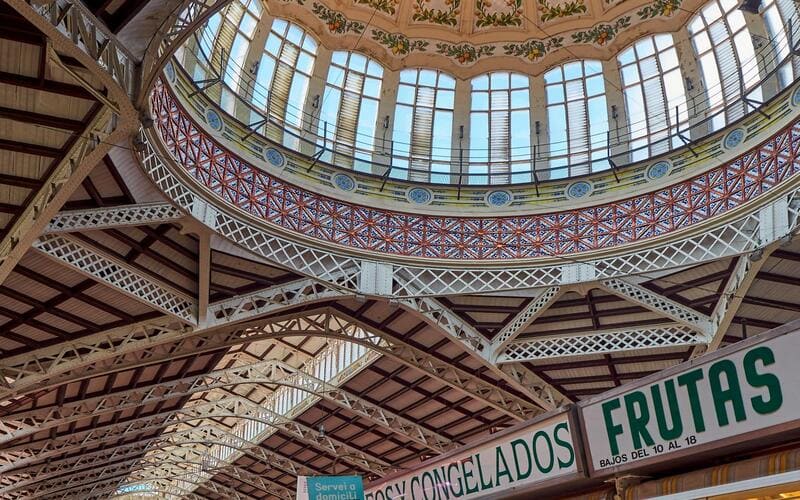
- Mercado Central: The colorful glass dome here is absolutely breathtaking. Try the local ham, olives, and fresh juices.
- Valencia Cathedral: Houses what is believed to be the Holy Grail used in The Last Supper.
Where to Stay
For those visiting Valencia primarily to experience Las Fallas, staying in Ciutat Vella is the best choice. This historic district offers easy walking access to the Mascletà fireworks and the main parades. However, be aware that it can be extremely noisy and crowded.
Ruzafa is also an ideal choice, brimming with Fallas celebrations and the best bars around. If you want to stay in the heart of the party all day long, this is the perfect spot.
Of course, if you prefer a quieter setting, Extramurs is located outside the old town, about a 10-15 minute walk from the event venue.
Tours4Fun Recommended Products
Las Fallas Traditional Food
During this grand festival, Valencia offers unparalleled festive cuisine, so save room to savor these traditional delicacies.
Bunyols: You’ll find a street stall selling bunyols de carabassa (pumpkin fritters). These are deep-fried rings of dough made with pumpkin purée. The classic way to eat them is by dipping them into a cup of thick, hot chocolate.
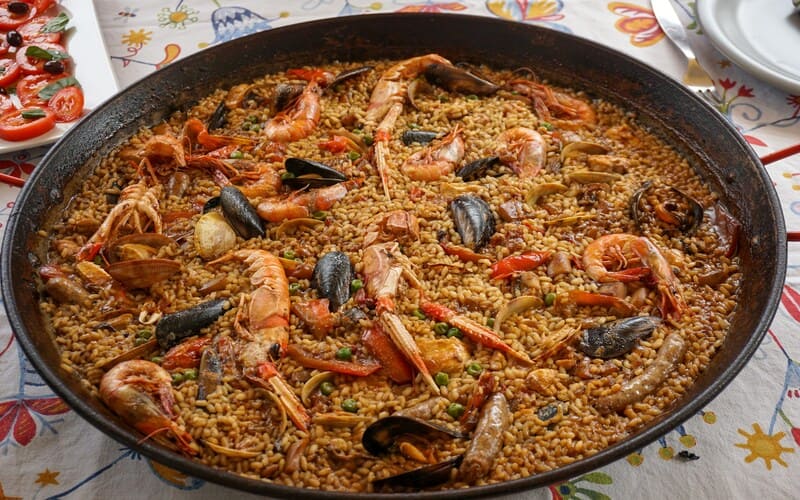
Paella Valenciana: Valencia is the birthplace of paella, and during the festival, you’ll see massive pans of it being cooked over open wood fires right in the middle of the street. Forget what you think you know about paella; the authentic version uses chicken, rabbit, green beans, and lima beans. No seafood or chorizo allowed!
Horchata and Fartons: Grab a glass of ice-cold horchata. This is a creamy, milk-like drink made from tiger nuts. It’s naturally sweet and refreshing. Pair it with a farton, a long, sugar-glazed pastry designed specifically for dipping into the drink.
Tips for Attending Las Fallas
- Wear Comfortable Shoes: You will walk miles. The city center is closed to cars, and the best way to see the monuments is on foot.
- Buy a Scarf: The traditional Fallas scarf is blue and white checkered. It helps keep the gunpowder smoke out of your lungs.
- Be Prepared for Noise: If you’re sensitive to loud bangs, bring earplugs.
- Plan Your Route: Use a map to find the “Special Section” fallas. These are the biggest and most impressive ones.
- Respect local traditions: Avoid loud noises and blocking pathways while taking photos during flower parades.
- Watch Your Belongings: Keep a close eye on your phone and wallet, as crowds are large during the festival.
FAQ
What does “las Fallas de Valencia” mean in English?
In the local Valencian language, Falles literally means “torches.” Historically, it referred to the torches used to light the festivities, but today it refers to both the festival itself and the giant monuments that are burned.
Why does Valencia celebrate Las Fallas?
The festival is officially held in honor of Saint Joseph, the patron saint of carpenters. It also serves as a pagan-rooted celebration of the arrival of spring, symbolizing the “burning away” of the old to make room for the new.
What is the best day to go to the Fallas?
If you can only stay for one day, make it March 19th. You’ll get to see the final Mascletà in the afternoon and the spectacular Cremà at night. However, March 17th and 18th are better for seeing the flower offering and the biggest fireworks.







There are no comments.