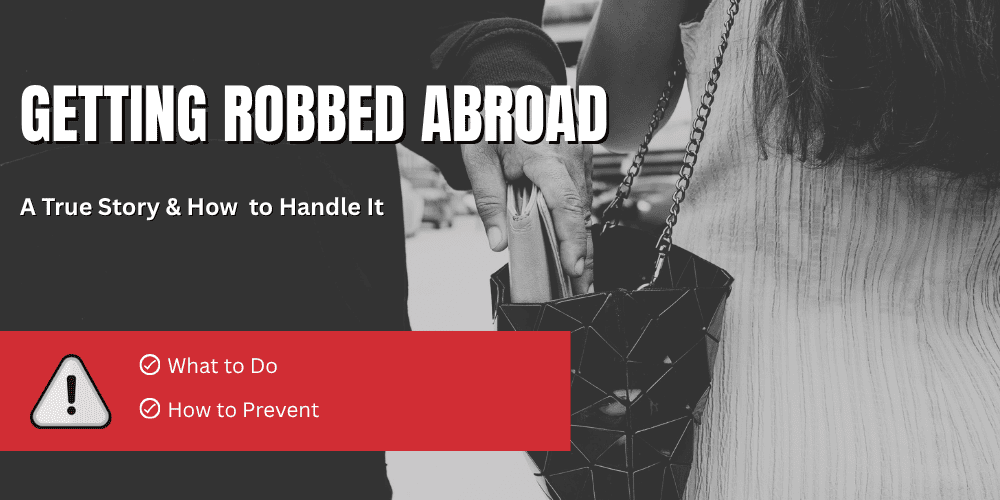

What’s your worst nightmare when traveling abroad? For many, it’s undoubtedly finding out they’ve been robbed or pickpocketed, especially when their passport, phone, and money are all gone. When you are thousands of miles from home, separated from your primary support network and familiar resources, a simple theft quickly spirals into a massive logistical and emotional crisis.
However, emergencies happen. The way you handle them, and the people you have in your corner, can make the difference between a minor setback and a total catastrophe. Today, I want to share a real-life situation that perfectly illustrates what happens when things go wrong on the road. We will look at how a dedicated travel agency team turned a daylight robbery into a story of resilience. After that, we will dive deep into exactly what to do if you get robbed abroad and how to stop it from happening in the first place.
True Stories About Being Robbed Abroad
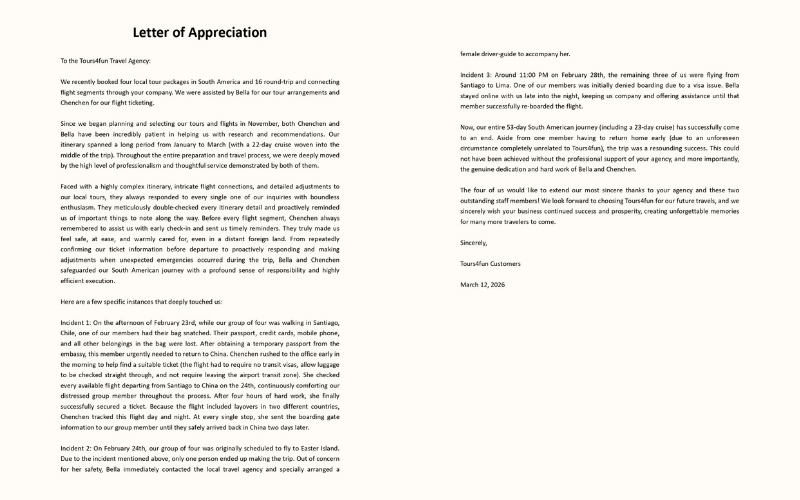
Recently, our team received a thank-you letter from a Tours4fun customer. The letter described an emergency they encountered and highlighted the immense value of having a professional team to rely on.

A group of four friends planned an ambitious, complex 53-day journey across South America. This massive trip ran from January to March and wove together multiple local tour packages and 16 different round-trip and connecting flight segments. Because the itinerary was so complicated, Bella and Chenchen, two travel experts from Tours4fun, carefully planned the trip. But even that couldn’t prevent a random street crime from occurring.
On the afternoon of February 23rd, the group of four was enjoying a walk through the streets of Santiago, Chile. Suddenly, someone snatched a bag from a group member. It happened in a flash. In an instant, the traveler lost everything in the bag: their passport, credit cards, mobile phone, and all their other daily belongings. After the initial panic and shock, the traveler obtained an emergency temporary passport from the local embassy, but having lost their primary identification documents and funds, they had to return to China immediately. That’s when the logistical nightmare of this emergency trip truly began.
Without a standard passport, returning home this time proved exceptionally difficult, as the flight required a transit visa and the luggage had to be checked through to the final destination. Fortunately, thanks to Chenchen’s efforts, she finally managed to find a suitable flight. The team members returned to China safely and successfully two days later.
This story proves a vital point. When things go sideways in a distant foreign land, having professional, caring humans looking out for you changes everything. But what if you are traveling alone? You need a plan.
What to Do If You Are Robbed Abroad
If you find yourself wondering what to do if you get robbed abroad, you need a clear, actionable checklist. When panic sets in, rational thought usually goes out the window. Familiarize yourself with these steps so you’ll know how to respond when unexpected situations arise.
Ensure Personal Safety
First and foremost, get to a safe location. Do not chase after the person who took your bag. Your physical safety is worth infinitely more than a smartphone or a piece of paper. Find a well-lit area immediately, step inside a hotel lobby, a reputable retail store, or a crowded restaurant, and ask for help.
Contact the Local Police and File a Report
You must file a local police report as soon as possible. Do not skip this step, even if the local police seem unhelpful, dismissive, or if there is a severe language barrier. Why is this so critical? You need official, written documentation of the crime.
Your home country’s embassy will almost certainly require a police report to issue a temporary replacement passport. Furthermore, if you plan to file a claim with your travel insurance company to recoup the cost of stolen items or expensive emergency flights, they will absolutely demand a copy of the police report. Ask the hotel staff, a local guide, or even a friendly local at a restaurant to accompany you to the police station and help with translation. Ensure you leave the station with a physical copy of the report or an official reference number.
Contact Your Bank Immediately
Report your credit and debit cards lost immediately to prevent further financial losses. And check your recent transactions. If the thief has already used your card, report those specific charges as fraudulent while you have the bank representative on the line.
Secure Your Digital Identity
Sign in to your Apple ID or Google account using a friend’s device and remotely lock your phone. Then immediately change the passwords for your primary email account and online banking portal.
Contact Your Embassy or Consulate
Find the embassy or consulate of your home country and visit during business hours. Explain that you have been robbed and urgently need an emergency passport. You will typically need to provide a recent police report, proof of your travel plans, passport photos, and the processing fee.
Emergency passports are typically processed quickly, often within 24 to 48 hours, but they look different from regular passports and have heavily limited validity.
Notify Your Travel Insurance Provider
Keep all relevant documents in a safe place, and submit the police report, receipts, and any supporting documentation to initiate the claims process. Most insurance companies require you to notify them immediately after an incident.
Plan Your Next Steps
For many people, this kind of situation can be a major setback, so they choose to cut their trip short and return home immediately. However, for travelers who have just begun their journey or have other plans, continuing the trip is also an option. Make a decision based on your specific circumstances.
How to Prevent Being Robbed Abroad
The absolute best way to handle a robbery is to make sure it never happens in the first place. Thieves look for easy targets. They want high rewards with zero friction. If you want to avoid being robbed, you need to practice proactive travel security.
Keep Important Items Separate
This is the golden rule of travel safety: keep your physical passport locked in the hotel room safe. Carry a paper copy or a clear digital photo of your passport on your phone for daily identification. Keep a credit card and a small amount of cash in your front pocket. Place a card in your day bag, and hide a spare credit card and some emergency cash in your luggage at the hotel. If someone steals your day bag, you can simply return to the hotel, retrieve the spare card, and continue your trip.

Recognizing Common Crimes
Pickpockets and bag snatchers rarely work alone. For example, on a crowded subway, someone might bump into you hard. Someone else might drop a map or a handful of coins at your feet. A common trick involves a stranger accidentally spilling a drink or squirting mustard on your shirt, then apologizing profusely and trying to wipe it off for you. While you’re flustered, distracted, and apologizing, their accomplice is quietly picking your pockets or unzipping your bag.
If a stranger invades your personal space aggressively, causes a commotion, or bumps into you, don’t look at them. Immediately keep your valuables on you, hold your bag securely, and leave the area.
Blend in With the Crowd
The typical tourist is someone who stares at their phone map, stands in the middle of the sidewalk, and carries a backpack. Try to blend in with the locals. Keep moving toward your destination, even if you’re completely lost.
If you need to check your route on your phone, don’t hold it up in front of you near busy streets, as you could have it snatched by passing motorcycles. Step into a café or shop, or stand with your back against a wall so no one can grab your phone from behind. Avoid wearing flashy jewelry, expensive watches, or eye-catching designer clothing.
Get the Anti-Theft Gear Ready
It’s best to purchase a high-quality anti-theft crossbody bag. These specialized bags are equipped with steel-reinforced, cut-resistant straps and heavy-duty zippers that lock shut. They make it extremely difficult and time-consuming for pickpockets to access your belongings. When thieves see the zipper, they’ll skip you and move on to an easier target.
Beware of Restaurant and Café Thefts
Many thefts occur while you’re eating. You’re sitting at a charming sidewalk café in Paris or Rome, take out your phone, and place it on the table. You take off your backpack and hang it on the back of your chair. You’re essentially inviting thieves to strike. Keep your bag on your lap, or wrap the strap securely around your leg and tuck it under the table. Never leave your phone face-up on a café table.
Back up Your Documents
Before leaving home, scan your passport, driver’s license, travel visa, travel insurance policy, and both sides of all your credit cards. Save these copies to a secure, encrypted cloud folder. If you lose all your physical documents, being able to access them from a computer at your hotel will significantly speed up filing a police report and contacting your embassy.
FAQ
What happens if you get robbed abroad?
You must file a police report with local authorities to document the crime, freeze your bank accounts to prevent fraud, and visit the embassy to apply for an emergency replacement passport. Once you have obtained your emergency travel document, arrange a safe flight home or decide whether to continue your trip.
How do pickpockets target tourists?
They actively seek out people who appear distracted, lost, or carrying large pieces of luggage. Pickpockets often operate in busy tourist areas, such as train stations, famous historical sites, or crowded open-air markets.
They look for easy and quick targets: expensive cell phones sticking out of shallow pockets, backpacks with open zippers, or wallets casually draped over restaurant chairs. They also rely heavily on crowd-distraction tactics, such as spilling a drink on you or dropping something at your feet, to distract tourists and steal their belongings without being noticed.
How to stop money from being stolen abroad?
To prevent theft of your money while abroad, you must strictly limit the amount of cash you carry on your person. Whenever possible, choose a travel credit card with no foreign transaction fees, as credit card companies offer robust fraud protection that cash cannot provide.
Keep your daily spending money in a secure zippered front pocket, rather than in back pockets or easily accessible open wallets. Lock your larger amounts of cash and spare credit cards in the hotel room safe. Finally, consider carrying a cheap “decoy wallet” containing a few expired gift cards and a small amount of local currency. If you encounter a robber, you can safely hand over the decoy wallet while keeping your real valuables completely protected.



There are no comments.