

Many travelers dream of a summer trip to Europe, where they can enjoy the sandy beaches of the Mediterranean, historic architecture, and various natural fjords. But before you head to Rome for an Aperol Spritz or a hike through the Swiss Alps, one crucial step is packing your bags.
Packing for a summer trip to Europe can be a bit overwhelming. This continent is rich and diverse; for example, Greece and Norway require very different items for a week. As I’ve traveled more, I’ve learned to pack light, but also to be smart about it: only packing clothes that are comfortable enough for every situation, rather than lugging around my entire closet. In this packing list for European summer, I’ll share what I’m packing now, and the lessons I’ve learned.

Table of Content
Regional-Specific Packing Tips
What to Pack in a Carry-On Bag
Tips on Baggage Allowances for Summer Travel in Europe
Safety Tips for Traveling in Europe
Temperature Differences Across Europe in the Summer
When we talk about summer in Europe, the temperatures on this continent are not the same. Due to geography and being influenced by different climates, the weather varies a lot from place to place and this will affect what to pack for Europe trip.
| Region | Typical Countries | Average Summer Temperature (°C) | Average Summer Temperature (°F) |
| Northern Europe | Norway, Sweden, Finland | 10–20 °C | 50–68 °F |
| Western Europe | France, United Kingdom, Belgium, Netherlands | 15–25 °C | 59–77 °F |
| Central Europe | Germany, Austria, Switzerland, Czech Republic | 17–27 °C | 63–81 °F |
| Southern Europe | Spain, Italy, Greece | 25–35 °C (can reach 40 °C in heatwaves) | 77–95 °F (peaks can reach 104 °F) |
In Southern Europe, which includes countries such as Italy, Spain, Greece, and Portugal, summers are usually hot and dry. Average summer temperatures range from 25-35 degrees Celsius (77 °F to 95 °F) and higher. You’re likely to spend a lot of time outdoors, where sun protection and light clothing are essential.
Central and Western Europe, including Germany, France, Austria, and the Czech Republic, on the other hand, has a milder climate. Summer temperatures usually range from 17-27 °C (63-81 °F). Temperatures vary considerably inland, and there can be heat waves and unseasonal rainfall. So you’ll need to pack extra clothes and be prepared for sunny and rainy days.
Finally, summers in Scandinavia, including countries such as Norway, Sweden, and Finland, are usually mild. Temperatures are usually in the 10-20 °C (50 to 68 °F) range. You’ll need to wear a few extra layers here. Even during the warm days, the nights can get chilly, and it can rain at any time.
So when packing your bags, be sure to check the weather in the country you are traveling to.
Europe Summer Packing List
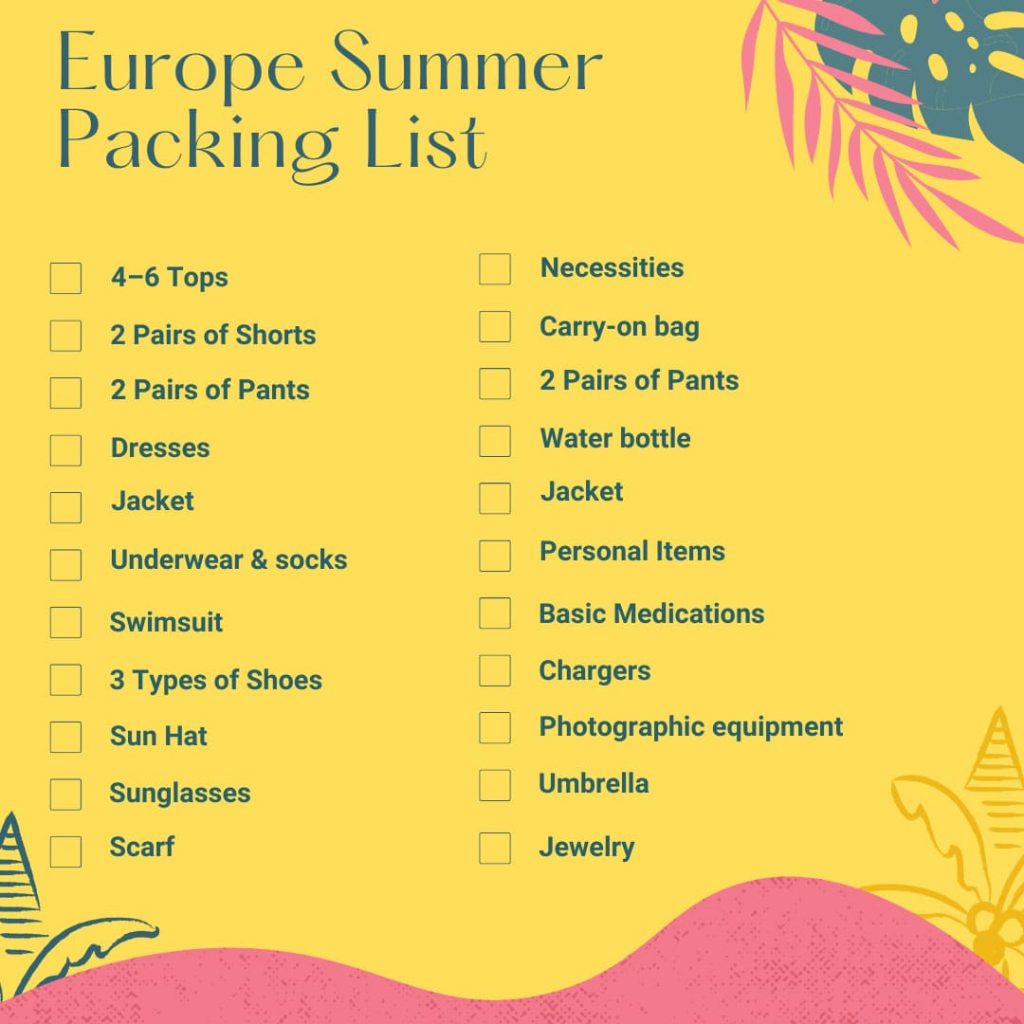
So that you don’t stuff your closet into a suitcase, but instead pack smart, here’s a packing list that can fit different European routes.
Clothing
When packing your clothes, prioritize pieces that can be mixed and matched for different looks.
- Tops: When packing my clothes, I always go for pieces that can be mixed and matched into different outfits. For a 1–2 week trip, I usually take 4–6 tops — a mix of t-shirts, tank tops, and one or two nicer blouses that can dress up a dinner look.
- Bottoms: Two pairs of shorts, two pairs of pants, or a comfortable skirt.
- Dresses: A couple of casual sundresses are perfect for both daytime exploring and spontaneous dinners by the sea. This is a key item on a female’s packing list for a summer Europe trip.
- Jacket: Evenings in places like Paris or Amsterdam can get chilly even in summer. Now I always bring a light cardigan and a packable raincoat.
- Underwear and socks: Prepare suitable underwear for the clothes you will be wearing and bring enough socks.
- Swimsuit: Don’t forget to bring your swimsuit if you are going to a beach, lake, or hotel with a pool. It’s also a good idea to bring a Swim cover-up.
For summer outfits in Europe, please also focus on the fabric of your clothes. Choose comfortable fabrics like cotton, linen, and tencel that are lighter and easier to pack.
Shoes
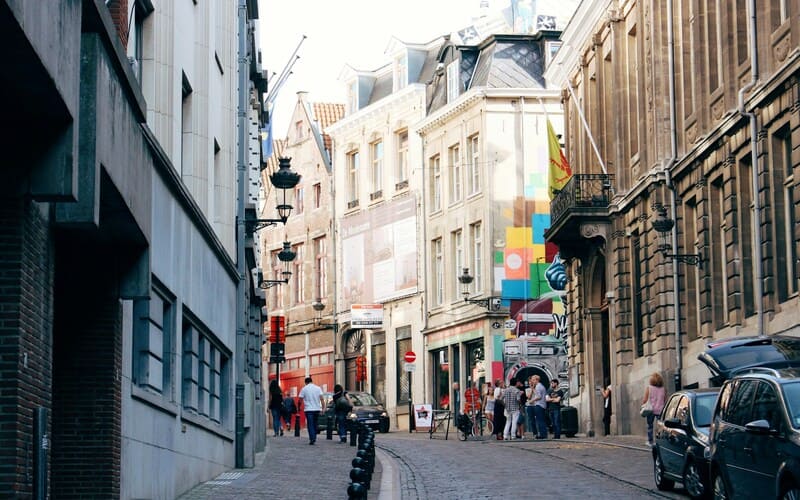
Many European cities have cobblestone streets in their old towns, so bringing the right shoes will be important.
- Comfortable Walking Shoes: This is the most important item on the list. A good pair of sneakers or walking sandals is essential.
- Dress Shoes: A stylish yet comfortable pair of flats, espadrilles, or sandals for dining out.
- Flip Flops: If your trip to Europe is a beach vacation, then flip flops will be essential. It’s also great for traveling to warmer southern European countries.
- Hiking Shoes: If your trip includes hiking, don’t forget sturdy shoes.
Accessories
- Sun Hat: A wide-brimmed hat is a savior for protecting your face from the sun.
- Sunglasses: A good pair of sunglasses is a must for sun protection and fashion.
- Scarf: A lightweight scarf can be a fashion accessory to cover your shoulders when visiting churches or as an extra layer of warmth on cold nights.
- Jewelry: Try to keep it simple with necklaces and rings. A few key pieces of jewelry that can be worn with a variety of outfits will suffice.
Other Essentials
- Necessities: Passport, credit cards, a small amount of cash, and a driver’s license.
- Carry-on bag: You can carry your passport, cash, and other important items.
- Water B ottle: Bottled water is expensive in Europe, so I bring a reusable bottle everywhere.
- Personal Items: Travel-size shampoo, conditioner, and body wash. Toothpaste, toothbrush, floss. Cosmetics, skin care products, etc.
- Basic Medications: Painkillers, anti-allergy medications, anti-mosquito spray, band-aids.
- Chargers: Most European chargers are Type C and F, Switzerland Type J, Denmark Type K, and Italy Type L. So bring a universal travel adapter and a multi-port USB charger, and preferably a portable power bank.
- Photographic Equipment: Camera, lenses, and spare batteries.
Regional-Specific Packing Tips
Next, for different regions of Europe for the summer, there are slightly different things to pack.
Southern Europe
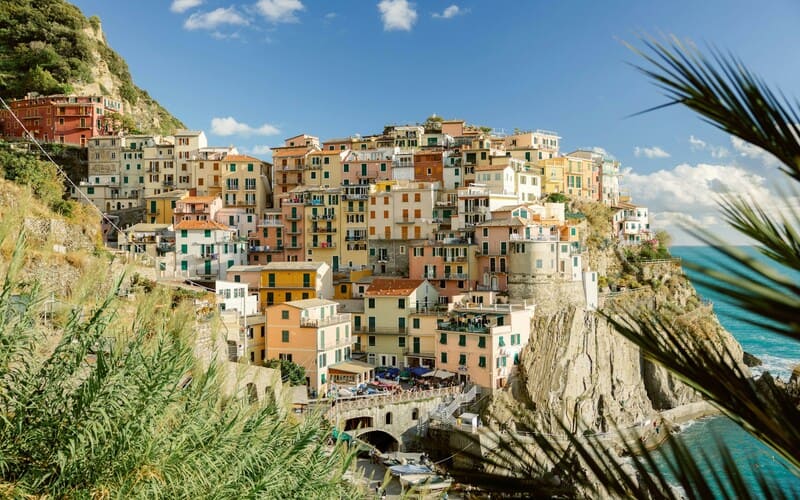
If you’re traveling to Italy, Spain, Portugal, or Greece, the biggest challenge will be the heat. And with famous beach resorts like the Amalfi Coast and Catania, it’s important to bring plenty of sunscreen.
Clothing: Prioritize lightweight, breathable clothing. Examples include linen pants, flowing skirts, and sundresses. White and other light-colored garments are good for reflecting heat.
Shoes: Comfortable sandals are ideal here. Make sure the soles of the shoes are suitable for walking on cobblestone streets or on the beach.
Extras: A reusable water bottle is a necessity to stay hydrated. High SPF sunscreen is also vital. There are also beach towels, sarongs, and swim cover-ups to pack.
Central and Western Europe
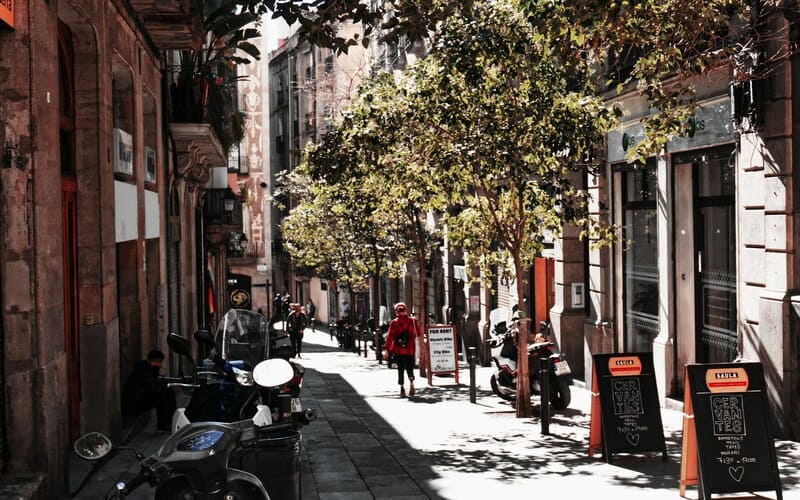
And the need to travel to France, the Netherlands, or Germany, where the weather is a bit unpredictable.
Clothing: Layering is crucial. A short-sleeved top or long-sleeved shirt is recommended. A lightweight jacket or trench coat is a must-have for cooler evenings and potential rainfall.
Shoes: Comfortable walking shoes are your best companion. You’ll spend hours walking through museums, parks, and historic downtowns.
Extras: A small folding umbrella is a wise choice. Some stylish accessories can make you stand out.

Northern Europe
In the Northern European countries of Norway, Sweden, and Finland, the days are longer and the weather is not too hot.
Clothing: You can pack a few long-sleeved tops, a warm sweater or cardigan, and a waterproof jacket. In the Nordic countries, even in July, a day can start sunny and end cold and drizzly.
Shoes: Waterproof shoes are highly recommended, especially if you plan on hiking or traveling to places like Bergen, where rainfall is abundant.
Extras: A compact umbrella is a good idea. Even in the summer, please consider bringing a pair of warm socks.

What to Pack in a Carry-On Bag
I keep these essentials handy, especially on long flights and sightseeing day. Make sure your essentials are within reach.
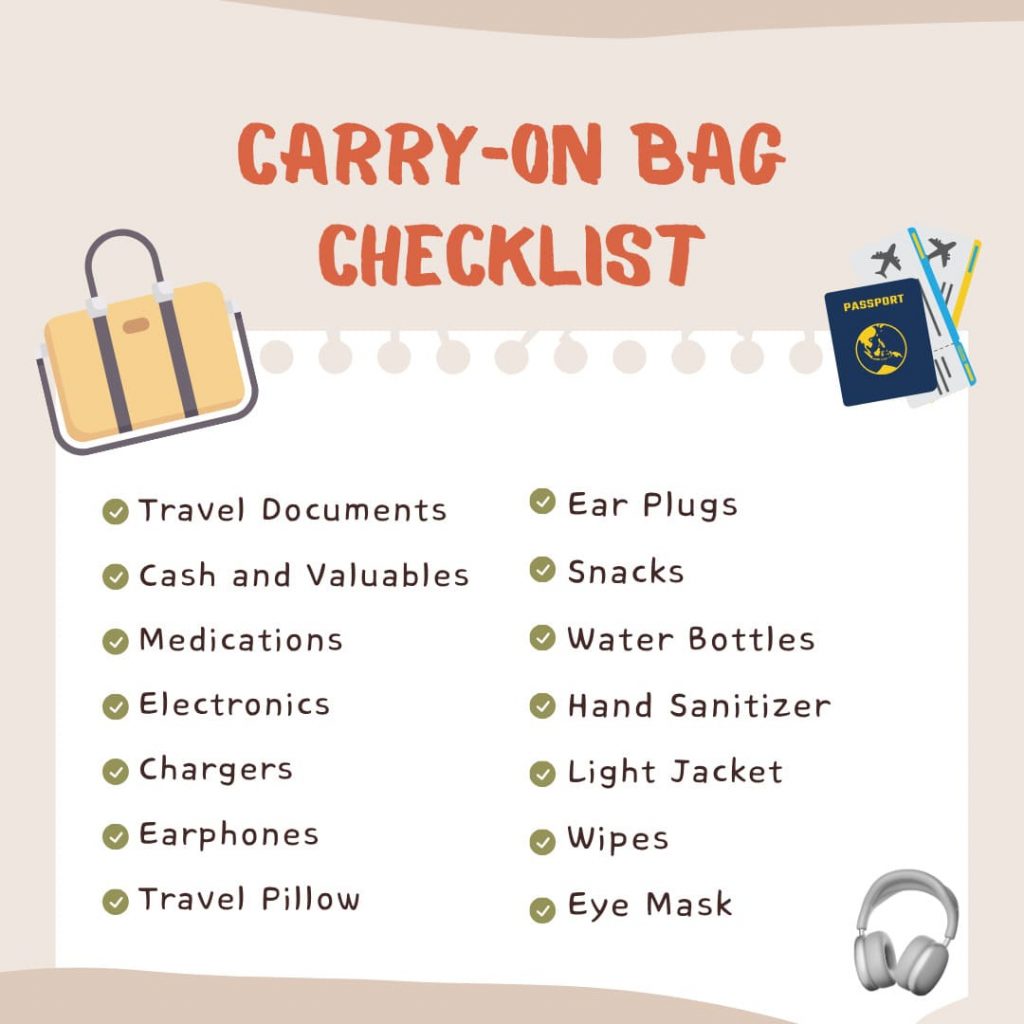
- Travel Documents: Your passport, visas, boarding passes, and any other important identification, such as a driver’s license, must be carried with you.
- Cash and Valuables: Keep cash, credit cards, and any valuable jewelry in your carry-on bag. This will ensure that they are safe and easily accessible.
- Medications: Such as painkillers, anti-allergy medication, or motion sickness medication, should be in your carry-on luggage. You never know when you might need them.
- Electronics and Chargers: Your cell phones, laptops, tablets, e-readers, and cameras are not only expensive, but often contain important information. Keep them in your carry-on and bring chargers and mobile power to keep them charged during layovers or flight delays.
- Earphones: Noise-canceling headphones are great for eliminating noise from crowded airplanes.
- Travel pillow, Eye mask, and Earplugs: These simple items can help you get plenty of rest during your flight.
- Snacks and Reusable water bottles: You can bring an empty bottle and fill it up at the water fountain on the other side of the security checkpoint. Bringing your snacks will save you money and ensure you have something you enjoy eating.
- Hand sanitizer and Wipes: These are great for wiping down your seats, small table tops, and other surfaces, especially if you’re worried about cleanliness.
- Scarf or Light jacket: Airplanes can be surprisingly cold, and a scarf or light sweater can double as a blanket or extra layer of warmth.
Tips on Baggage Allowances for Summer Travel in Europe
When flying to or traveling within Europe, especially on low-cost airlines such as Ryanair, EasyJet, or Vizz Air, baggage limits can be very strict and vary from airline to airline. Most low-cost airlines only include a small under-seat bag in the base fare. There is usually an additional fee for overhead or checked baggage.
Before booking your flight, check the airline’s website for specific size and weight restrictions for carry-on and checked bags. Measuring and weighing your luggage at home can save you from high airport fees.
I recommend a compressible backpack or lightweight carry-on bag for easy transportation through airports and train stations. They’re ideal for summer traveling in Europe!
Safety Tips for Traveling in Europe
Europe is generally safe, but from my experience on previous trips you need to be aware of your surroundings to avoid some of the common safety concerns.
Secure your belongings: Consider using a fanny pack or hidden pouch to store your passport, spare cash, and credit cards. Keep a small amount of cash in your main wallet for everyday use.
Beware of pickpockets: Pickpockets are common in crowded tourist areas, public transportation, and train stations. It is best to use an anti-theft fanny pack and carry it in front of you. Do not carry valuables in your back pocket. And please avoid bringing precious jewelry.
Be aware of your surroundings: Avoid looking at your cell phone when walking in crowded areas. Be alert to people who try to distract you or create a disturbance.
Make copies of important documents: Take photos of your passport, visas, and credit cards and save them to your phone or cloud storage service.
Beware of scams: If you encounter someone claiming to be a police officer checking ID, do not hand over your wallet and ask to see police identification to make sure they are a real police officer. Avoid taking pictures with people dressed in cartoon character costumes who will demand money after the picture is taken. The same goes for bracelets or roses handed to you in front of popular attractions, both of which will demand money when you take them. Be wary of overly enthusiastic people.
FAQ
What is the 5 4 3 2 1 packing rule?
This packing rule represents 5 tops, 4 bottoms, 3 pairs of shoes, 2 jackets, and 1 set of accessories. Of course, this packing rule can be changed depending on your destination, for example, 2 can also be two dresses.
What to pack for 2 weeks in Europe in the summer?
For a two-week trip to Europe, pack 6-8 tops, 4 bottoms, 2-3 dresses, 2 jackets, and a bathing suit. 3 pairs of shoes – sneakers, loafers, and sandals. Bring enough underwear, plus a few extras.
What to pack for 3 weeks in Europe in the summer?
For a packing list for a 3-week trip, the best strategy is to pack for about 10 days and plan for laundry. The items you need to bring are very similar to those for a two-week trip. Pack 8-10 tops, 4-5 bottoms, 3-4 dresses, 2 jackets, and 3-4 pairs of shoes.
The most important thing to look for is accommodation with laundry facilities or a local laundromat. This is usually very convenient and cheap.
How to not overpack for Europe?
Start by eliminating the things you think you might use and go for the multifunctional products. And use organizers, they can compress your clothes and keep things organized. Avoid bringing too many shoes and items that you won’t use more than 3 times during your trip.




There are no comments.