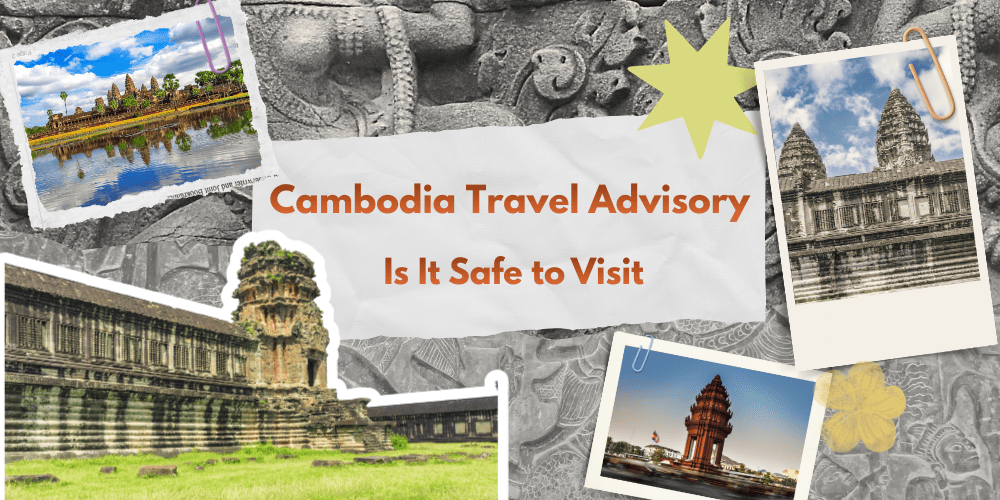

Cambodia is often overlooked among Southeast Asia’s popular travel destinations, especially during periods of instability. Yet the ancient ruins of Angkor Wat and the tranquil landscapes along the Mekong River hold a special place in many travelers’ hearts, making a trip to Cambodia deeply rewarding.
However, after experiencing particularly severe border clashes with Thailand this year, Cambodia has inevitably led tourists to wonder: Is Cambodia safe to visit? Safety has always been the top priority when traveling. This latest Cambodia travel advisory will provide you with the most accurate information to help you make decisions and ensure a safe trip.
Table of Contents
Is It Safe to Travel to Cambodia
Latest News from Cambodia
Cambodia Travel Advisory
Cambodia Safe Travel Destinations
Is It Safe to Travel to Cambodia
Yes, but necessary precautions must be taken. The primary risks associated with traveling to Cambodia typically involve petty crime, transportation, and border issues, all of which can be prevented and avoided.
However, recent developments on the international border have raised the overall safety profile for the country, moving it from a standard ‘Exercise Normal Precaution’ to a higher level with specific ‘Do Not Travel’ warnings for certain remote areas. Please review these travel advisories to ensure safe trips.
Latest News from Cambodia
Cambodia’s most pressing security concerns are ongoing armed conflicts and tensions along its border with Thailand. From summer 2025 through December, the situation has significantly escalated, with reports of artillery fire and airstrikes in border provinces.
- December 8, 2025: Thailand launched airstrikes against Cambodia, targeting military facilities in the disputed border region. This resulted in tens of thousands of people fleeing and seeking refuge in the Thai-Cambodian border area.
- The Warning: Major governments, including the US, UK, Canada, and Australia, have issued stern warnings against travel to these areas.
- The Consequence: Land border crossings between Cambodia and Thailand have been suspended, and tourist sites in the border regions have been closed.
Cambodia Travel Advisory
Before deciding whether to travel, please check your country’s advisory risk level. Here are the Cambodia travel warnings issued by various countries.
USA: The U.S. Department of State currently advises travellers to Exercise Increased Caution, which is Level 2, in Cambodia due to crime and landmines. This warning explicitly advises against traveling to areas along the Cambodia-Thailand border due to armed conflict.
Canada: The Canadian government advises travellers to Exercise a high degree of caution due to an increase in petty crime. They explicitly advise avoiding all travel within 50 kilometers of the Cambodia-Thailand border due to ongoing tensions. And they highlight the risk of organized crime operations, particularly in Sihanoukville and Poipet, involving employment scams, drug, and human trafficking.
UK: The UK’s Foreign, Commonwealth & Development Office (FCDO) also advises against all but essential travel to within 50km of the entire border with Thailand.
Australia: The Australian government advises travellers to Exercise a high degree of caution in Cambodia overall. Like other governments, they advise against travel to areas within 50 kilometers of the Thai-Cambodian border.
🚫Areas to Avoid
Be sure to familiarize yourself with these places to avoid ruining your trip.
The Cambodia-Thailand Border Region
This is the most critical safety exclusion zone. This includes provinces that lie along the border, specifically Banteay Meanchey, Oddar Meanchey, Preah Vihear, Battambang, Pailin, Pursat, and Koh Kong. These locations are characterized by active armed conflict, military strikes, and the widespread presence of unexploded ordnance (UXO). Do not enter these areas.
Rural Areas Outside of Main Roads
Cambodia has one of the world’s highest concentrations of landmines and unexploded ordnance, particularly in rural or forested areas. If you plan to hike or enter remote, uncleared areas, be sure to hire a local guide. If you see warning signs for landmines, take them extremely seriously.
Sihanoukville and Poipet
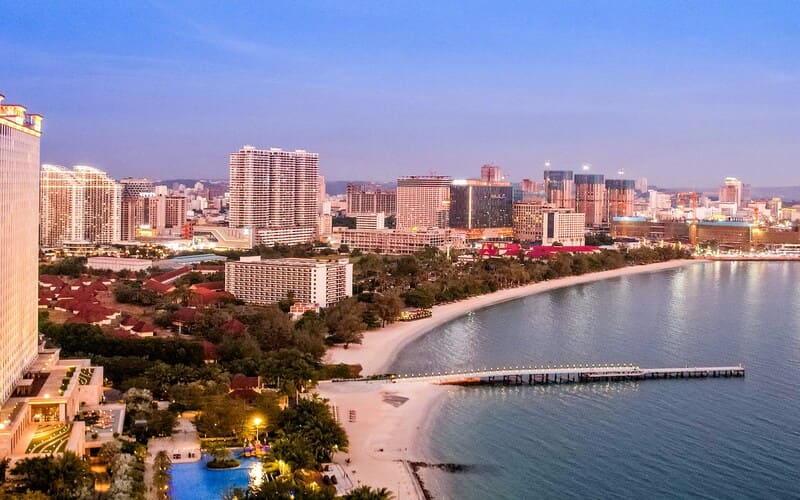
While Sihanoukville is a beach destination, and Poipet is a border town, both have garnered warnings for an increase in organized crime, particularly related to illegal gambling, scam operations, and human trafficking rings. Exercise extreme caution in these areas, especially if you are approached with suspicious employment offers.
Cambodia Safe Travel Destinations
Although the border conflict between Cambodia and Thailand has persisted for months, major tourist routes have remained largely unaffected. Travel to Cambodia’s major cities and attractions remains safe.
Siem Reap
Siem Reap is most famous for the UNESCO World Heritage Site Angkor Wat. Though the city itself is compact, it brims with cafes, night markets, and boutique shops. It is also widely regarded as one of Cambodia’s safest destinations, with a well-established tourism industry and comprehensive supporting facilities.
Things to Do
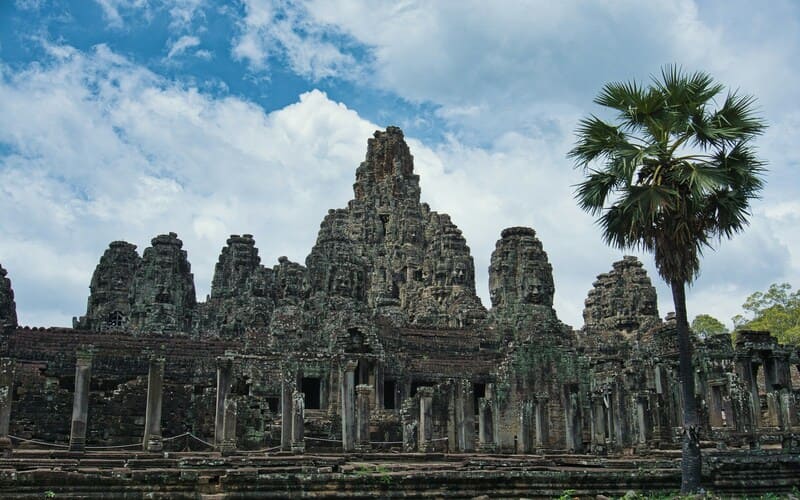
Visiting Angkor Wat, the world’s largest temple complex, is a must, as it represents the pinnacle of Khmer art. Inside lies the Bayon Temple, featuring its enigmatic four-faced stone carvings. If you’re a movie enthusiast, don’t miss Ta Prohm, the filming location for Tomb Raider, where the temple ruins are enveloped by massive tree roots.
Beyond the vast temple complex of Angkor Wat, the Tonlé Sap Floating Villages also showcase Siem Reap’s unique waterborne lifestyle and fishing village ecosystem.
Do & Don’t for Angkor Wat
Do dress appropriately, respect religious customs, and maintain a polite distance when encountering monks. Hire a guide or use an audio guide, and visit in the morning or evening to avoid crowds and intense heat. Angkor Wat is quite large, so it’s best to visit only three main temples per day to avoid fatigue.
Don’t climb fragile structures, do not touch or remove artifacts, do not photograph monks without permission, and do not litter.
Recommended Accommodation Areas
For convenient access to Angkor Wat, the Old French Quarter, and Wat Bo, this quiet area offers numerous boutique hotels. To immerse yourself in local life, consider staying in the heart of the Old Market district, where you’ll find plenty of restaurants and bars.
Phnom Penh
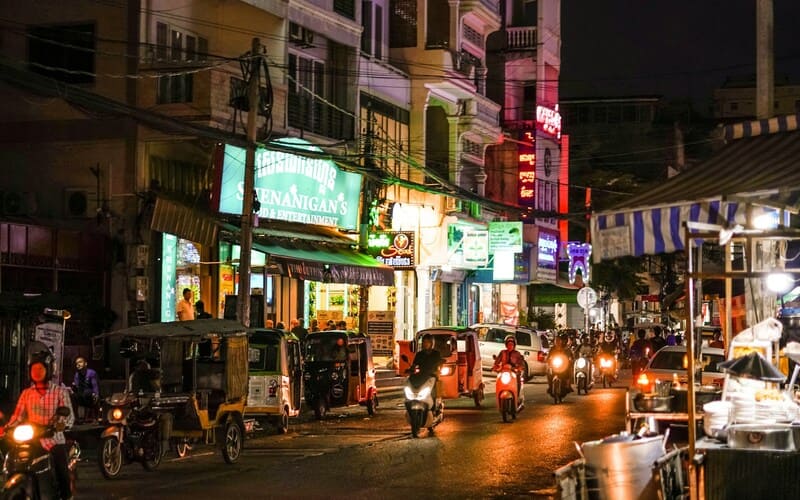
Phnom Penh, Cambodia’s capital, is more modern than Siem Reap, boasting both historical sites and a city skyline, making it the center of history and culture. However, compared to Siem Reap, the safety situation is more complex, with motorcycle snatch thefts being a concern that requires caution.
Things to Do
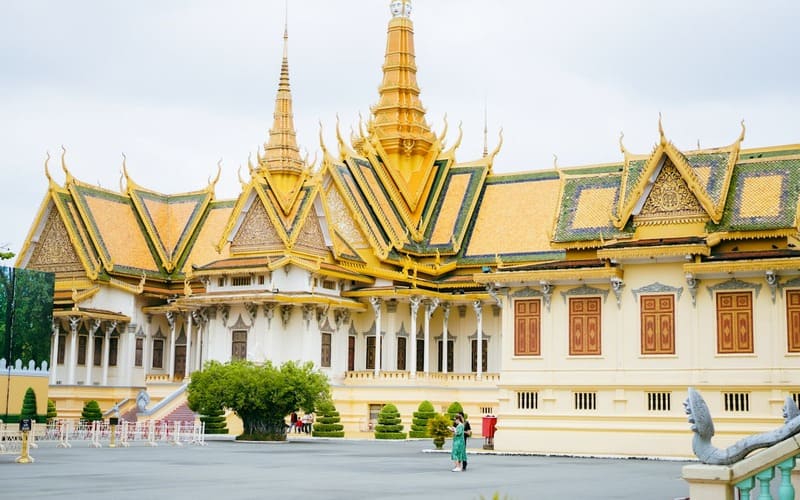
Phnom Penh’s top attractions are the Royal Palace and the Silver Pagoda. The Silver Pagoda, paved with over 5,000 silver tiles, serves as a symbol of both the Cambodian monarchy and Buddhism. Combined with its exquisite Buddha statues and traditional architecture, it offers a half-day tour experience.
Explore Khmer culture and artistic treasures at the National Museum, and walk along the Mekong River to experience local daily life and the lively atmosphere of the riverside night market. Additionally, Phnom Penh serves as a crucial site for understanding Cambodia’s tragic history. Visit Khmer Rouge memorial sites, including the Choeung Ek Killing Fields and the Tuol Sleng Genocide Museum, to honor the memory of those who suffered.
Do & Don’t for Phnom Penh
Do keep quiet and dress appropriately when visiting palaces and museums. Familiarize yourself with the historical context beforehand, and consider joining a guided tour or renting an audio guide.
Don’t touch cultural relics or Buddhist statues. Don’t make loud noises. Don’t take inappropriate photos at memorial sites.
Recommended Accommodation Areas
For first-time visitors to Phnom Penh, Riverside is the most suitable area, offering proximity to major attractions and views of the Tonle Sap River. Boeng Keng Kang 1 is Phnom Penh’s safest district, featuring numerous hotels and dining options.
Tours4fun Recommended Products
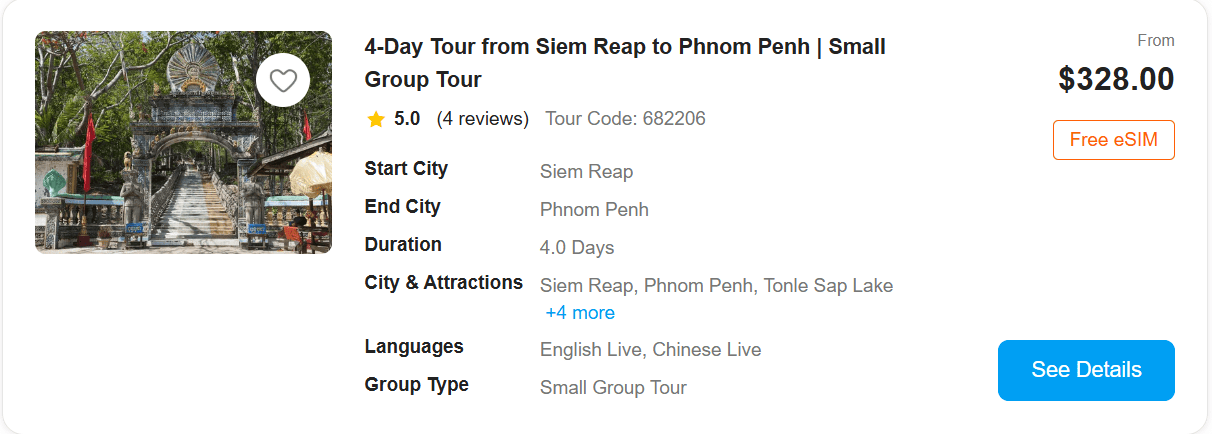
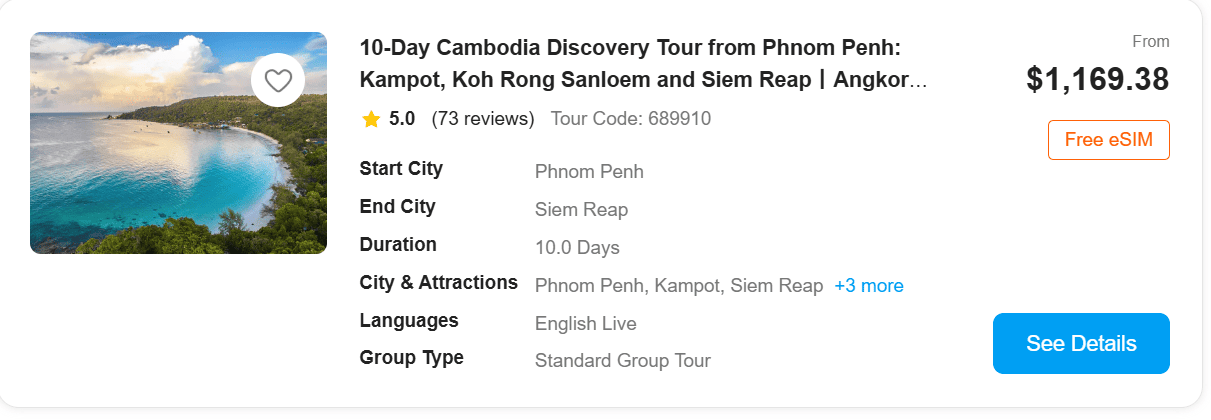
Cambodia Travel Tips
Being fully prepared is the best way to avoid potential issues. These Cambodia travel tips cover situations you may encounter during your journey.
Visa Requirements
Most travelers entering Cambodia require a visa. Fortunately, the process is straightforward and allows for a 30-day stay. There are two ways to obtain one:
- Visa on Arrival (VOA): Available at Phnom Penh and Siem Reap International Airports, as well as select land border airports. You will need a passport valid for at least 6 months, a passport-sized photo, and $30–35 in cash.
- Electronic Visa: You can apply online through the official government website. This is typically faster than obtaining one upon arrival. The fee is usually $30 plus a processing charge.
Common Scams in Cambodia
- Fake Staff or Guides: Near tourist attractions, some individuals may claim to be official guides or staff, offering low fees or free tours, but will actually charge exorbitant prices or force visitors to make purchases.
- Formula Scam: Women with infants will ask you to buy a can of milk or formula from a nearby store for their child. Prices are significantly inflated, with shopkeepers and beggars colluding to profit.
- High-priced Taxi Fares: At airports, train stations, or popular tourist attractions, individuals may offer fixed-price or chartered services, only to demand additional fees upon arrival.
- The Money Exchange Scam: This usually happens with a wad of local Riel currency. A person will ask to change money and, through sleight of hand, short-change you, or they may try to pass off counterfeit or damaged US dollar bills, which are not accepted.
- Bar Overpriced Bills: In nightlife districts, some bars may add unordered drinks or charge hidden fees when settling the bill.
- Fake Souvenirs: Markets or street vendors may sell items claiming to be genuine silk, jade, or antique Buddhist statues at low prices, but most are counterfeits.
Safety Alert
- Caution on Traffic: Unless you are very familiar with Cambodia’s chaotic traffic, avoid driving a car or motorcycle yourself. Also, be mindful of oncoming motorcycles when crossing the street.
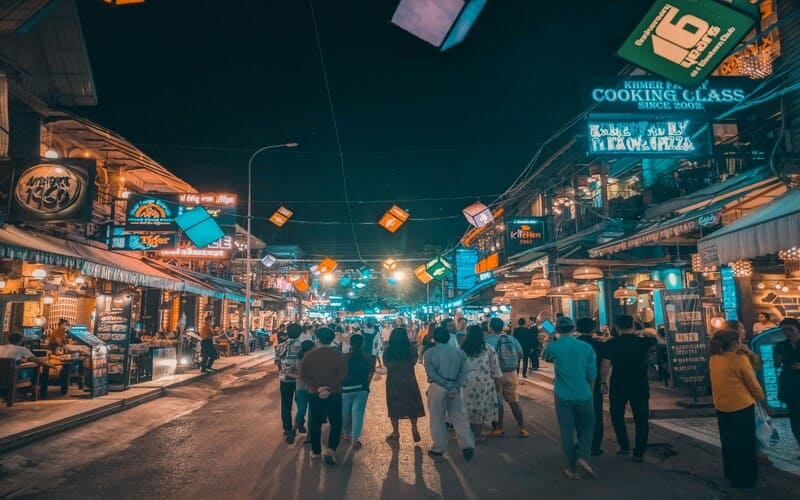
- Stay Alert: Especially at night, on isolated streets, or in markets. Avoid traveling alone and carry only essential items.
- Choose Formal Transportation: Use Grab, hotel arrangements, or licensed taxis or tuk-tuks. Avoid hailing random rides on the street.
- ATM Security: Use ATMs at banks or hotels whenever possible. Shield your PIN when entering it and avoid accepting assistance from strangers.
- Drink Bottled Water: Consume only bottled or filtered water, and avoid untreated water and ice from unknown sources.
- Use Anti-theft Bags: In markets and crowded areas, use zippered bags or anti-theft backpacks to prevent theft of wallets and phones.
- Caution with Cell Phones: Avoid using your phone while walking on the street, as motorcycle snatchers targeting phones are extremely common.
FAQ
Is it safe to travel to Cambodia right now?
Yes, for the main tourist destinations like Siem Reap, Phnom Penh, and the coastal towns not near the border, like Kampot or Kep, it is generally safe. However, you must avoid all travel within 50km of the Thai-Cambodian border due to active conflict and landmines. You should also exercise increased caution against petty crime in city centres.
Do you need a visa to travel to Cambodia?
Most visitors require a visa. You have two main options: Visa on Arrival (VOA) at international airports and major land border crossings, which costs $30–35 in cash, or an electronic visa requiring online application and a $30 fee plus processing charges. You must hold a passport valid for at least six months beyond your entry date.
What not to wear in Cambodia?
Dress codes in Cambodia require particular attention at temples, where tank tops, spaghetti straps, or any shoulder-baring attire are strictly prohibited. Shorts, skirts, or dresses must cover the knees. Lightweight scarves or sarongs serve as convenient options for quick coverage.



There are no comments.