
Medieval castles in Europe stand as a reminder of a time when stone walls and high towers were essential for defense and status. From the misty highlands of Scotland to the sun-drenched hills of Spain, these architectural marvels tell tales of conquest, resilience, and daily life centuries ago.
Built primarily between the 11th and 16th centuries, these fortresses evolved dramatically, reflecting changing warfare techniques and societal needs. They served multiple roles: military strongholds to defend territory, administrative centers to govern regions, symbols of wealth and status for the nobility, and safe havens for communities during conflict. They were the power bases of the medieval world.
Today, exploring these famous castles offers an unparalleled journey back in time, allowing us to walk the same ramparts as kings and queens and uncover fascinating facts about medieval times.
Europe’s Medieval Castles You Can Visit
Europe’s legacy is etched in stone, perhaps most notably in its castles. But just how many medieval castles are still standing? Estimates suggest well over 10,000 castles exist, though many are ruins.
And the oldest? The title is debated. Château de Doué-la-Fontaine in France, dating to around 950 AD, is often considered the oldest surviving stone keep in Europe. However, the vast Prague Castle complex boasts foundations laid around 880 AD, representing one of the oldest continuously developed castle sites. And for continuous occupation, Windsor Castle in England holds the title of the oldest and largest continuously inhabited castle in the world, founded shortly after the Norman Conquest.
These castles are time capsules rather than just inert monuments. Visiting them offers opportunities to feel the weight of centuries. To guide your journey, here’s a list of some of the most epic, famous, and best medieval castles in Europe you can still visit today:
TOP 20 European Medieval Castles You Can Visit
- Windsor Castle, England
- Edinburgh Castle, Scotland
- Neuschwanstein Castle, Germany
- Prague Castle, Czech Republic
- Leeds Castle, England
- Hohenzollern Castle, Germany
- Mont Saint-Michel, France
- Malbork Castle, Poland
- Alcázar de Segovia, Spain
- Eltz Castle (Burg Eltz), Germany
- Alhambra, Spain
- Wartburg Castle, Germany
- Cité de Carcassonne, France
- Conwy Castle, Wales
- Bran Castle, Romania
- Château de Chillon, Switzerland
- Predjama Castle, Slovenia
- Spiš Castle, Slovakia
- Castel del Monte, Italy
- Cahir Castle, Ireland
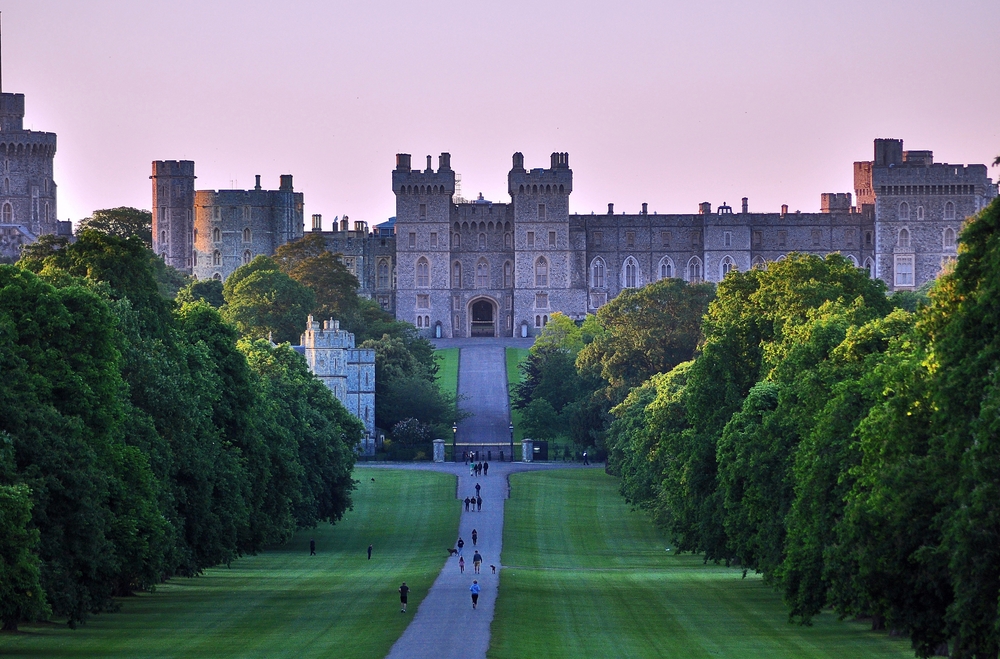
Windsor Castle, England
Standing majestically in the Berkshire countryside, Windsor Castle is not just a castle, but a living monument embodying nearly 1,000 years of British royal history. Founded by William the Conqueror around 1070, shortly after the Norman Conquest, it began as a strategic motte-and-bailey overlooking the River Thames. Its purpose was clear: project Norman power and guard the western approach to London. Henry II’s transformation replaced timber with stone, building the iconic Round Tower on the original motte and the first stone outer walls, shaping the castle we recognise today.
Over the centuries, successive monarchs have added to, rebuilt, and renovated Windsor, making it a patchwork of architectural styles – from the medieval military foundations and St. George’s Chapel (a masterpiece of Perpendicular Gothic) to the lavish State Apartments remodelled by George IV in the early 19th century. It has witnessed sieges (during the First Barons’ War), served as a prison (for Charles I during the Civil War), endured fire (a major blaze in 1992 led to extensive restoration), and remained a cherished home for the Royal Family, most recently Queen Elizabeth II. Exploring its vast grounds is like walking through the pages of English history.
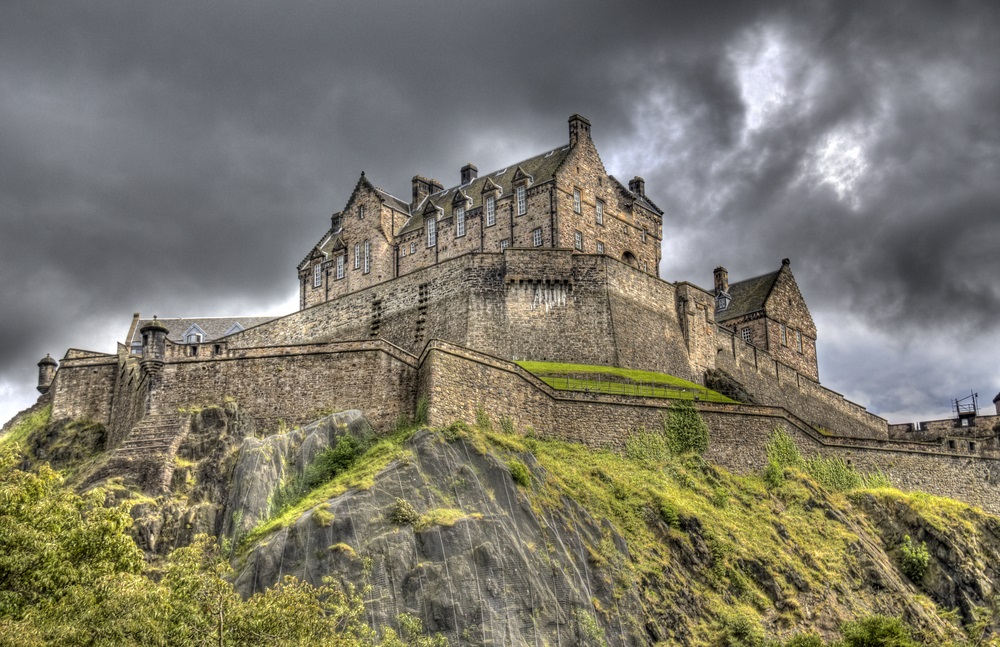
Edinburgh Castle, Scotland
Dominating the skyline of Scotland’s capital city from its perch atop Castle Rock, an extinct volcanic plug, Edinburgh Castle is a historic fortress with a complex building history. Occupation of the rock dates back to the Iron Age, though the earliest surviving structures belong to the 11th and 12th centuries, including St Margaret’s Chapel, Edinburgh’s oldest building. As one of the most important strongholds in the Kingdom of Scotland, the castle has been besieged numerous times and has served variously as a royal residence, fortress, military garrison, and prison.
Key historical events unfolded here, including the birth of James VI of Scotland (later James I of England) in the Royal Palace. The castle houses the Honours of Scotland (the Crown Jewels), the Stone of Destiny (an ancient symbol of Scottish monarchy), the National War Museum of Scotland, and the famous One o’Clock Gun, fired daily (except Sundays). Its architecture spans centuries, from the medieval core to later military additions. Exploring the ramparts offers panoramic views across Edinburgh. Its rich history and central role in Scottish affairs make it one of the most famous medieval castles in Europe, though much of its current appearance dates from later periods.
Pro tip: Book tickets online well in advance, as timed entry slots often sell out, especially during peak season and the Edinburgh Festival in August.
Neuschwanstein Castle, Germany
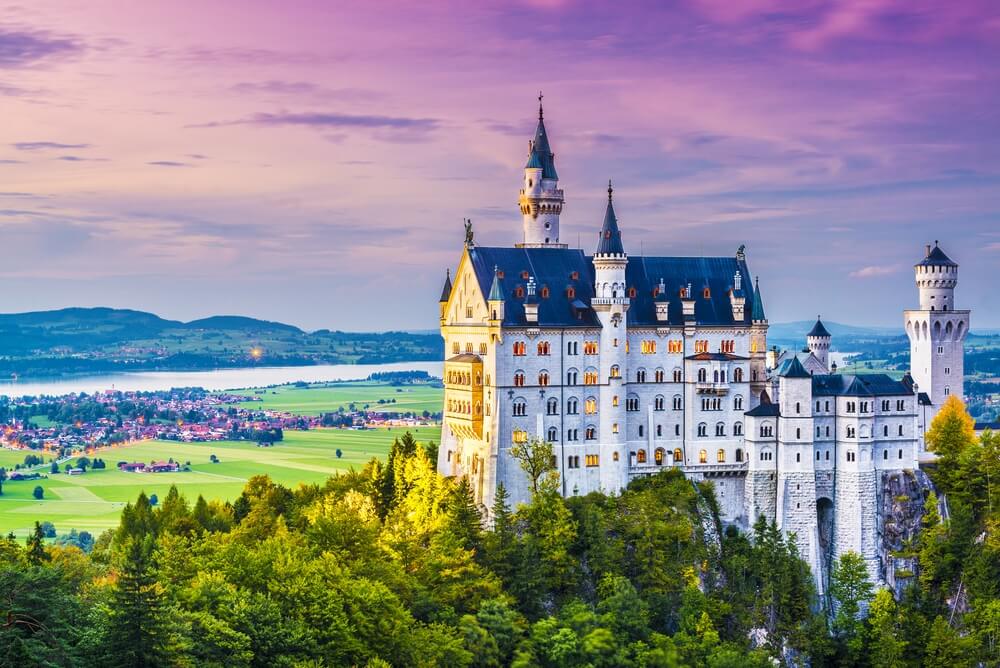
Neuschwanstein is the ultimate fairy-tale castle, instantly recognizable and globally famous. Perched dramatically on a rugged hill above the village of Hohenschwangau in southwest Bavaria, it was commissioned by King Ludwig II of Bavaria as a personal retreat and an homage to the composer Richard Wagner. Though inspired by medieval romance and Romanesque architecture, this is not a true medieval castle but a stunning 19th-century creation (construction began 1867).
Ludwig II, often called the “Fairy Tale King,” poured his personal fortune into creating this fantastical palace, featuring opulent interiors like a throne room Byzantine style, a Singers’ Hall decorated with scenes from Wagner’s operas, and even an artificial grotto. Sadly, Ludwig only lived in the castle for 172 days before his mysterious death in 1886, leaving it incomplete. Its breathtaking beauty and romanticism inspired Disney’s Sleeping Beauty Castle and make it one of the most visited castles in Europe.
Pro tip: Book tickets online months in advance, as they sell out quickly. Hike or take the shuttle bus up to Marienbrücke (Mary’s Bridge) for the iconic postcard view of the castle.
Prague Castle, Czech Republic
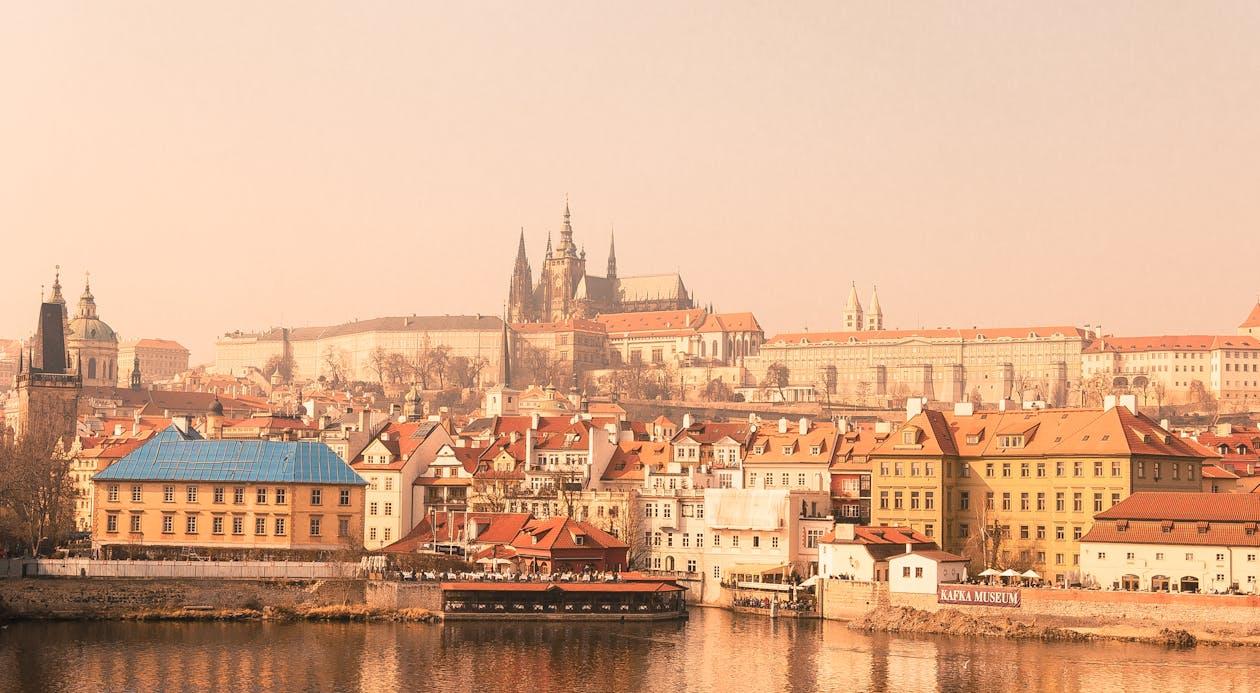
Overlooking the Vltava River, Prague Castle (Pražský hrad) is a vast complex of palaces, churches, courtyards, and gardens, evolving over more than a thousand years. According to the Guinness Book of World Records, it’s the largest coherent castle complex in the world. Founded around 880 AD by Prince Bořivoj, it has been the seat of power for Czech kings, Holy Roman Emperors, and presidents of Czechoslovakia and the Czech Republic.
Within its walls lies a stunning collection of architectural styles, from Romanesque basilicas to the soaring Gothic splendour of St. Vitus Cathedral (where Czech kings were crowned and buried), the Old Royal Palace with its impressive Vladislav Hall, the Romanesque St. George’s Basilica, and the charming Golden Lane, once home to castle guards and alchemists. Exploring this sprawling complex is a journey through the heart of Czech history and artistry.
Leeds Castle, England
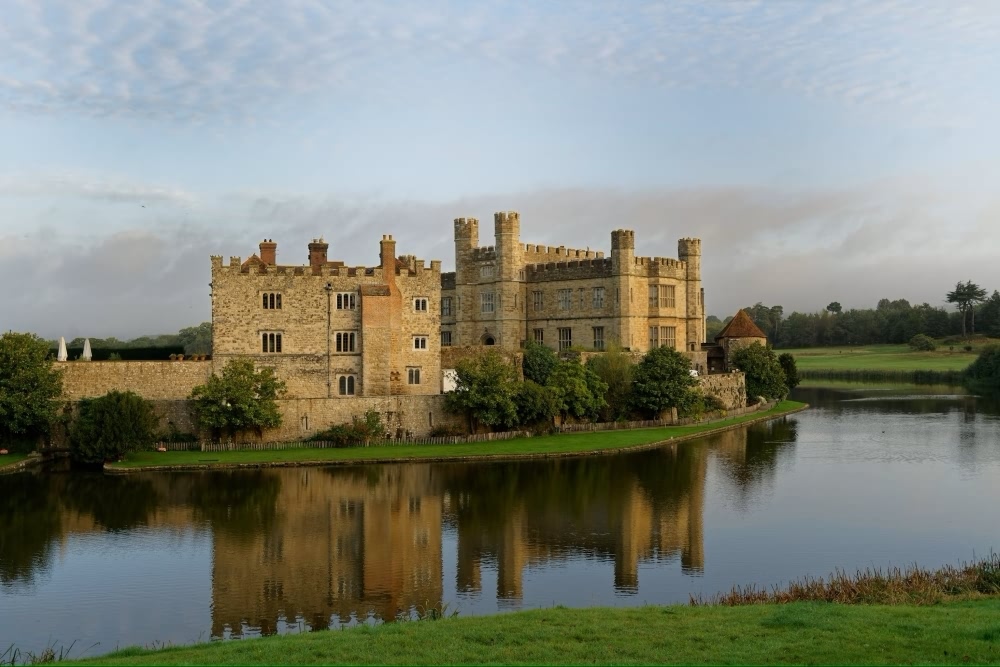
Often described as “the loveliest castle in the world,” Leeds Castle rises majestically from two islands in a lake in the Kent countryside. Its history stretches back over 900 years to a Norman stronghold built in 1119. It later became a royal palace, owned by six medieval Queens of England, earning it the nickname “The Ladies’ Castle.” King Henry VIII famously transformed it for his first wife, Catherine of Aragon.
After centuries of royal and private ownership, the castle was purchased in 1926 by Lady Olive Baillie, an Anglo-American heiress, who meticulously restored it and filled it with art and antiques. Today, visitors can explore the glamorous 1930s interiors she created, wander through beautiful gardens (including a maze and grotto), witness falconry displays, and enjoy the picturesque lakeside setting. While significantly modified from its original medieval structure, its long history and stunning appearance secure its place among famous medieval castles in Europe.
Hohenzollern Castle, Germany
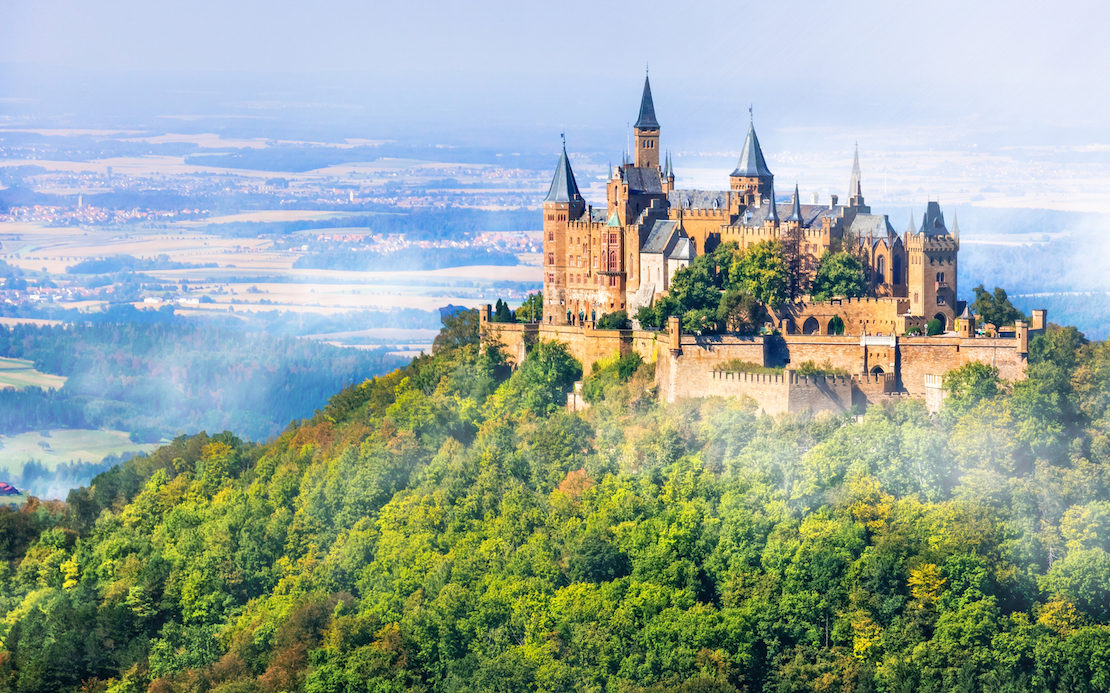
Perched dramatically atop Mount Hohenzollern in the Swabian Alps, Hohenzollern Castle cuts an imposing figure against the sky. This site is the ancestral seat of the Hohenzollern dynasty, the family who eventually became Kings of Prussia and German Emperors. While the family’s history here dates back over a millennium, the current structure is largely the third castle built on this site.
The magnificent neo-Gothic castle seen today was constructed between 1846 and 1867 by King Frederick William IV of Prussia as a romanticized tribute to his ancestors and medieval ideals (making it, like Neuschwanstein, a 19th-century creation inspired by the past, rather than a truly medieval structure). It houses historical artifacts related to Prussian history, including the crown of Kaiser Wilhelm II and personal items of Frederick the Great. Its stunning panoramic views and connection to German royalty make it a popular destination.
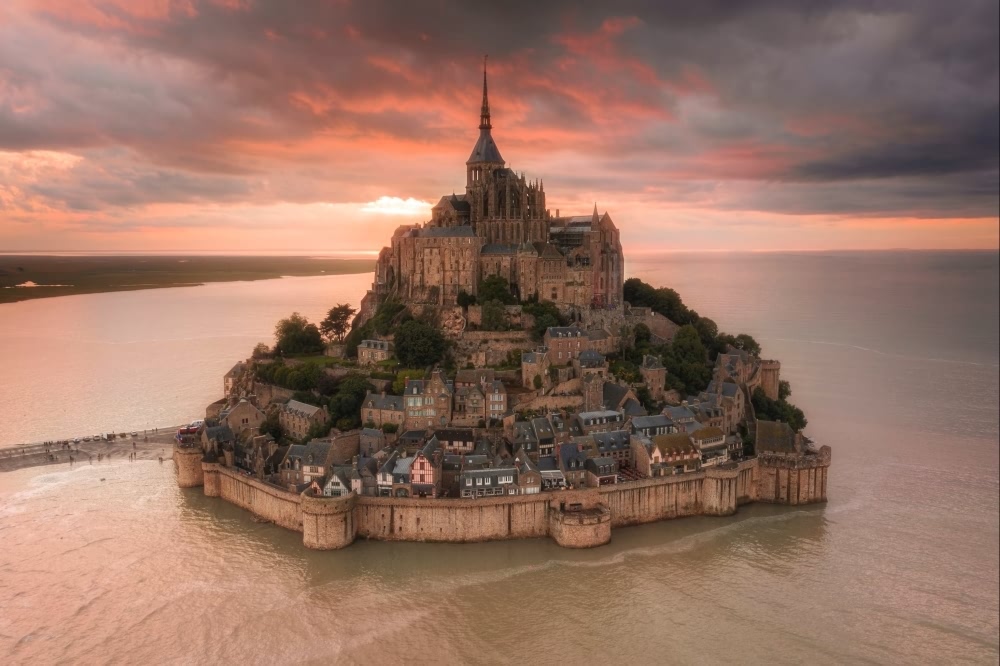
Mont Saint-Michel, France
Rising dramatically from a tidal bay off the coast of Normandy, Mont Saint-Michel is less a single castle and more a breathtaking fortified island commune, crowned by a magnificent abbey. Its origins stretch back to the 8th century when, according to legend, the Archangel Michael appeared to St. Aubert, Bishop of Avranches, instructing him to build a church on the rocky islet. This initial oratory grew over centuries into a major Benedictine abbey, a masterpiece of medieval architecture blending Carolingian, Romanesque, and Gothic styles.
The island’s strategic location and the formidable tides (which can recede up to 15 km, creating vast sandbanks, and rise incredibly quickly) made it a natural fortress. During the Hundred Years’ War (14th-15th centuries), extensive military fortifications were added, successfully repelling repeated English assaults and making it a potent symbol of French national identity. Below the abbey, a medieval village with winding streets, houses, shops, and museums clings to the slopes. It’s a unique example among famous medieval castles in Europe where religious, military, and domestic life intertwined so spectacularly.
Pro tip: Check the tide schedule before your visit. Witnessing the tide rush in around the Mont is spectacular. Wear comfortable shoes as exploring involves steep climbs and many steps.
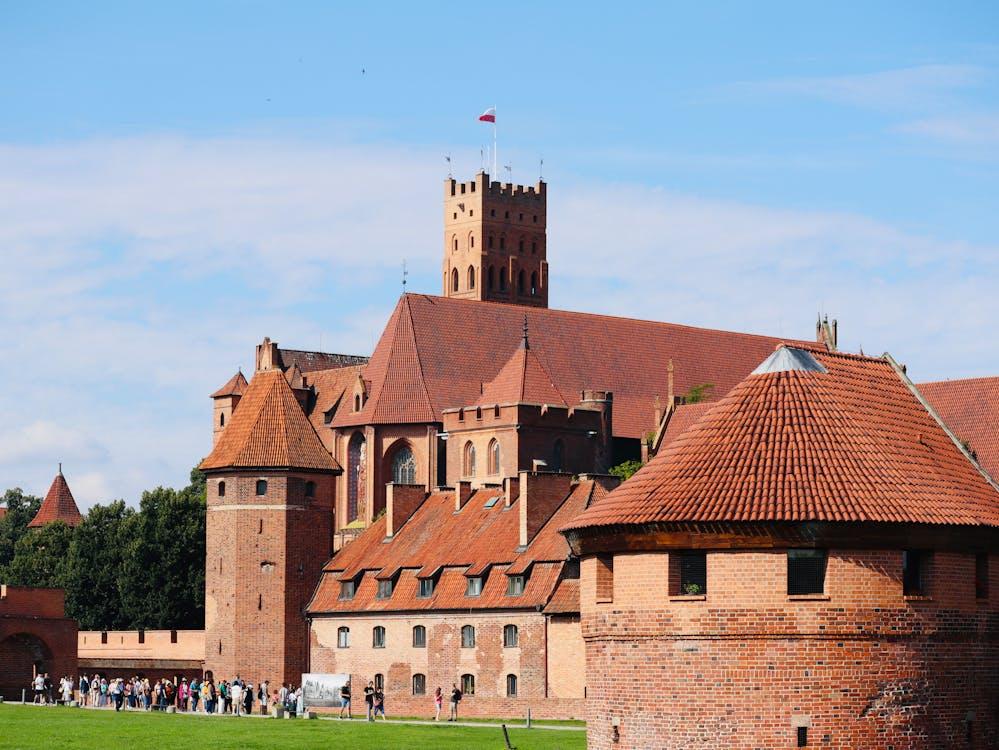
Malbork Castle, Poland
Recognized by UNESCO as the largest castle in the world measured by land area, and the largest brick building in Europe, Malbork Castle (Zamek w Malborku) is a staggering testament to the power and organizational skills of the Teutonic Order. Originally founded in 1274 by the Teutonic Knights, a German Catholic religious order of crusaders, as Marienburg (“Mary’s Castle”), it became the Order’s headquarters in 1309.
The castle complex actually consists of three distinct sections: the High Castle (the original monastic core), the Middle Castle (administrative and residential centre), and the Lower Castle (service areas and St. Lawrence’s Chapel). Its construction, primarily using red brick, spanned nearly 230 years, constantly being expanded and fortified. It served as the capital of the Teutonic Order’s state until 1457. After extensive damage during World War II, it has undergone meticulous restoration. Exploring its sheer scale, intricate Gothic architecture, and the museum exhibits detailing the life and history of the Teutonic Knights is an unforgettable experience.
Pro tip: Malbork is huge! Allow at least 3-4 hours, or even a full day, to explore properly.
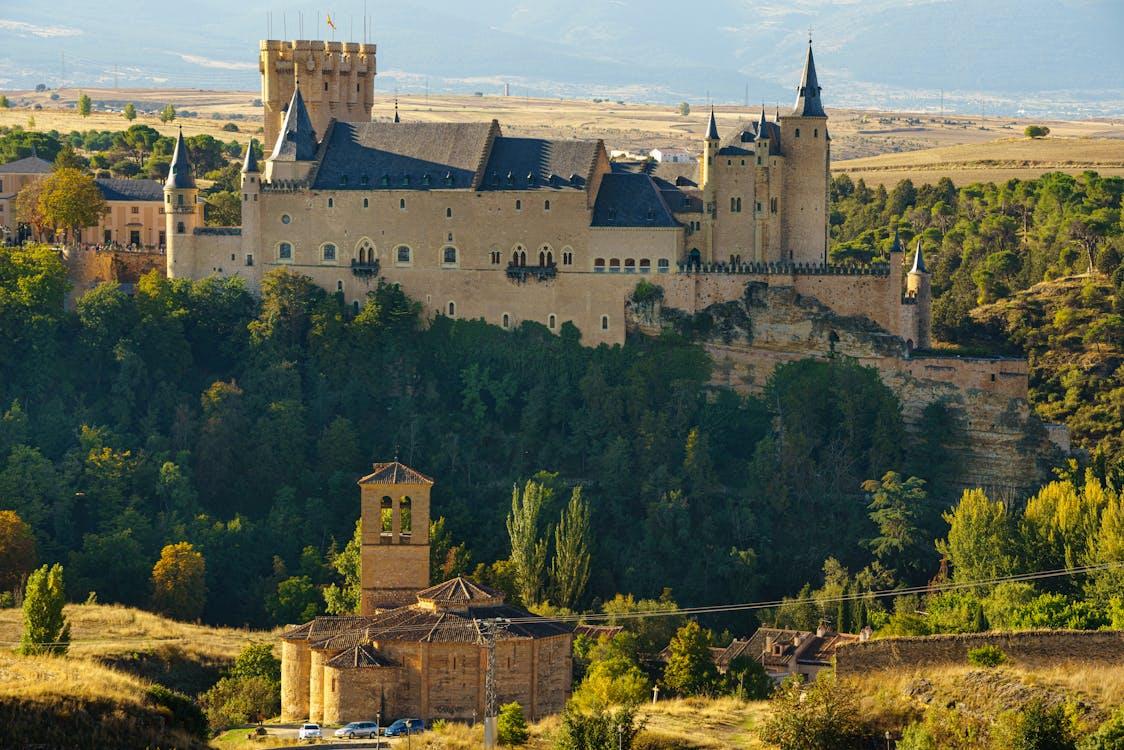
Alcázar de Segovia, Spain
Rising from a rocky crag above the confluence of two rivers near the Guadarrama mountains, the Alcázar of Segovia is one of Spain‘s most distinctive castles, famed for its ship’s-bow shape. Its origins trace back to a Roman-era fort, later utilized by the Moors before becoming a favoured residence of the monarchs of Castile during the Middle Ages. Key figures like Alfonso VIII and Isabella I (who was crowned Queen of Castile here in 1474) shaped its history. It evolved from a wooden fort to a magnificent stone fortress-palace, blending Moorish influences with Gothic architecture.
The Alcázar served various roles: royal palace, state prison, the Royal Artillery College, and now a museum and military archives. Its fairytale silhouette, complete with whimsical turrets, slate spires, and a deep moat, is rumoured to have been one of the inspirations for Walt Disney’s Cinderella Castle. Inside, visitors can explore opulent rooms like the Hall of Kings, featuring a stunning frieze depicting Spanish monarchs, the Throne Room, and the Armoury. Climbing the Tower of Juan II offers breathtaking panoramic views of Segovia and the surrounding countryside. This is truly one of the best medieval castles in Europe for sheer visual splendour.
Pro tip: Combine your visit with Segovia’s other famous landmarks: the incredible Roman Aqueduct and the stunning Gothic Cathedral.
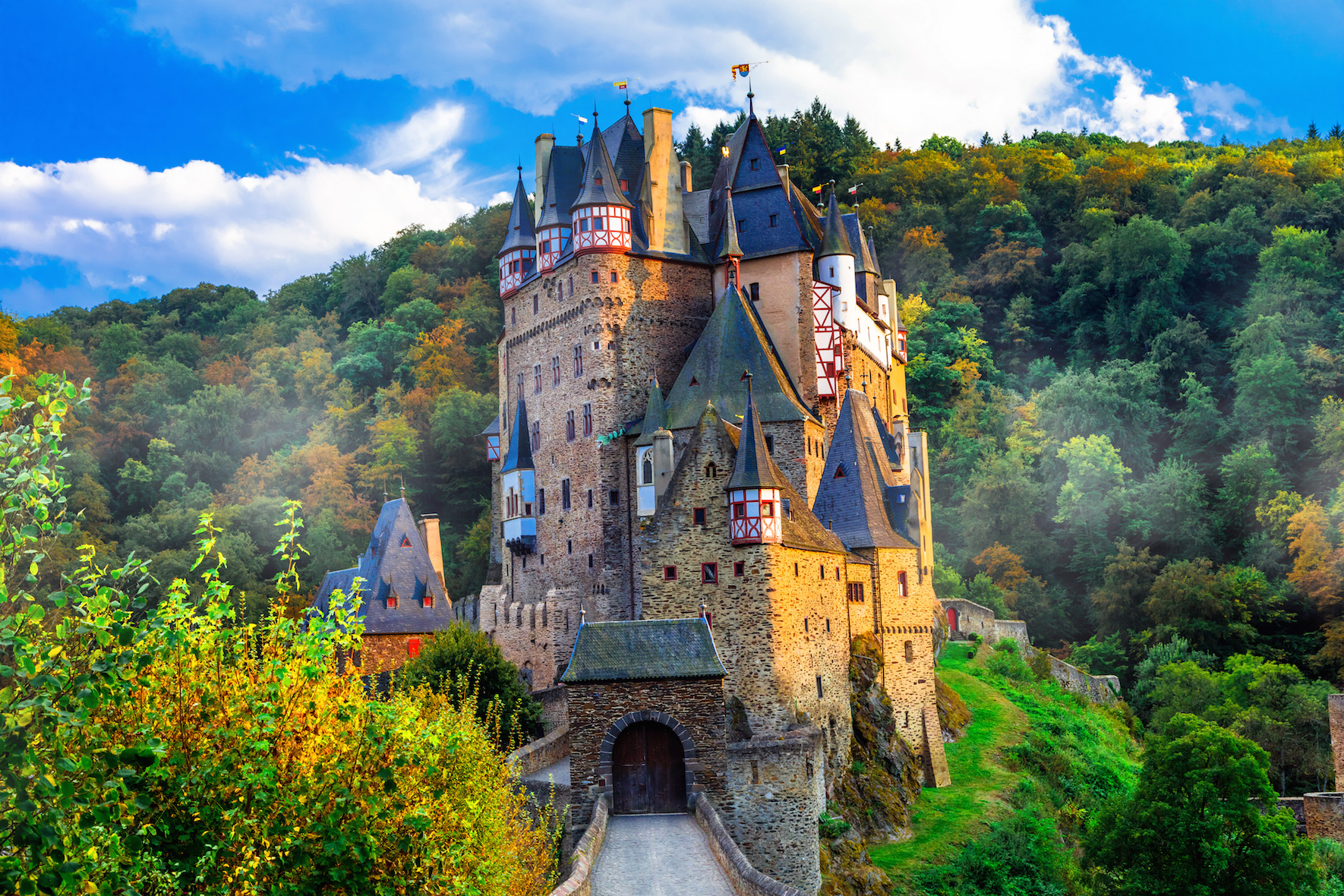
Eltz Castle (Burg Eltz), Germany
Hidden deep within a forested valley in western Germany, perched atop a rock spur in the Elzbach River, Eltz Castle looks ripped straight from a fairytale. What makes Eltz truly remarkable among medieval castles in Europe is that it has remained in the possession of the same family – the Eltz dynasty – for over 850 years, spanning more than 34 generations. Even more incredibly, it has never been destroyed or captured in battle, surviving centuries of conflict unscathed, partly due to its secluded location and clever diplomacy.
Construction began sometime before 1157. Unlike many castles owned by a single line, Eltz became a “Ganerbenburg,” meaning it was jointly owned and inhabited by several branches of the Eltz family simultaneously. This resulted in the unique cluster of residential towers and buildings we see today, essentially multiple family homes within one castle complex, built between the 13th and 17th centuries. Inside, you can explore authentically furnished rooms spanning different eras, showcasing original furniture, tapestries, armour, and treasures accumulated over centuries. It offers a rare glimpse into the domestic life of German nobility.
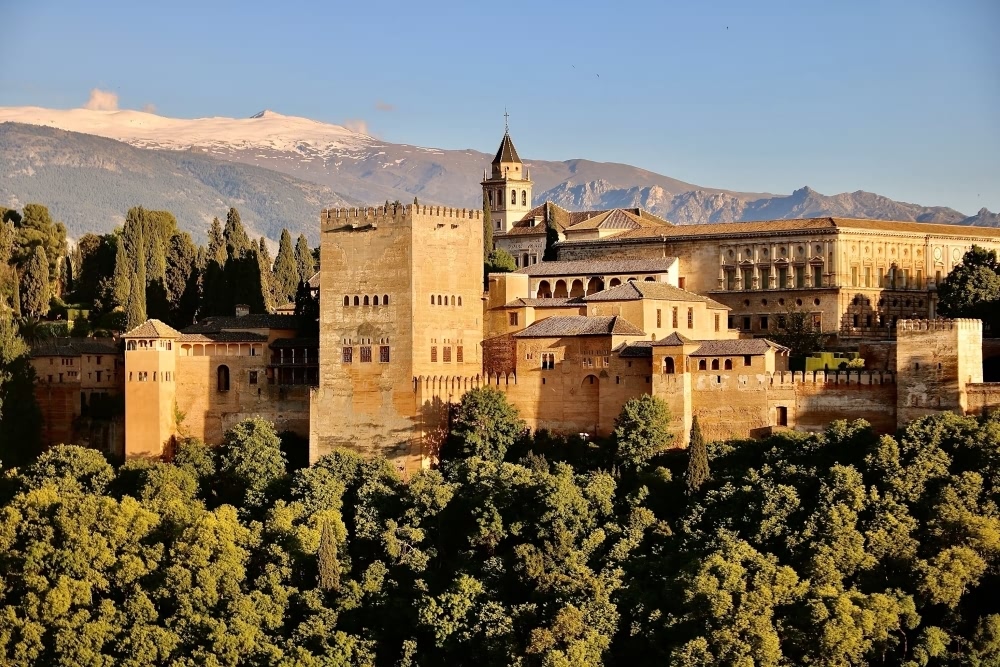
Alhambra, Spain
More than just a castle, the Alhambra in Granada is a breathtaking palace and fortress complex of the Moorish rulers who governed parts of Spain for centuries. Its name, meaning “The Red One” in Arabic, likely refers to the colour of its outer walls. While fortifications existed on the Sabika hill earlier, the main structures visitors see today were built primarily between the 13th and 14th centuries by the Nasrid dynasty, the last Muslim rulers in Iberia. It stands as the pinnacle of Moorish architecture and art in Europe.
The complex includes the Alcazaba (the original citadel with ramparts and towers offering stunning views), the Nasrid Palaces (the heart of the Alhambra, renowned for their intricate stucco work, colourful tile mosaics, elegant courtyards like the Court of the Lions, and delicate colonnades), and the Generalife (the sultans’ serene summer palace and gardens). After the Christian Reconquista in 1492, subsequent rulers made alterations, including the Palace of Charles V, a contrasting Renaissance addition. The Alhambra’s exquisite beauty, complex history, and blend of Islamic and later Christian elements make it utterly unique among European historical sites, though its primary construction falls within the later medieval times castles in Europe.
Pro tip: Tickets for the Alhambra, especially the Nasrid Palaces, sell out months in advance. Book online via the official website the moment you know your travel dates.
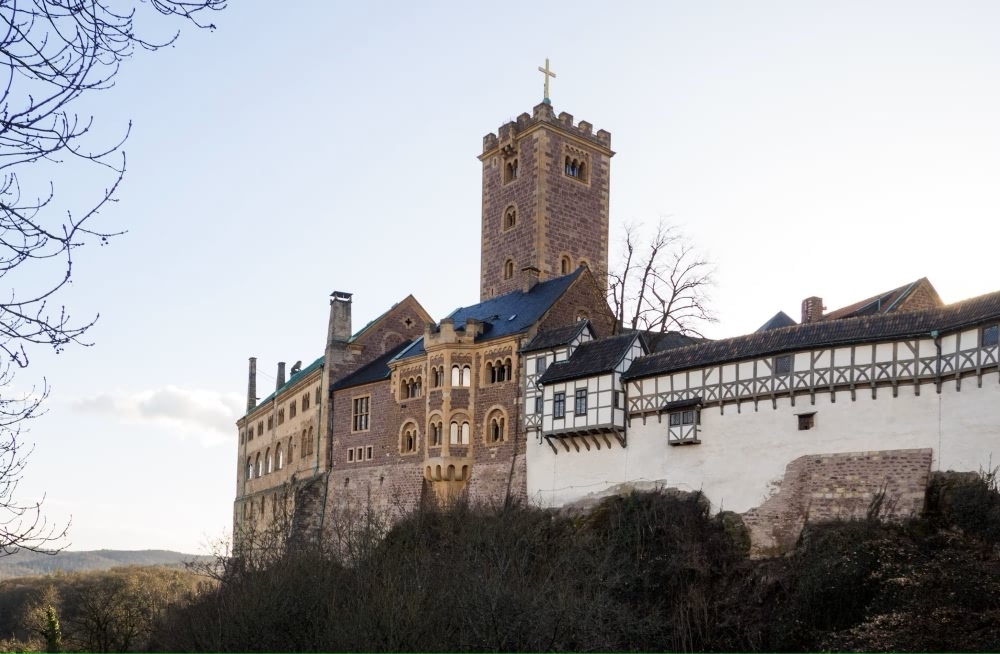
Wartburg Castle, Germany
Perched on a precipice overlooking the town of Eisenach in Thuringia, Wartburg Castle holds a special place in German history and culture. Its origins date back to 1067, making it one of the best-preserved medieval castles in Europe from that era. Unlike the fairytale creations of the 19th century, Wartburg boasts authentic medieval substance, primarily Romanesque architecture, although additions continued through the centuries. It was the seat of the Landgraves of Thuringia and hosted the legendary Sängerkrieg (minstrels’ contest) in the 13th century, later immortalized in Wagner’s opera Tannhäuser.
However, Wartburg is most famous for providing refuge to Martin Luther in 1521-1522. After being declared a heretic, Luther hid here disguised as ‘Junker Jörg’ (Knight George). During his 10-month stay, he undertook the monumental task of translating the New Testament from Greek into German, a pivotal event in the Protestant Reformation and the standardization of the German language. Visitors can see the ‘Luther Room’ where he worked. Recognized as a UNESCO World Heritage site, Wartburg is a powerful symbol of German history and Christianity.
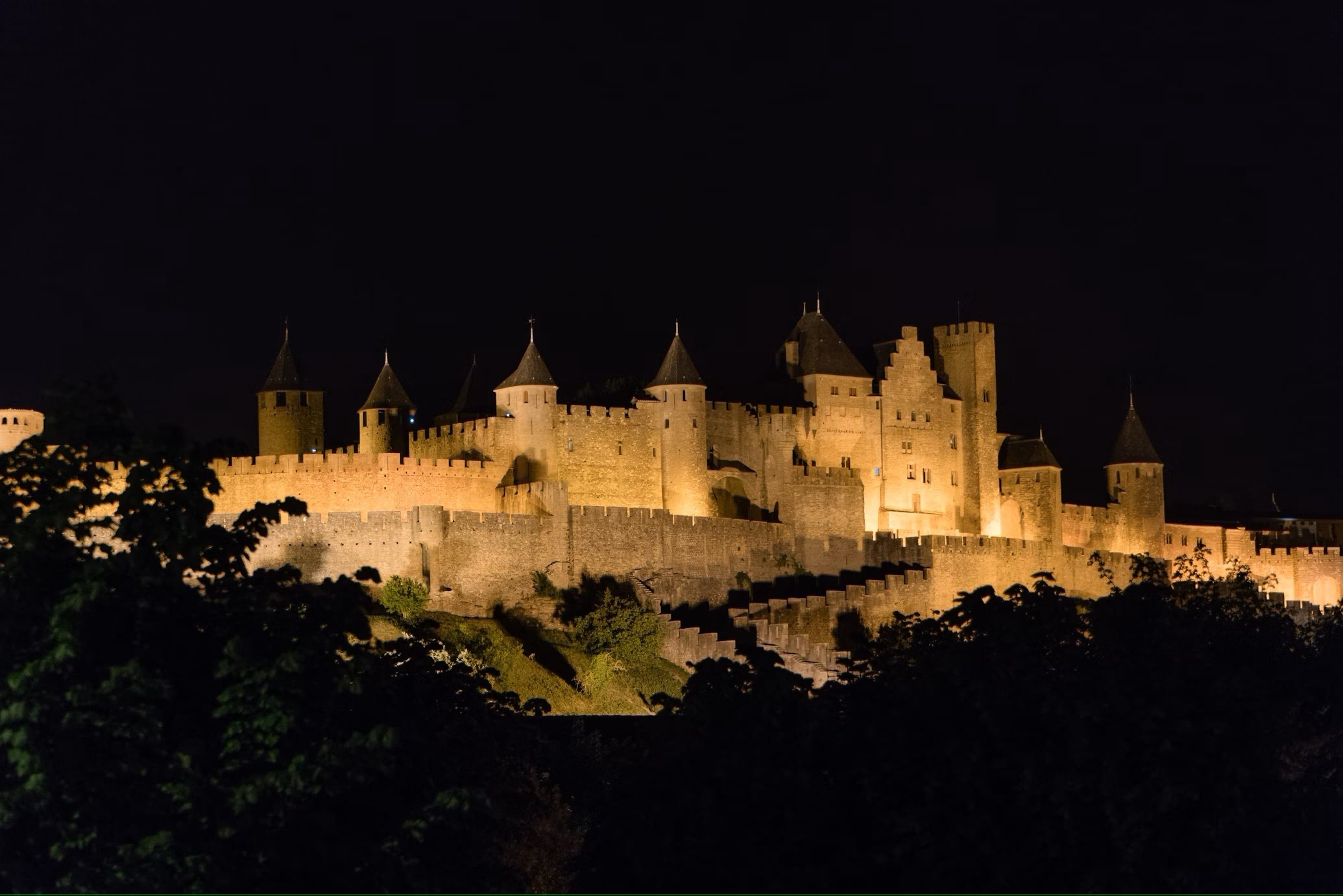
Cité de Carcassonne, France
The Cité de Carcassonne is not just a castle but a fully realized medieval fortified city, located in the Languedoc region of southern France. With origins dating back over 2,500 years to pre-Roman times, this UNESCO World Heritage site is renowned for its massive double circuit of defensive walls (nearly 3 kilometers long) interspersed with 52 towers. It achieved its peak during the medieval period, particularly under the Trencavel viscounts.
After falling into disrepair, the Cité was famously saved from demolition and meticulously restored in the 19th century by the architect Eugène Viollet-le-Duc, whose work, while sometimes debated, preserved this incredible monument. Walking through its narrow, winding streets, exploring the inner Château Comtal (Count’s Castle), and patrolling the ramparts feels like stepping directly into the Middle Ages. It’s a living museum and one of the most impressive examples of medieval fortification surviving today.
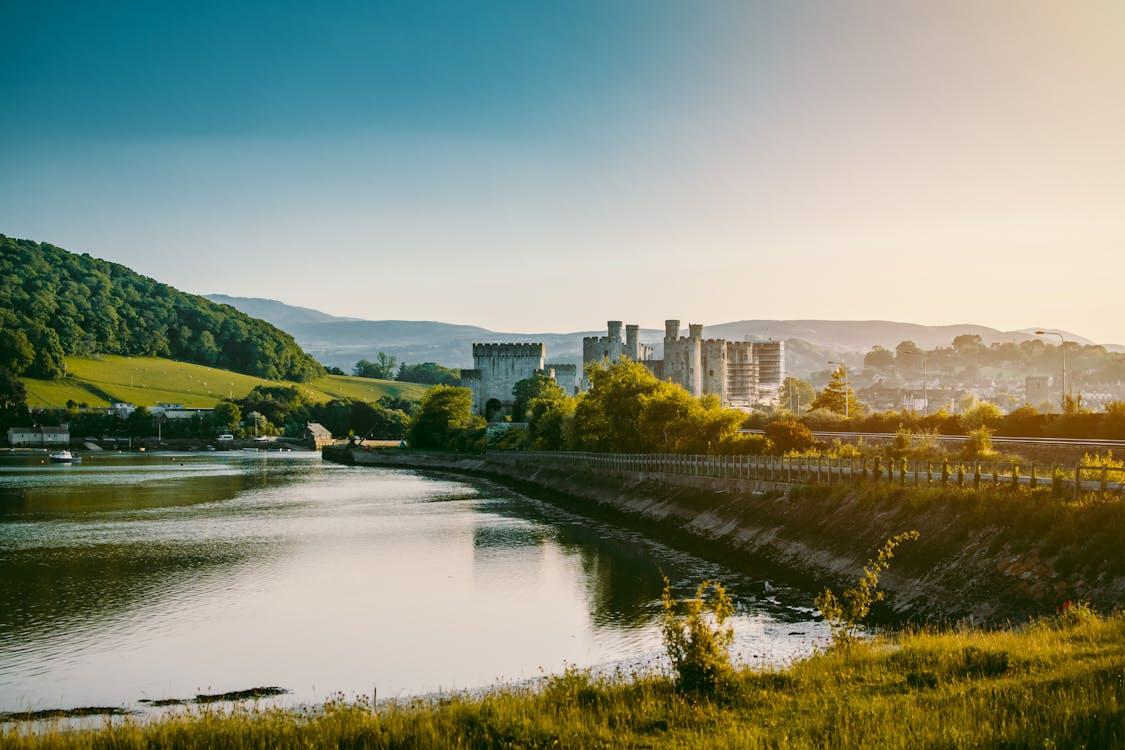
Conwy Castle, Wales
A brute in stone, Conwy Castle in North Wales is a masterpiece of medieval military architecture. King Edward I of England built the castle as part of the “Ring of Iron” fortress during his conquest of Wales. Designed by Master James of St George (the genius architect behind many of Edward’s Welsh castles), Conwy is considered one of the finest examples of late 13th-century military construction in Europe. Its high curtain walls are punctuated by eight massive, imposing round towers, creating a formidable and instantly recognizable silhouette.
The castle is strategically positioned on a coastal ridge overlooking the Conwy Estuary, originally integrated with the town walls, also built by Edward I, which still encircle Conwy town today – a remarkably well-preserved medieval defensive system. Visitors can walk almost the entire circuit of the battlements, enjoying spectacular views of the town, estuary, and Snowdonia mountains beyond. The castle’s interior, though now roofless, clearly shows the division between the Outer Ward (containing the Great Hall) and the more private Inner Ward, which housed the royal apartments.
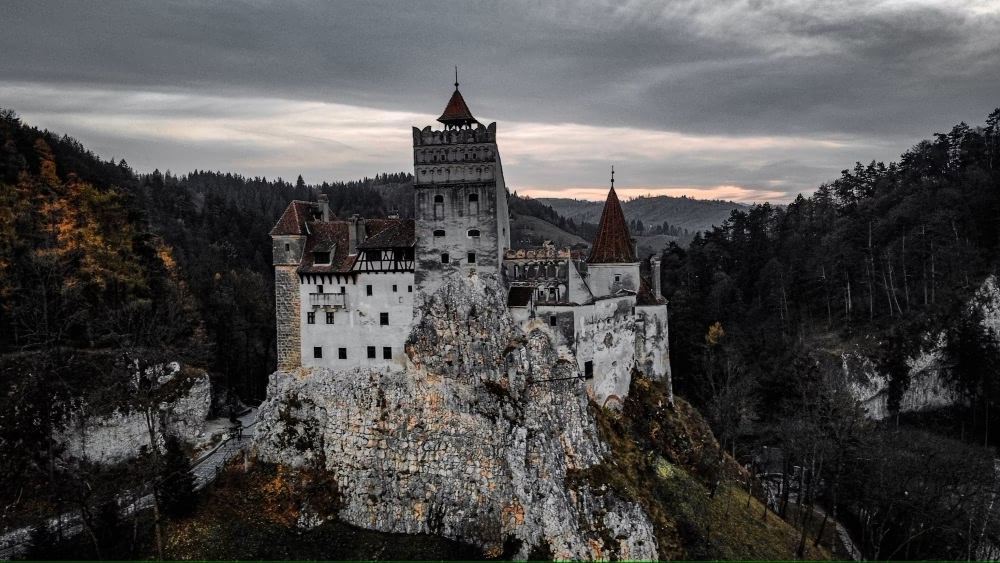
Bran Castle, Romania
Bran Castle is inextricably linked with the legend of Dracula. While its connection to Bram Stoker’s fictional vampire is tenuous (Stoker likely used descriptions of Bran, though never visited, and its link to the historical Vlad the Impaler, one inspiration for Dracula, is debated and minimal), the castle’s gothic appearance and atmospheric setting perfectly fuel the imagination. This association has made it one of the most famous medieval castles in Europe, attracting hordes of visitors.
Beyond the Dracula myth, Bran Castle has a genuine and fascinating history. Initially a wooden structure built by the Teutonic Knights in 1212, it was replaced by a stone fortress commissioned by Louis I of Hungary in 1377 to defend the mountain pass from the Ottoman Empire and serve as a customs post. It later passed through various hands, including local Saxon lords and Romanian royalty. Queen Marie of Romania, granddaughter of Britain’s Queen Victoria, extensively renovated it in the 1920s and used it as a favourite royal residence. Today, it operates as a museum displaying art and furniture collected by Queen Marie, alongside exhibits exploring the castle’s history and the Dracula legend.
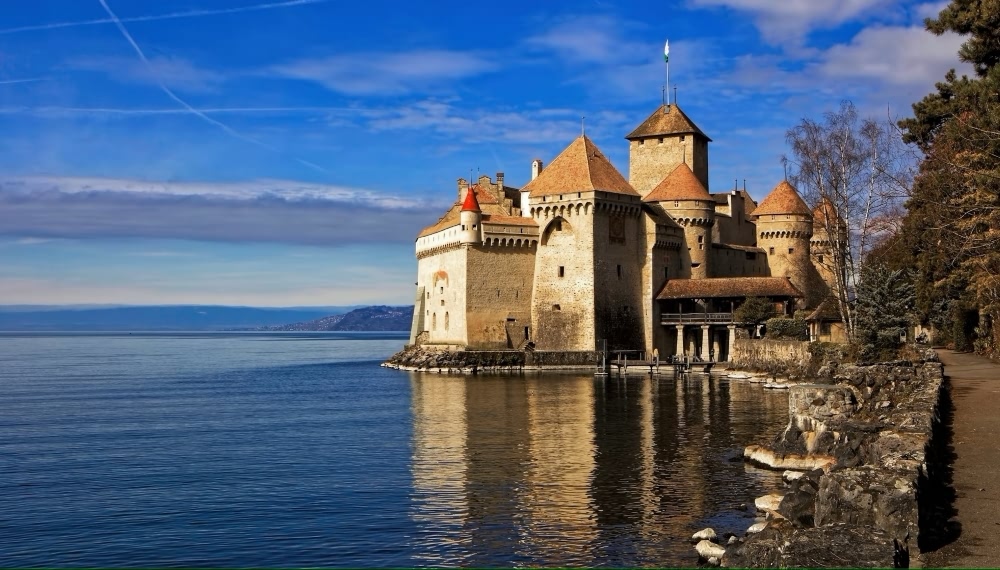
Château de Chillon (Chillon Castle), Switzerland
Switzerland‘s most visited historic monument, Château de Chillon, is located on a rocky island on the shores of Lake Geneva. Its strategic position controls the passage between the lake and the steep Alps, a vital route from northern to southern Europe. While occupied since the Bronze Age, the current castle’s foundations date back to the 11th century, with significant expansion under the Counts of Savoy from the mid-12th century onwards. For nearly four centuries, it served as their residence and a profitable toll station.
The castle boasts two distinct faces: the formidable fortress side facing the land, and the more palatial residential side facing the lake. Inside, you can explore a labyrinth of courtyards, grand halls (like the Great Hall or Aula Nova), a chapel with 14th-century murals, subterranean vaults that famously imprisoned François Bonivard (inspiring Lord Byron’s poem “The Prisoner of Chillon”), and beautifully preserved bedrooms. The architecture reflects centuries of development, primarily Gothic. Its idyllic lakeside setting against the backdrop of the Alps makes it one of the most picturesque medieval castles in Europe.
Pro tip: Arrive via a scenic boat trip across Lake Geneva for stunning views of the castle from the water.
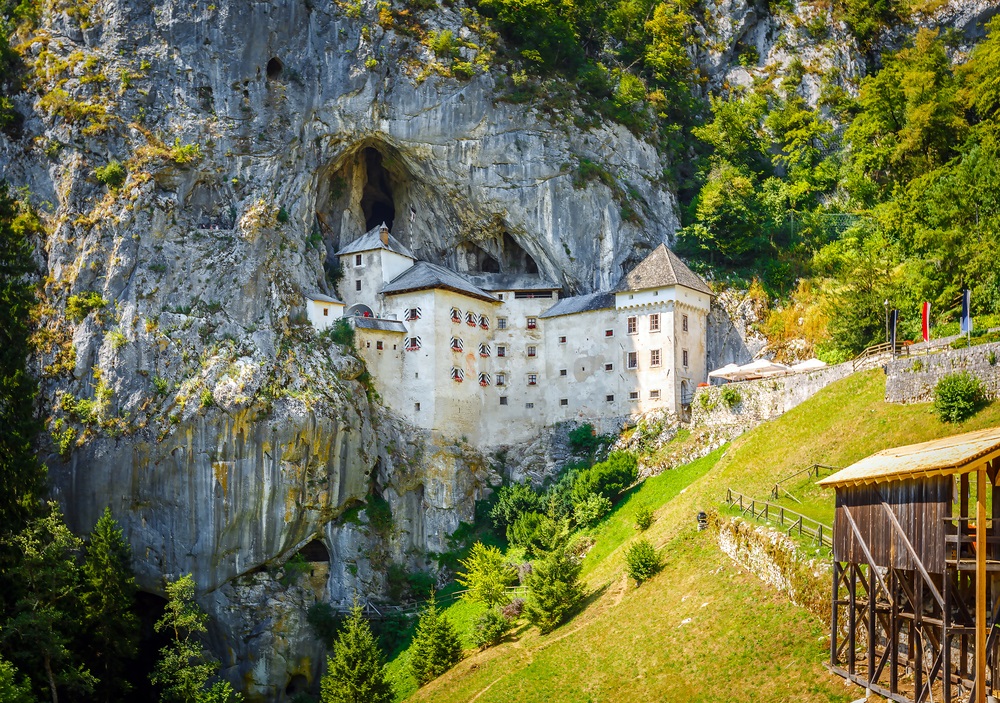
Predjama Castle, Slovenia
Clinging dramatically within the mouth of a towering cave halfway up a 123-metre (404 ft) cliff, Predjama Castle is a marvel of medieval engineering and audacity. Located near Postojna Cave in southwestern Slovenia, its name literally means “Castle in Front of the Cave.” First mentioned in 1274, the castle gained notoriety through its most famous resident, the rebellious knight Erazem Lueger (or Luegger), Slovenia’s own Robin Hood figure, in the 15th century.
During a siege, Erazem utilized a secret natural cave network behind the castle (leading out to the valley) to smuggle supplies, allowing him to withstand the Imperial forces for over a year. Legend claims he was finally betrayed and killed by a cannonball while using the latrine, supposedly the one weak spot on the outer wall. The current castle largely dates from a rebuilding in 1570, in Renaissance style, after the medieval structure was destroyed by an earthquake. Inside, you can see recreated living quarters, a chapel, and the dungeon, while exploring the cave system behind offers insight into its unique defensive advantage.
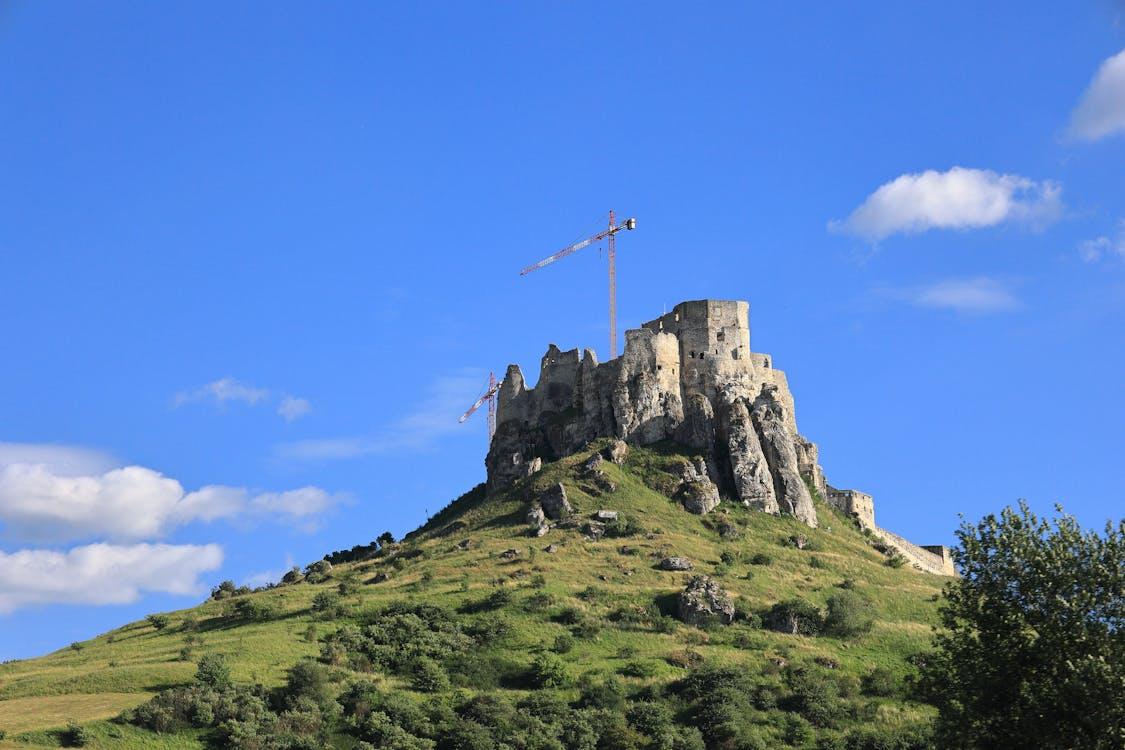
Spiš Castle, Slovakia
Covering a vast area of over four hectares (nearly ten acres), Spiš Castle (Spišský Hrad) in eastern Slovakia is one of the largest castle complexes in Central Europe by area. Much of the castle is now in ruins, but its majestic silhouette against the limestone hills dominates the surrounding landscape. The castle, which has been inscribed on the UNESCO World Heritage List, traces its origins back to the 12th century, when it was originally a border fortress for the early Hungarian state.
Over centuries, it evolved from a Romanesque stone castle with fortifications into a grand Gothic residence, particularly under the ownership of the Zápoľský family in the 15th century, who added a palace, knight’s hall, and chapel. Tragically, a fire in 1780 destroyed much of the complex, leading to its gradual abandonment. Conservation efforts began in the 1970s to stabilize the impressive ruins. Exploring the expansive site offers insights into medieval life and castle evolution on a grand scale.
Castel del Monte, Italy
Castel del Monte in Puglia, Southern Italy, is famous for its distinctive and mathematically precise octagonal design. Built in the 1240s by the Holy Roman Emperor Frederick II Hohenstaufen, this UNESCO World Heritage site stands isolated on a hill, commanding views over the surrounding landscape. The castle consists of a perfectly octagonal main structure with an octagonal tower at each of its eight corners, and an octagonal courtyard at its center.
The purpose of Castel del Monte remains debated among historians. While possessing some defensive features, it lacks others typical of military fortresses (like a moat or drawbridge) and its location isn’t particularly strategic. Theories suggest it may have been a hunting lodge, a symbolic representation of imperial power, or even an astronomical observatory, given its precise geometric and potential solar alignments. Its stark beauty, architectural perfection, and enduring mystery make it a fascinating visit.
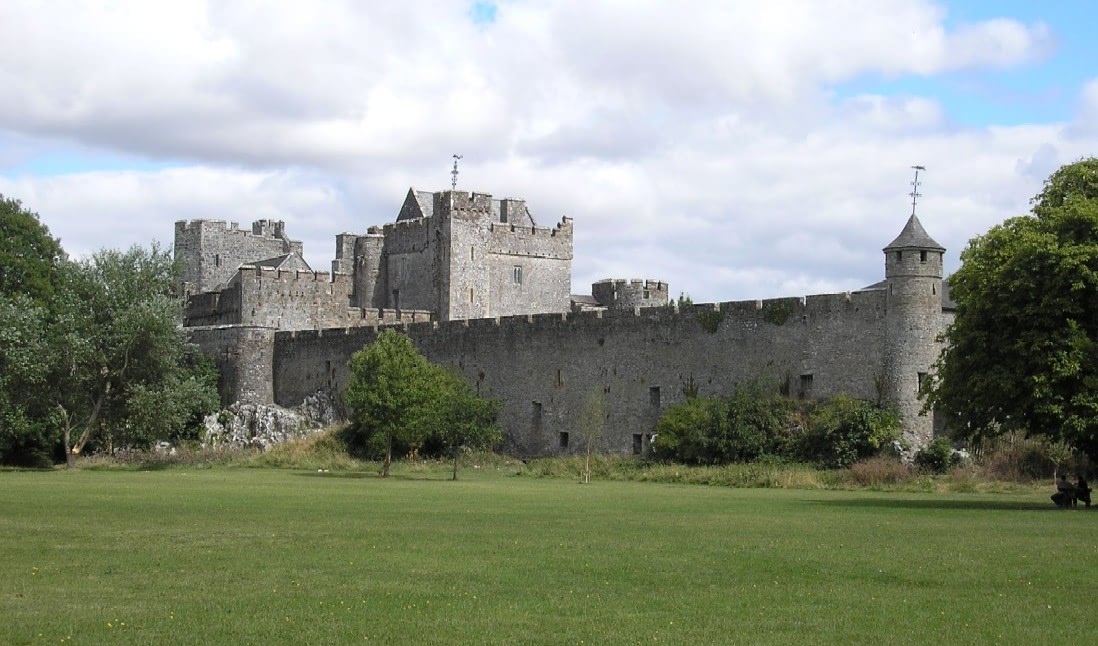
Cahir Castle, Ireland
Cahir Castle is one of Ireland‘s largest and best-preserved medieval castles. Its origins trace back to the 3rd century, but the core structure seen today was built by the powerful Butler family, starting in 1142 under Conor O’Brien, Prince of Thomond, and significantly developed throughout the 13th century. Unlike many Irish castles that fell into ruin, Cahir retained much of its original structure, including its keep, towers, and defensive walls, largely thanks to careful restoration.
The castle boasts an impressive curtain wall, three wards (courtyards), and a substantial keep. It withstood several sieges, notably falling to the Earl of Essex in 1599 after a bombardment, and surrendering to Oliver Cromwell in 1650 without a fight. The Butlers regained the castle and lived there until the 1960s. Its excellent state of preservation allows visitors to truly step back into medieval times castles in Europe, imagining life within its robust walls. It has also served as a filming location for movies like Excalibur and The Tudors.
The 3 Types of Medieval Castles
Medieval castles can be broadly categorized into four types :
Motte-and-bailey castles. These castles appeared in large numbers after the Norman Conquest of England in 1066 and are one of the earliest distinctive castle types of the Middle Ages. Featuring an earthen mound (motte) topped with a wooden keep and an enclosed courtyard (bailey), they were relatively quick and cheap to build, excellent for quickly establishing control over newly conquered territory. Their height offered a defensive advantage against contemporary attackers. Examples like the original Windsor Castle started this way.
Stone-keep castles. As building techniques advanced and the need for stronger defences grew in the 11th and 12th centuries, timber structures were gradually replaced by stone, offering greater fire resistance and permanence. They were also significant status symbols, demonstrating the wealth and power required for their lengthy and costly construction. The White Tower at the Tower of London is a prime example.
Concentric castles. Emerging in the 12th and 13th centuries, heavily influenced by designs encountered during the Crusades, these represent the pinnacle of medieval defensive architecture. Provided maximum defence through multiple obstacles. Attackers breaching the outer wall would find themselves trapped in a killing ground between the two walls, vulnerable to fire from the inner defences.
These were incredibly expensive and took decades to build, usually commissioned only by powerful monarchs or nobles. Beaumaris Castle in Wales is a classic, albeit unfinished, example.
Fun Facts about Medieval Castles
Moats weren’t always filled with water
In areas with dry terrain, castles used dry moats—deep trenches that slowed attackers.
Lavish banquets took place in drafty halls
Great halls had huge fireplaces, but food often cooled before being served to long tables.
Castle kitchens could be separate from living quarters
To reduce fire risk, cooking took place in outbuildings connected by covered walkways.
Some castles doubled as prisons
The dank dungeons beneath keeps held high-value captives whose ransoms paid for castle expansions.
Clockwise spiral staircases
Nearly all castle staircases wind clockwise going up—a tactic that forced right-handed attackers to fight with their weaker hand as they ascended the narrow stairs while defenders above could strike unimpeded.
Toilets dumping into the moat
Latrines (called garderobes) often jutted out on corbels so that waste fell directly into the moat—or even into an adjacent river—keeping foul smells away from living quarters.
Hidden sally ports
Many castles had tiny, concealed doors—known as sally ports—that allowed defenders to launch surprise sorties or evacuate if under siege.
Cats on the payroll
Some castles officially hired cats as “mousers,” setting aside budget money to feed them when they didn’t catch enough rodents—medieval pest control with payroll entries.
Murder holes and arrow slits
Narrow vertical slits let archers fire on attackers, while “murder holes” in ceilings above entryways allowed defenders to drop stones or boiling liquids onto invaders.
Ovens big enough for an ox
In grand kitchens—like those at Marlborough and Ludgershall—chefs baked and roasted entire oxen in massive ovens, with built-in drains to whisk away kitchen waste.
Built on Roman forts
The Normans often reused the walls of earlier Roman castra—Pevensey Castle in East Sussex being a prime example—saving time and resources by building atop existing stonework.
Treadwheel cranes powered by people
Heavy stones were lifted by workers walking inside huge wooden wheels (treadwheels), a technology revived from Roman times and widely used in 13th-century castle and cathedral construction.
Moats as status symbols
Beyond defense, moats showcased wealth—some were ornamental, stocked with fish for leisurely angling or even small boats—signaling a lord’s power as much as his military strength.
Moats doubling as sewers
In many castles, the same water that surrounded the walls carried away human waste, turning the moat into an impromptu sewage channel and making it both defensive and hygienic (by medieval standards).
Gargoyles as waterspouts and guardians
Those grotesque stone figures weren’t just decoration—gargoyles channeled rainwater away from walls, and folklore held that they also scared off evil spirits.
Frequently Asked Questions
Which country in Europe has the most medieval castles?
Pinpointing the exact country is difficult as definitions and counts vary. However, France and Germany are frequently cited as having the highest numbers, potentially tens of thousands of castle sites, ranging from ruins to fully preserved structures. Wales is also noted for having the most castles per square mile.
What is the oldest castle in Europe?
Defining the “oldest” depends on criteria. Windsor Castle (England, founded c. 1070) is widely considered the oldest continuously occupied castle. Château de Doué-la-Fontaine (France, c. 950) might have older stone foundations but is largely ruins. Fortifications existed much earlier, but these represent early examples of what we typically recognise as medieval castles.
How many medieval castles are still standing?
While precise numbers are hard to verify, estimates suggest there are well over 10,000 medieval castles or castle sites still existing across Europe. Many are impressive ruins, while others have been continuously occupied, restored, or rebuilt over the centuries.
Why were castles important in the Middle Ages?
Castles were crucial multi-functional centres. They served as:
* Military Strongholds: Defending territory and populations.
* Residences: Homes for kings, lords, and knights.
* Administrative Hubs: Centres for governing surrounding lands, collecting taxes, and dispensing justice.
* Symbols of Power: Demonstrating the wealth, status, and authority of their owners.
* Economic Centres: Often attracting settlements and trade around their walls.
Exploring these magnificent remnants of the past provides incredible insight into the lives, struggles, and triumphs of those who lived during medieval times in Europe. Each stone holds a story, waiting to be discovered.



There are no comments.