

When we talk about national parks, those on the West Coast are probably the first to come to mind. Especially the expansive canyons of Zion or the geysers of Yellowstone. While these parks are truly magnificent, they are not the only options for outdoor adventure. The East Coast of the United States and Canada is home to several spectacular parks that offer a completely different kind of wild beauty.
From the swampy lowlands of Florida to the rugged Atlantic islands of Newfoundland, these East Coast national parks offer something for nature lovers of all kinds. To make choosing your destination easier, we’ll take you on a tour of some of the most impressive national parks on the East Coast and give you insider tips on making the most of your visit.

Everglades National Park, USA
Everglades National Park is located in Florida, an hour’s drive from Miami. The Everglades is teaming with swamps, wetlands, and forests that are filled with stunning birdlife, reptiles, and marine mammals, including the West Indian manatee.
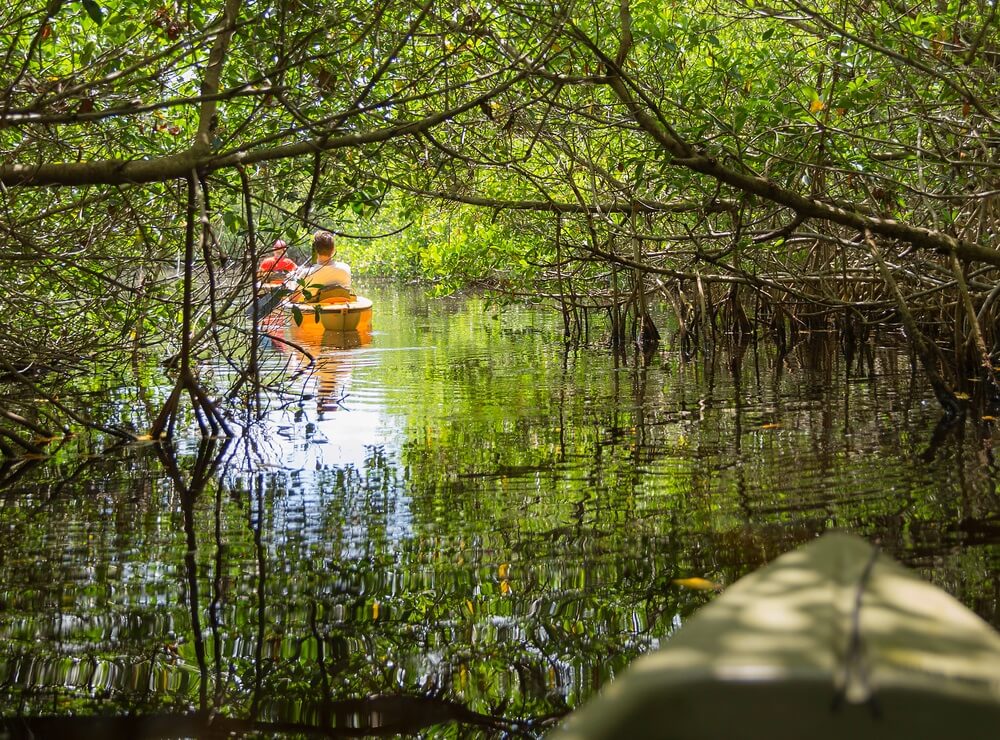
Best time to visit: The dry season from December to April is the most popular time to visit. Temperatures during this time range from 69-79 °F (20-26 °C), the weather is cool and dry, and the lack of water concentrates wildlife and makes it easier to spot them.
Things to do: You can take a day trip from Miami to the Everglades, where an airboat tour is a classic and thrilling way to see the park’s alligators. You can also take a ranger-led walk, kayak through the mangrove tunnels, or bike along the paved Shark Valley Trail.
Fees: For bike or walk-in access, passes are $20 a person. For private vehicles, it is $35 and covers the driver and all passengers. All park entrances are valid for 7 consecutive days.
Great Smoky Mountains, USA
A gem of the South, the Great Smoky Mountains National Park stretches out across North Carolina and Tennessee with rolling mountains and forests that are truly worth getting lost in.
One of the most visited national parks in the U.S., the Great Smoky Mountains offers travelers a variety of trails, drives, and historical landmarks to discover, as well as stunning wildlife, wildflowers, and waterfalls.
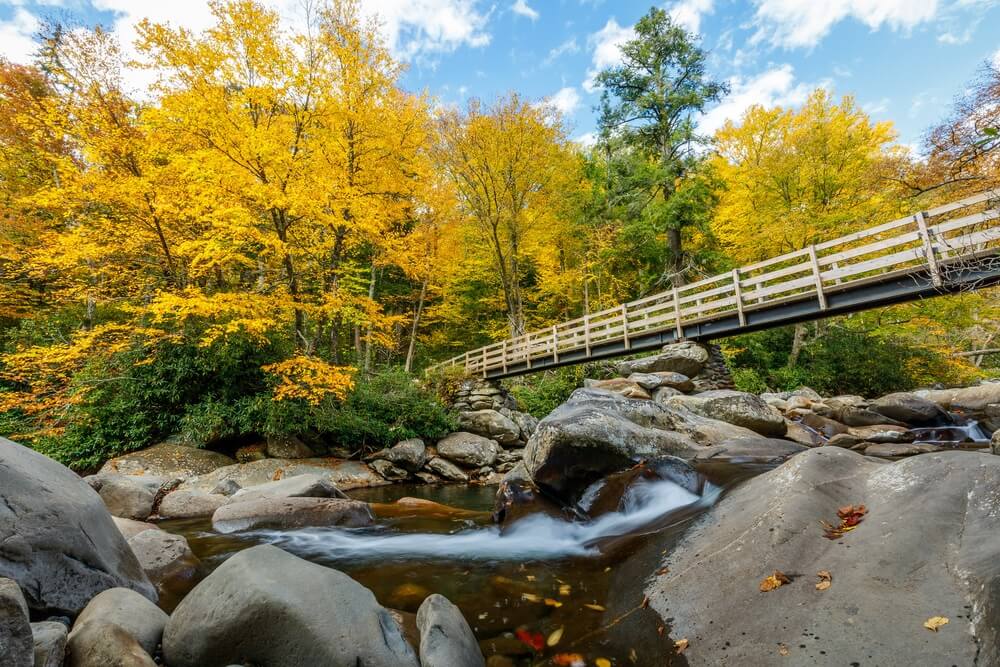
Best time to visit: March-May in spring and September-October in fall are the best seasons to visit this place. The weather is much cooler during these two seasons, with lows as low as 8°F (4°C) and highs as high as 82°F (28°C). Out In the spring, you can enjoy wildflowers and misty fog, and in the fall, this is one of the best destinations in the United States for fall foliage.
Things to do: We can drive along the scenic Clingmans Dome Road to reach the highest point in the park and take in the breathtaking views. Hike a section of the Appalachian Trail or visit some of the park’s many waterfalls, such as Laurel Falls.
Fees: Admission to the park is free. However, if you park for more than 15 minutes, you will need to purchase a parking sticker: $5 for a daily pass, $15 for a weekly pass, and $40 for an annual pass.
Shenandoah National Park, USA
Shenandoah National Park is an hour’s drive from Washington, D.C., and is the perfect remove to escape the city. Wrapping around the Blue Ridge Mountains, the park is home to the enchanting Skyline Drive through the valley, a 105-mile (169 km) stretch of road that follows the mountains’ ridge. There are dozens of scenic overlooks where you can park and enjoy spectacular views of the valley below.
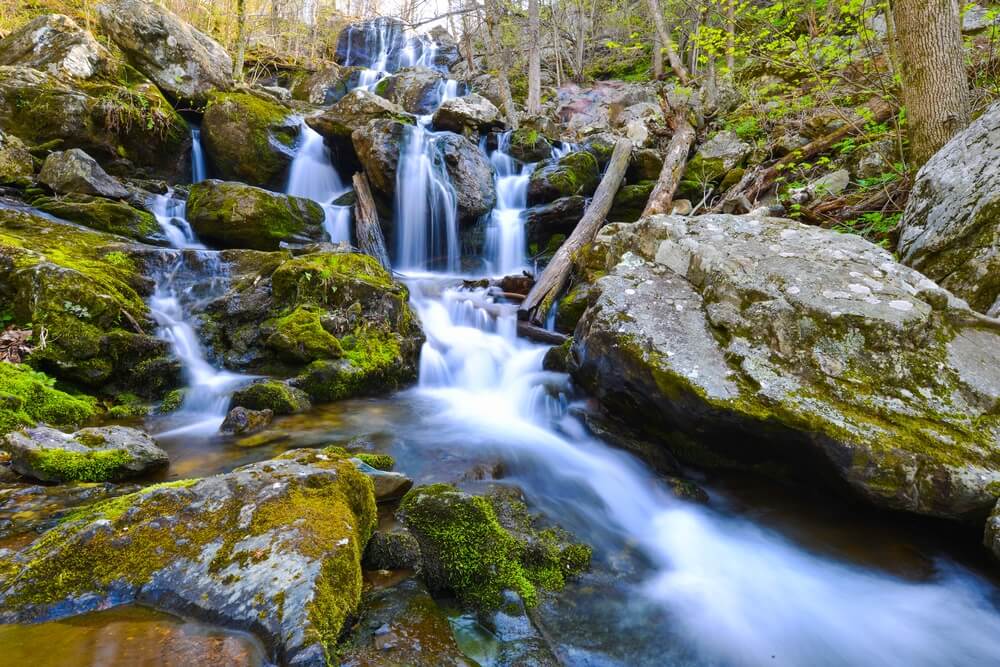
Best time to visit: The best time to visit is March-May in the spring and September-November in the fall. The average temperature will be 49°F to 60°F (9-15 °C). The fall foliage is unforgettable, and in the spring, the area blooms with large dogwood and mountain laurel trees.
Things to do: Skyline Drive is the most popular drive here, traversing the entire national park and boasting several viewpoints to check out the beauty of the valley. There are also many hiking trails within the park to waterfalls and mountain peaks.
Fees: Walking or biking into the park is $15 per person; children are free. Private vehicles are $30.
Acadia National Park, USA
When it comes to national parks on the East Coast of the USA, Acadia National Park is iconic. A perfect representation of New England’s natural beauty, Acadia National Park is the highlight of any trip to Maine. A coastal national park just southwest of Bar Harbor, Acadia encompasses a series of Atlantic islands, as well as Mount Desert Island. This park is a stunning blend of land and sea, and you can watch the sunrise from the top of Cadillac Mountain – the first place in the U.S. to see the sunrise for most of the year.
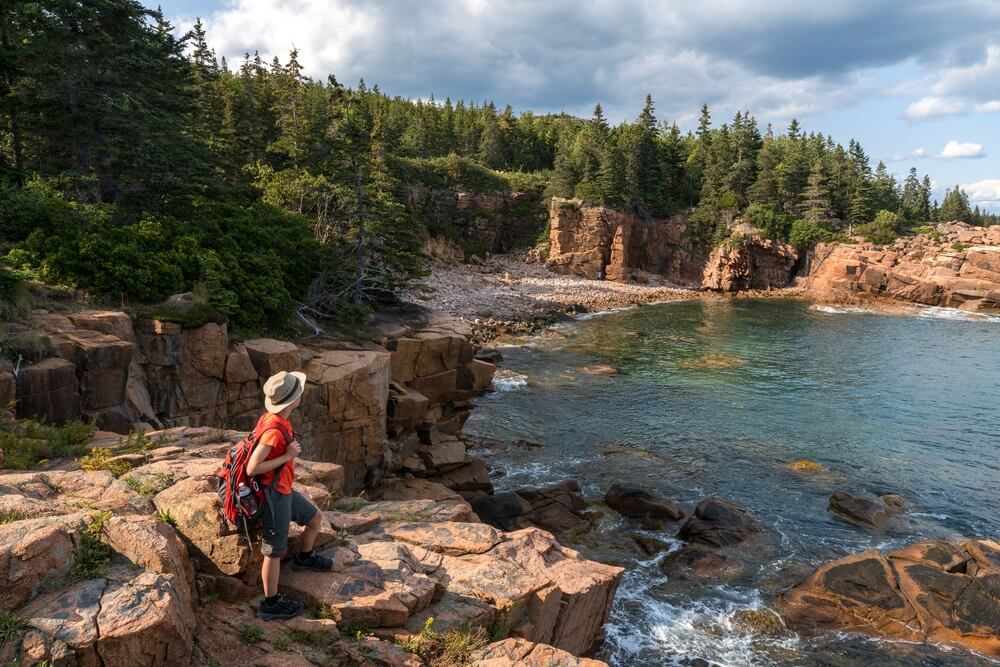
Best time to visit: Late spring to fall, May to October, crowds are low and temperatures average between 40 °F and 50 °F (4-15 °C). The summer months of June through August are the peak season, with temperatures ranging from 50 to 70 °F (10-25°C).
Things to do: Sand Beach is a great place for swimming as well as people watching, and at night, you can watch the sparkling stars from here. Not to be missed is a trip to Cadillac Mountain to watch the sunrise, rent a kayak to see the rocky coastline from the water, or enjoy a lobster roll in nearby Bar Harbor.
Fees: Entry by foot or bicycle is $20 per person or $35 for a private vehicle and is valid for 7 days.
Mammoth Cave National Park, USA
Mammoth Cave National Park, a vast limestone labyrinth that runs underground in Kentucky, is the longest cave system in the world and a must-see in Kentucky. Rich in history, Mammoth Cave has been inhabited by humans for more than 6,000 years, and today it is not only a national park but also a World Heritage Site and Biosphere Reserve. Here you can experience the unique atmosphere of the East Coast of the USA.
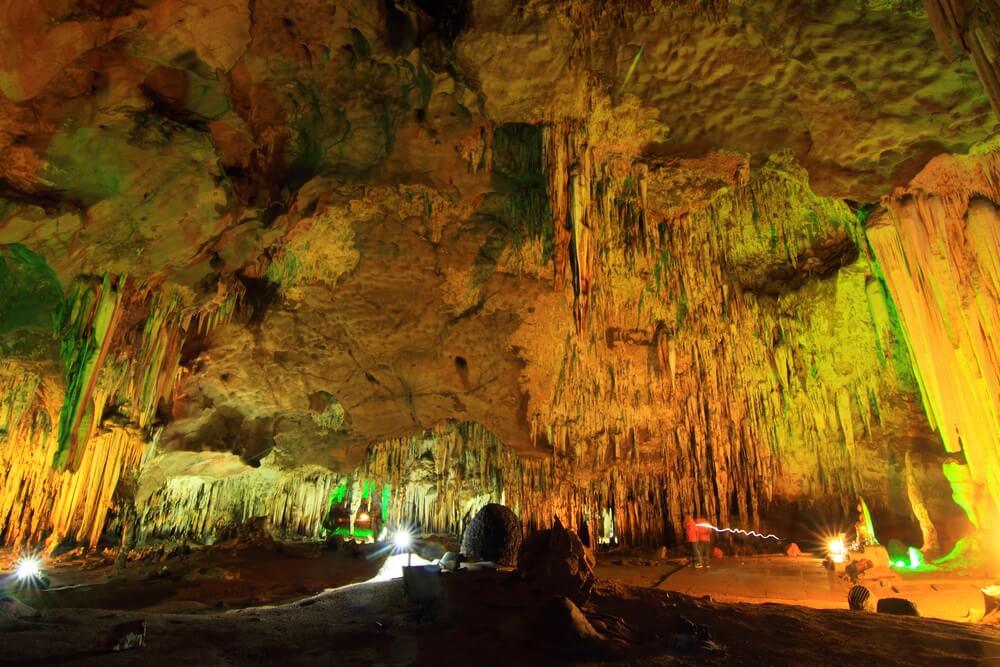
Best time to visit: It’s a great place to visit year-round, with cave temperatures stabilizing at 54°F (12°C) year-round. However, summer is the peak season for sightseeing, and you’ll encounter larger crowds.
Things to do: When you come to Mammoth Cave, you’ll find 16 adventures. The Historic Tour is the most popular, where you’ll take a guided tour to see iconic sites such as trails used by early miners and mining ruins, while the Wild Cave Tour is the most challenging and more physically demanding, requiring participants to traverse narrow passages.
Fees: No entrance fee, free entry to natural areas. Guided cave tours and other activities are available for an additional fee.
Hot Springs National Park, USA
Hot Springs National Park is a short drive from the city and has a series of old hot springs. It is also the oldest recreational area where you can experience a variety of hot spring facilities, and it is the perfect place to relax.
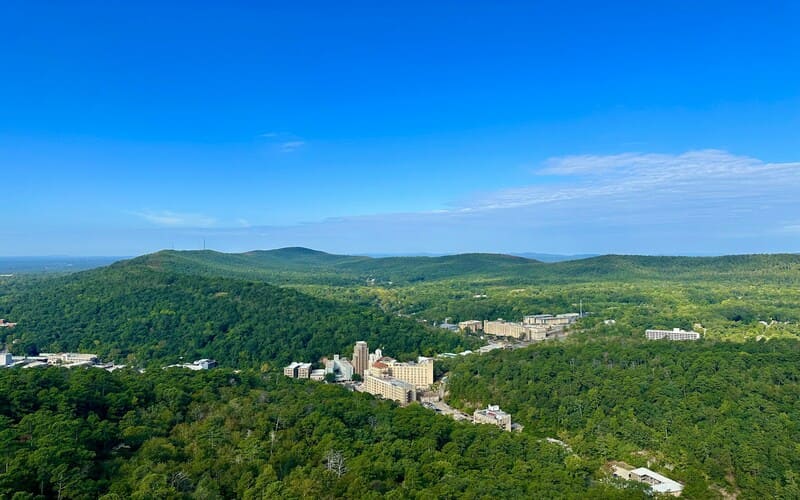
Best time to visit: The best times to visit are spring (April-May) and fall (September-October), when the weather is mild and comfortable, with average temperatures between 60 °F and 70 °F (15-26 °C).
Things to do: In Bathhouse Row, the most famous of the parks, amongst others, The Buckstaff Bathhouse is a bathhouse that has been in continuous operation for over a hundred years, offering a traditional bathing experience. You can also head to Hot Springs Mountain Tower for panoramic views of the park, and in the fall, you’ll be able to see the astounding fall foliage.
Fees: Free, no admission fee.
Dry Tortugas National Park, USA
Compared to other national parks on the East Coast USA, Dry Tortugas National Park isn’t really popular because of its more distant location. Located nearly 70 miles west of Key West, Florida, it consists of seven small islands, open ocean, and coral reefs. Fort Jefferson, the centerpiece of the area, is well worth a visit.
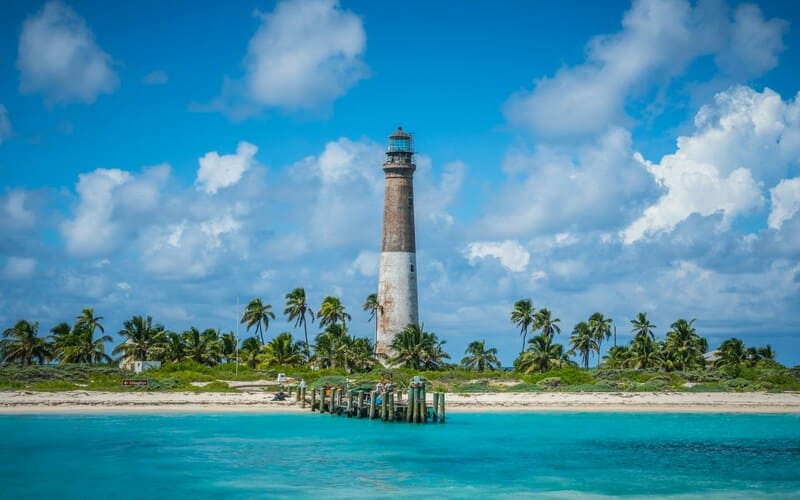
Best time to visit: Dry Tortugas National Park is good to visit all year round, but if your primary need is diving, then March-May is best. Temperatures during this time range from the mid-70s to 80 °F (26-29°C). The water is usually at its clearest, providing excellent visibility for viewing the coral reefs and marine life. If you’re just sightseeing, winter temperatures are mild with average highs around 70 °F (24 °C) in December-February, and there are fewer crowds.
Things to do: There is a range of natural and historical specialties to try. This includes visiting Fort Jefferson and walking through the arches and corridors to learn about the history of the area. And snorkeling is available in the shallow waters around Garden Key, and tropical fish and other marine life can be seen near the moat wall.
Fees: Tickets are $15 per person and are included in the ferry ticket. Children 15 and under are free. The Yankee Freedom ferry costs $235 round-trip for adults and $180 for kids.
Bruce Peninsula National Park, Canada
Once you cross the border into Eastern Canada, get ready to meet some of the world’s most stunning national parks, especially if you’re traveling to the Bruce Peninsula from Toronto. The Bruce Peninsula National Park, located in Ontario, provides visitors with a relaxing place to enjoy the beautiful beaches, forests, and islands. It also provides opportunities for hiking, swimming, and kayaking.
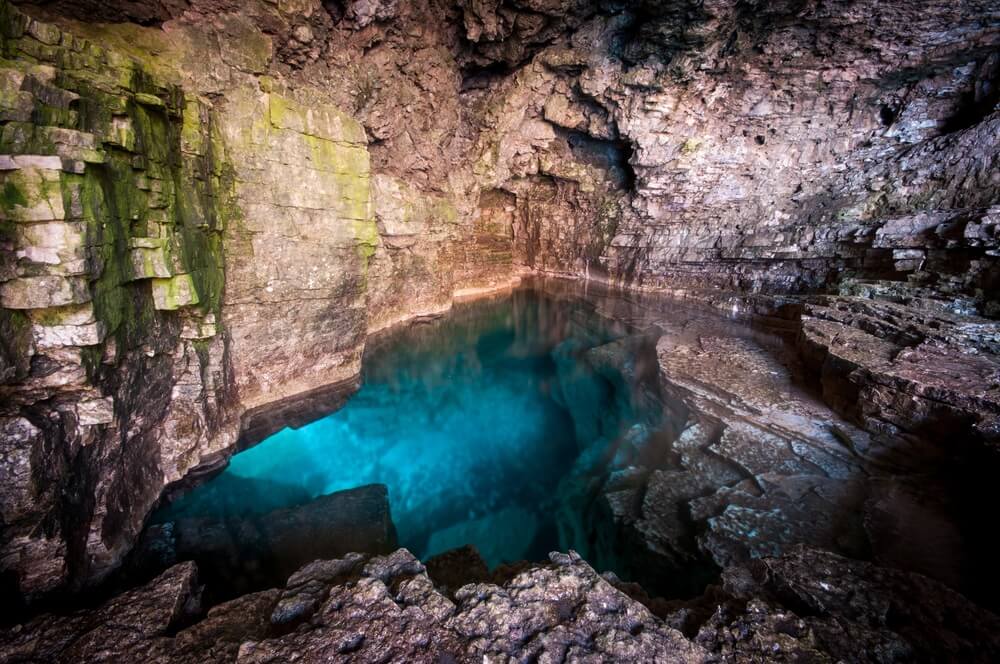
Best time to visit: The summer months (June through August) are perfect for swimming and enjoying the crystal clear waters. Daytime temperatures usually range from 60 °F (20 °C) to 80 °F (27 °C), making it ideal for outdoor activities.
Things to do: Within the park, you can view Cameron Lake and Cyprus Lake. The most popular attraction is the Grotto, with its turquoise waters and limestone caves, which can be reached via trails. If you have plenty of time, the scenery at nearby Flowerpot Island is also mesmerizing, and a Clear kayak is a hit here.
Fees: 2025-06-20 to 09-02 Admission is free, but parking must still be reserved in advance and paid for separately. Weekday admission prices are $9 for adults, 17 and under are free, while parking is $15.75.
Kouchibouguac National Park, Canada
This is a hidden treasure in the Canada East Coast national parks, located in the coastal parks of New Brunswick. Featuring barrier islands, lagoons, and salt marshes. It is the perfect place for a relaxing vacation with sandy beaches perfect for swimming and sunbathing. The park is also a birdwatcher’s paradise. And for serene bird watching, this is your first choice.
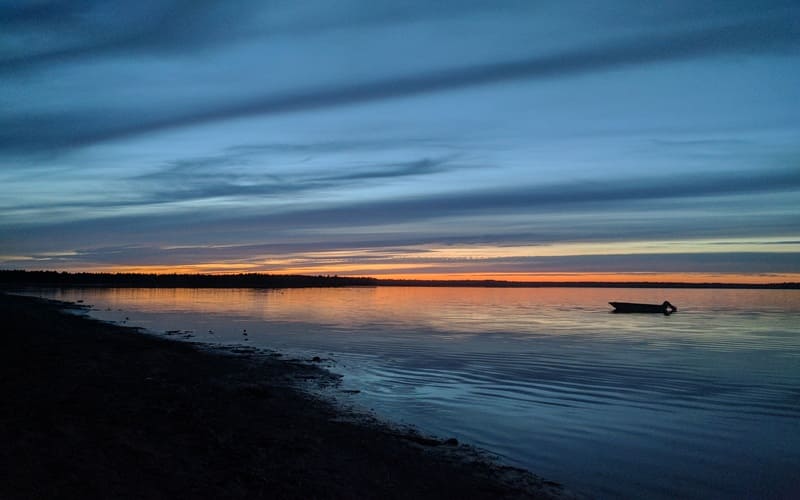
Best time to visit: The summer months (June through August) are perfect for beach days and biking on the park’s extensive trail system. Average temperatures are expected to range from 68°F to 77°F (20°C to 25°C).
Things to do: Kouchibouguac National Park is a family-friendly park, perfect for traveling with children. The lagoon here is calm and perfect for kayaking or biking on the trails. Camping and picnicking are both great relaxing options.
Fees: Adults $9, Seniors $7.75, Youth Free, Family or Vehicle Group $17.50.
Fundy National Park, Canada
Delve deep into Canada’s wilderness and you’ll find Fundy National Park, another coastal gem tucked away in New Brunswick. It’s home to some of the highest tides in the world, creating a unique landscape. Especially at low tide, the ocean floor is exposed, and you can walk and observe the marine life left behind.
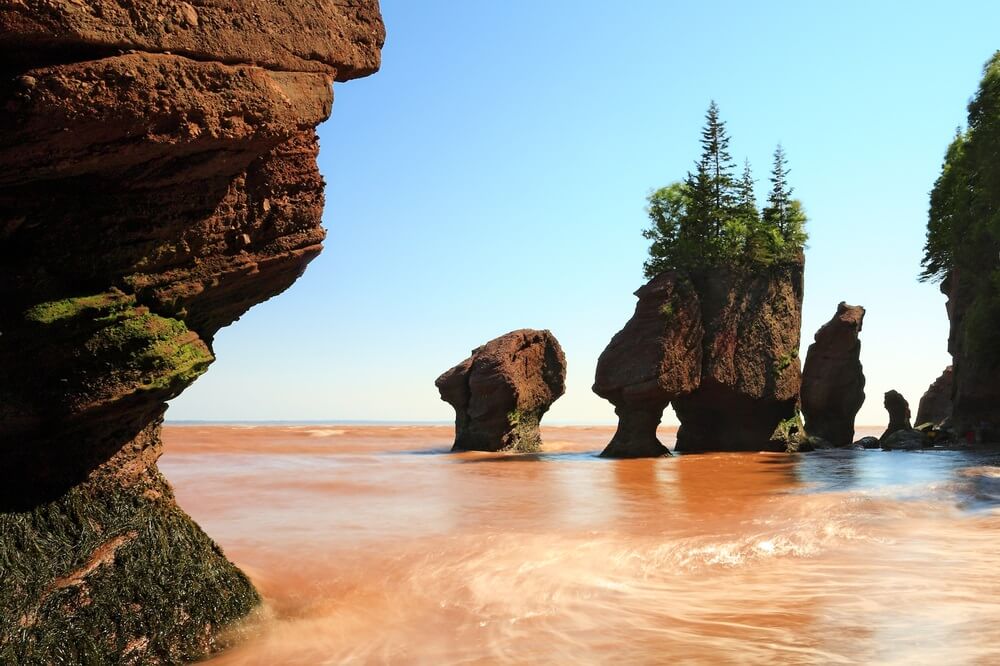
Best time to visit: The summer months (June through August) are perfect for hiking and enjoying the park’s amenities. Average temperatures during these months hover around 60-70°F (15-21°C), making them ideal for outdoor activities.
Things to do: Except for the seabed walk when the tide goes out. With 25 hiking trails (from dirt roads to boardwalks), three campgrounds, 25 waterfalls, and the vast Bay of Fundy, the park is perfect for nature lovers looking to escape to the natural beauty of Canada.
Fees: Adults $9, Seniors $7.75, Youth Free, Family or Vehicle $17.50.
Gros Morne National Park, Canada
Last but not least is Gros Morne National Park, the second-largest national park in Atlantic Canada. Encompassing the west coast of the island of Newfoundland, this ancient mountain range dates back to 1.2 billion years ago, allowing you to see how the history of the world is reflected in the geology and complex erosion process.
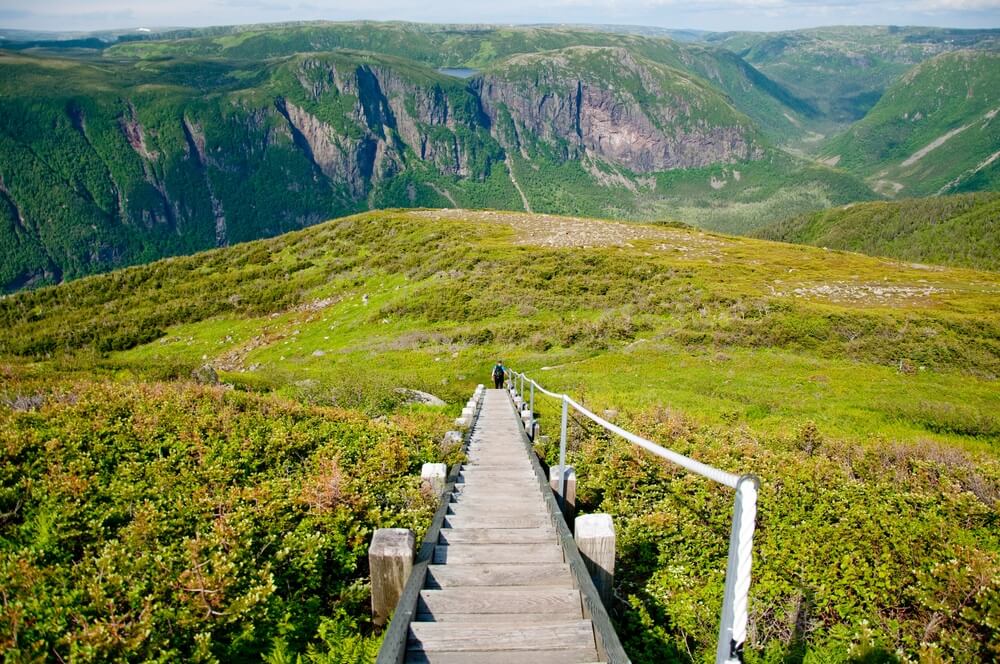
Best time to visit: Summer months of July and August bring warm and dry weather with average daytime temperatures between 61-77°F (16-25°C). Evenings can get a little chilly, so it’s a good idea to dress in layers.
Things to do: A hiker’s paradise, Gros Morne offers 20-day trip trails to explore either the coastline or the interior mountains. Of course, visitors can also take a boat tour of Western Brook Pond, a freshwater fjord.
Fees: Adults $11, Seniors $9.50, Youth Free, Family or Vehicle $22.
Cape Breton Highlands National Park, Canada
Cape Breton Highlands National Park is located on the northern tip of Cape Breton Island, Nova Scotia, where mountains and seascapes meet. It has a rugged coastline, deep river gorges, and vast forested plateaus. It was Canada’s first national park to be located on the Atlantic coast. Spectacular natural scenery is just part of the picture, and wildlife such as moose, black bears, and coyotes can also be observed here.
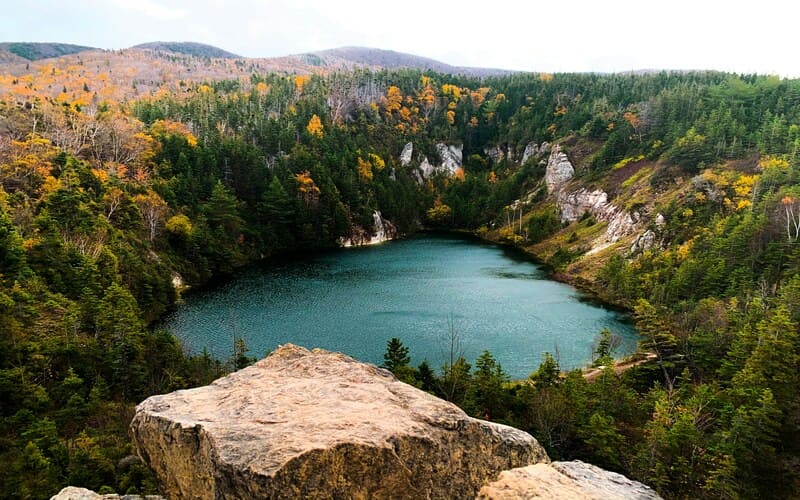
Best time to visit: The summer months of July and August are the best time for outdoor sports, when the weather is at its warmest, with average daytime highs around 70 °F (22-24 °C). This is the best time for activities such as swimming, biking, and whale watching. The park is vibrant and green, and all facilities and trails are open. And fall September-October, is the best time to see the Canadian fall foliage, with average high temperatures ranging from 60 °F (18 °C) to 50 °F (10 °C).
Things to do: Drive the Cabot Trail, a highway that breaks through national parks, passing different ocean views and mountain passes along the way. Don’t miss the viewpoints at French Mountain and MacKenzie Mountain. Right. For hiking, the Skyline Trail leads to headlands for sunset viewing and moose. Swimming is also a popular activity here because of the multiple sandy beaches.
Fees: Adults $9, Seniors $7.75, Youth Free, Family or Vehicle $17.50.
What to Bring When Visiting National Parks on the East Coast
If you will be traveling to a national park for the first time, pack these essentials.
- The right clothing: The weather can change quickly, so having a T-shirt, a long-sleeved shirt, and a lightweight jacket is a smart way to stay comfortable.
- Comfortable shoes: Sturdy hiking boots are essential for most of these parks.
- Insecticide: Especially in the humid south or the heavily wooded north.
- Sunscreen and Hat: UV rays can be strong even on cloudy days.
- Reusable Water Bottle: Staying hydrated is key, especially during long hikes.
- Lightweight backpack: able to hold your essentials, but light enough not to harm your back.
- Map, compass, or GPS: Cell phone reception in remote areas may be unstable.
- Trekking poles: Ideal for getting over uneven ground while hiking.
- First aid kit: Includes blister pads, Band-Aids, antiseptic wipes, and any personal medications.
- Binoculars: Useful for bird watching in places like Everglades National Park.
- Snacks, Protein Bars, or Beef Jerky: Easy to carry and refuel
- Small Trash Bags: Leave no trace and pack everything away.
FAQ
How many national parks are on the East Coast?
There are 15 official U.S. National Parks on the East Coast of the USA. This does not include national seashores, national forests, or other types of protected lands. There are 9 National Parks and Park Reserves on the East Coast of Canada.
What 4 states have the most national parks?
California has 9 national parks, Alaska has 4, Utah has 5, and Colorado has 4. These are the four states with the most national parks in the United States.
Which national park is known as the Big Five?
The “Big Five” typically refers to the five most famous national parks in Utah: Zion, Bryce Canyon, Arches, Canyonlands, and Capitol Reef.





.jpg)
There are no comments.