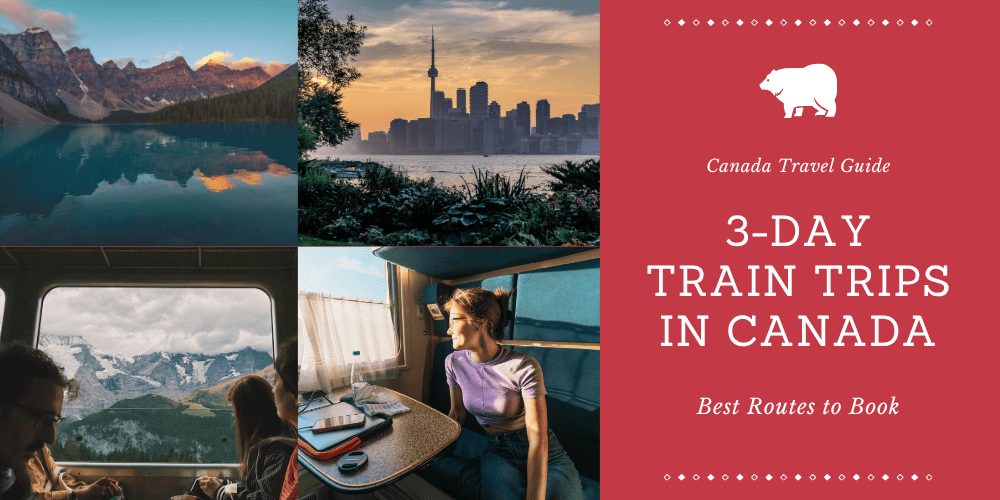

Canada offers some of the world’s most breathtaking natural scenery, and what better way to take it all in than by train? Whether you’re looking for a quick and adventurous getaway or a weekend getaway, 3-day train trips in Canada are the perfect choice. You’ll have plenty of time to take in the changing scenery, but not so much that you start missing your own bed.
Since Canada is such a vast country, driving around to see it all can be exhausting. Flying, on the other hand, makes it hard to take in the full picture, especially the Rocky Mountains. Fortunately, Canada offers plenty of three-day train trips. Let’s take a look at how to explore the Great White North by train.
Table of contents
Best Time to Travel by Train in Canada
Top 3 Day Train Trips in Canada
How to Save Money on a Canadian Rail Trip
Best Time to Travel by Train in Canada
Canada offers different scenery in every season. First, you should familiarize yourself with the unique features of each season, as this will help you make your choice.
- Summer (June to August): The days are incredibly long, which is great because you get more hours of daylight to see the scenery. If you are doing a train across the Canadian Rockies, summer gives you those bright blue glacial lakes you see on postcards. However, it is also the busiest and most expensive time.
- Fall (September to October): This is the best time to view the Canadian fall foliage. If you’re traveling to Ontario or Quebec, the maple trees will turn vibrant shades of red and orange. The larch trees in the Rocky Mountains will turn a nearly unreal golden yellow. The crisp, cool air makes it the perfect time for photography.
- Winter (November to March): Don’t count winter out. Taking the train through a blizzard while you sip hot coffee in a heated cabin is cozy. Plus, it is often the cheapest time to find 3-day train trips in Canada. Just keep in mind that the Rocky Mountaineer doesn’t run in the winter, so you’ll be looking at VIA Rail routes.
- Spring (April to May): You get to see the world waking up. The waterfalls in the mountains are roaring because of the melting snow. It can be a bit muddy and grey in some areas, but the prices are usually lower than in mid-summer.
Top 3 Day Train Trips in Canada
When we search for specific 3-day train trips in Canada, these routes stand out. They offer the best scenery and excellent service, ensuring your three-day rail journey is truly rewarding.
The Canadian
Operated by VIA Rail, The Canadian is arguably Canada’s most iconic and representative long-distance train. It travels from eastern to western Canada, taking four days and four nights to complete the journey, though passengers may board or disembark at intermediate stops. The train operates twice weekly in each direction.
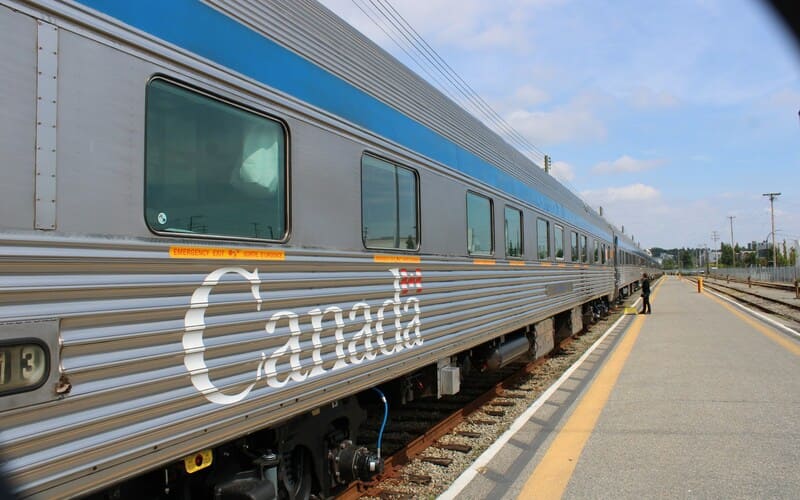
Route: Toronto to Edmonton or Edmonton to Vancouver.
Highlights: If you start in Toronto, you spend your first few days winding through the rugged Canadian Shield. It is all granite rocks, deep blue lakes, and thick forests. If you pick the western leg, you get the dramatic transition from the flat, yellow prairies into the massive, jagged wall of the Rockies.
This is one of the most popular 3-day train trips in Canada for seniors because the Sleeper Plus class includes all your meals and gives you access to the “Park Car” with its 360-degree observation dome. No stairs to climb once you’re on board!
Average Cost: Economy class fares range from $600 to $800 CAD, while the more comfortable Sleeper Plus class is significantly more expensive, typically costing between $1,600 and over $3,000 CAD.
Rainforest to Gold Rush
Operated by the Rocky Mountaineer, this route is a luxury-focused journey that specializes in daylight travel are the best 3-day train trips in Canada from Vancouver. Unlike VIA Rail, this train stops at night, and passengers stay in high-end hotels. This route connects the rainforests of Canada’s west coast with historic mining areas in the interior, highlighting the diverse landscapes of northern British Columbia. This train runs once a week in each direction.
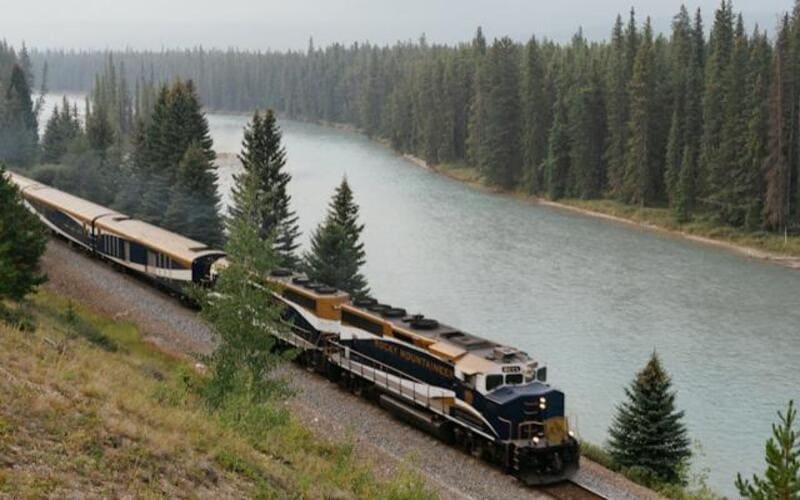
Route: Vancouver to Jasper, via Whistler and Quesnel.
Highlights: You begin in the lush, coastal rainforests of Vancouver before climbing into the high alpine beauty of Whistler. From there, the terrain shifts dramatically into the arid, desert-like landscapes of the Fraser Canyon and the rolling ranch lands of the Cariboo region. The final leg brings you into the heart of the Rockies, passing by Mount Robson, the highest peak in the Canadian range. There will also be commentary on historical and geographical topics along the way.
Because this route includes hotel stays and gourmet meals, it is highly recommended for those who want the best rail trips in Canada without the cramped quarters of a sleeper cabin.
Average Cost: This is a premium experience, with prices generally ranging from $2,500 to $3,800 CAD, depending on whether you choose SilverLeaf or GoldLeaf service.
The Ocean
The Ocean is another classic Canadian long-distance train operated by VIA Rail, connecting the heart of Francophone culture with the Atlantic coast. It is also the oldest continuously operating named passenger train in North America. The train makes multiple round trips in both directions each week. The journey takes about 22 hours, but when combined with overnight stays in Montreal and Halifax, it creates a perfect 3-day coastal itinerary.
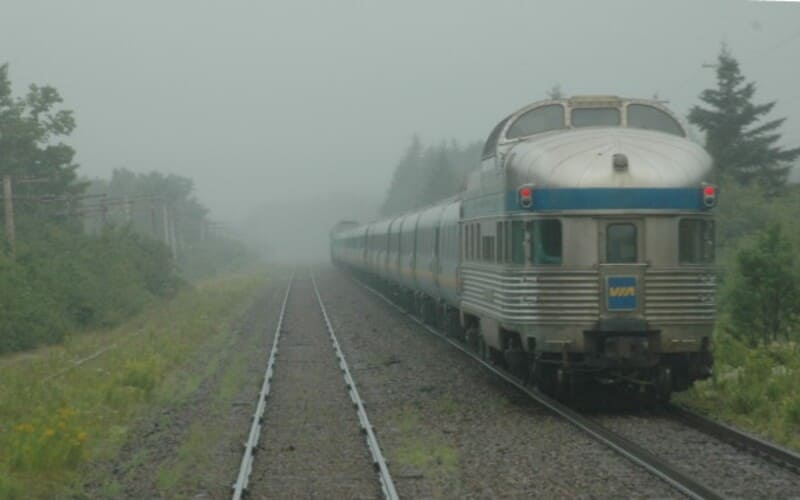
Route: Montreal to Halifax.
Highlights: As the train leaves the lights of Montreal, it heads into the rolling hills of the Eastern Townships. By morning, you are tracing the edge of the Baie des Chaleurs, where you can see the ocean from your window. The final stretch through New Brunswick and into Nova Scotia offers a look at traditional maritime life, with small towns and thick forests lining the tracks.
Average Cost: Although the scenery may not be as breathtaking as that of the Rocky Mountains, the train is more affordable and offers a relaxing journey.
The Corridor
The Corridor is arguably one of Canada’s busiest intercity rail services, operated by VIA Rail. Compared to scenic trains, this service is geared more toward daily commuting. For travelers looking to combine urban culture with a brief scenic rail journey, it offers the most flexible option. Plus, with frequent departures, you can easily choose a departure time that fits your schedule.
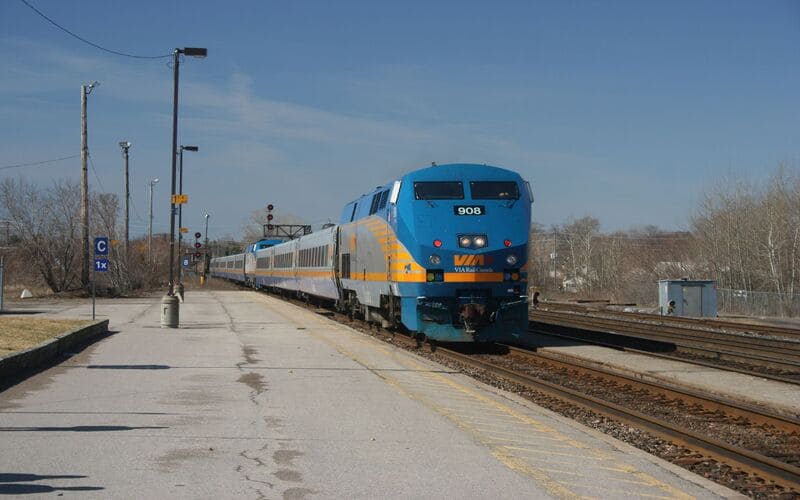
Route: Toronto-Ottawa-Montreal.
Highlights: This route takes you through the “heritage” heart of Canada. You’ll see the limestone architecture of Kingston, the rural farmlands of Ontario, and the scenic banks of the St. Lawrence River. Since the cities are only a few hours apart, you can spend a full day in each location. It is a fantastic way to see the transition from English-speaking Ontario to the historic, French-influenced streets of Quebec.
This is the most accessible of all 3-day train trips in Canada from Toronto. If you choose Business Class, you get access to station lounges, priority boarding, and full meals served at your seat, making the short jumps between cities feel like a luxury treat.
Average Cost: Very affordable for short trips. A multi-city pass or individual tickets usually total between $200 and $450 CAD.
Passage to Peaks
Passage to Peaks is another luxury sightseeing route operated by Rocky Mountaineer, and this train journey is also known as the “Canadian Rockies Train Trip.” More importantly, this is a limited-time rail journey, running only in June and July 2026. This limited-time route, which Rocky Mountaineer has never offered before, offers even more scenic views than the standard route.
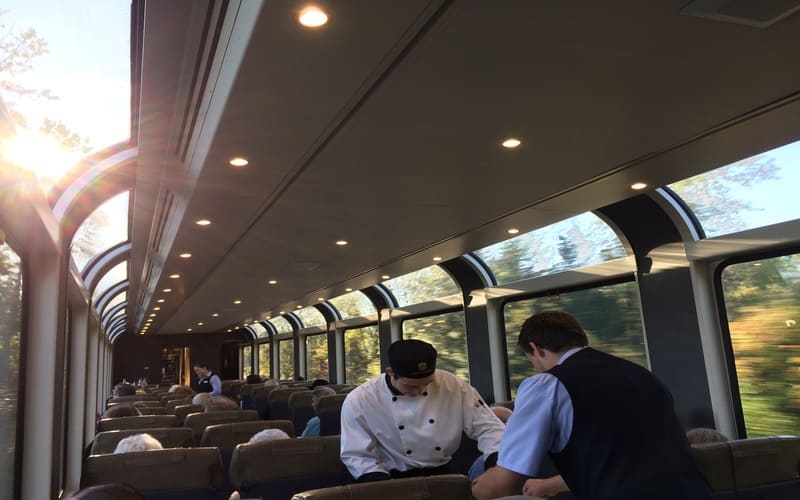
Route: Running between Banff and Jasper via Kamloops.
Highlights: This itinerary takes you through the heart of the Canadian Rockies, including glacial lakes and the Icefields Parkway. It highlights the most spectacular scenery while offering views of iconic mountains and rivers. It places you right in the heart of Canada’s most famous national parks,
Average Cost: A two-day rail journey including overnight accommodations in Kamloops starts at CAD 2,829 per person.
Hudson Bay
If you want to experience a completely different side of Canada, the Hudson Bay route is a unique and rugged journey that heads straight north into the subarctic region. It is officially known as the Winnipeg-Churchill train. While the full journey is long, a 3-day segment takes you from the flat plains of Manitoba into the wild, treeless tundra where the ground is permanently frozen. The train departs every Sunday and Tuesday and returns every Thursday and Saturday.
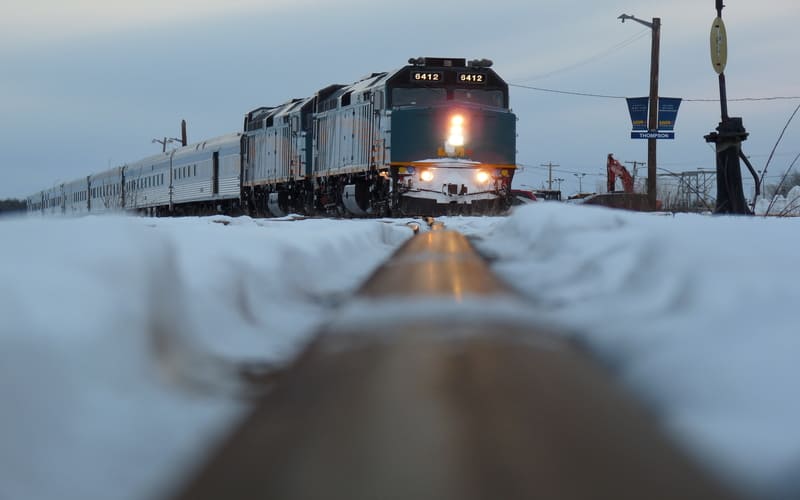
Route: Winnipeg to Churchill.
Highlights: This is not really a “tourist” train in the traditional sense; it is a lifeline for northern communities. The landscape shifts from the golden wheat fields of the south to the “land of little sticks” and finally the open tundra. In the fall, Churchill is the polar bear capital of the world, and in the winter, it is one of the best places on Earth to see the Northern Lights.
Average Cost: Economy class tickets cost around 200 CAD, while the highly recommended sleeper car costs over 400 CAD
The Skeena
Operated by VIA Rail, this route is often called the “Jasper-Prince Rupert” train. It is a hidden gem that many travelers overlook in favor of the more famous Rockies routes. However, it offers some of the most spectacular mountain and river scenery in the country. This is a “daylight-only” train, meaning it stops overnight in Prince George. This train typically runs three round-trip per week, usually on Sundays, Wednesdays, and Fridays.
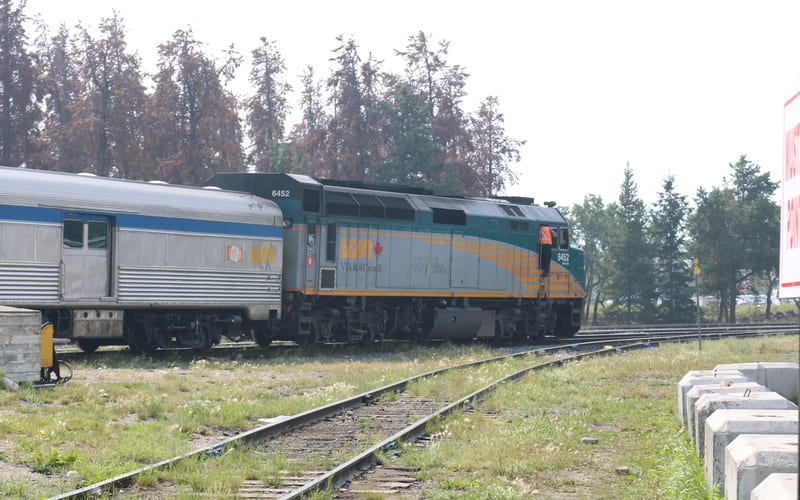
Route: Jasper to Prince Rupert.
Highlights: You start in the high peaks of Jasper National Park and follow the Skeena River all the way to the Pacific Ocean. Along the way, you’ll pass through ancient cedar forests, see totem poles in indigenous communities, and witness the rugged beauty of the Coast Mountains. The train often slows down to allow for photos of bald eagles, moose, and black bears.
Average Cost: This is a very budget-friendly way to see the mountains. Economy seats are usually $150 to $300 CAD. There are no sleeper cabins because the train does not move at night.
How to Save Money on a Canadian Rail Trip
To be honest, scenic trains in Canada aren’t cheap, especially if you opt for sleeper cars or deluxe domes. If you’re looking to save a little money, here are some practical tips.
- Book on Tuesdays: VIA Rail usually has “Discount Tuesdays” where they drop prices on certain routes.
- Book Early: Unlike airlines, train prices in Canada almost always go up as the date gets closer.
- Off-Season Travel: If you can travel in May or October, you’ll find prices are significantly lower than in July or August, and the scenery is just as good.
- The Escape Fare: VIA Rail offers an “Escape” tier for their tickets. These are non-refundable and have strict rules, but they are often half the price of a standard ticket.
FAQ
What is the most beautiful train trip in Canada?
Most people agree that the Passage to the West, which is from Vancouver to Banff or the Rainforest to the Gold Rush are the most visually stunning. The sheer scale of the mountains and the color of the glacial rivers are hard to beat. However, if you like rugged, rocky coastlines and historic lighthouses, The Ocean, which is from Montreal to Halifax, is a close second. It really depends on whether you prefer “Mountain” or “Sea” views.
What is the best train trip in Canada for seniors?
The Rocky Mountaineer is often cited as the best for seniors because it is designed for maximum comfort. You don’t sleep on the train; you stay in high-quality hotels. The seats are plush, they recline, and the food is gourmet. If you prefer a traditional train where you sleep on board, The Canadian in a “Prestige Cabin” offers incredible comfort with a private bathroom and shower.
How much do Canada rail vacations usually cost?
This depends on the length of the journey and the amenities on board. For short-distance trains, prices typically range from $40 to $150 CAD. Prices for long-distance trains vary widely, as they are divided into economy class and sleeper cars, with fares ranging from $300 to $3,000 CAD. As for luxury scenic trains, prices can range from $2,000 to as much as $10,000 CAD.





.jpg)


There are no comments.