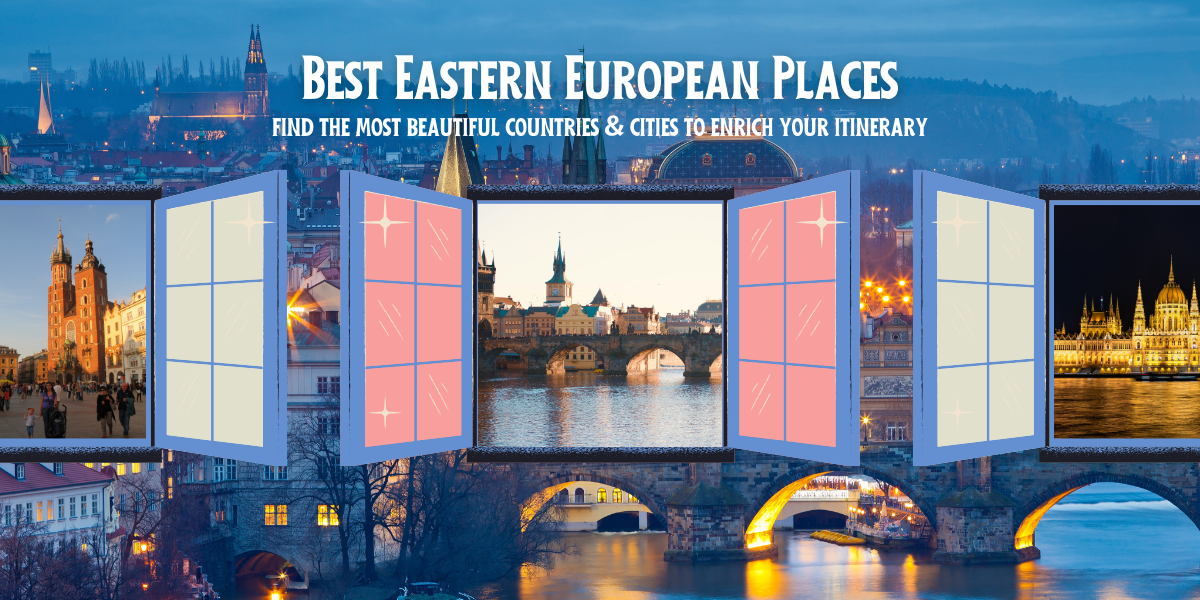

Eastern Europe has a way of surprising people. Many travelers arrive with a loose idea of medieval old towns and budget-friendly prices, then leave talking about how varied the region really is. In a single trip, you can move from grand imperial capitals to quiet mountain villages, from Black Sea beaches to café-lined squares shaped by centuries of layered history.
For first-timers, the challenge is not whether Eastern Europe is worth visiting, but where to start. The region covers a wide range of cultures, languages, and travel styles. Some places feel instantly familiar, while others still feel refreshingly under-visited. This guide focuses on the best places to visit in Eastern Europe, combining well-known highlights with lesser-known destinations that experienced travelers consistently recommend.
Best Countries to Visit in Eastern Europe
Eastern Europe generally includes countries east of Germany and Austria, stretching toward the Balkans and the Black Sea. What unites many of these destinations is strong local identity, deep history, and travel costs that are often lower than in Western Europe.
So, what is the best country to visit in Eastern Europe? The answer, naturally, depends on your priorities, but a few countries stand out as must-sees for a first-time visitor.
Poland is a historical powerhouse and a consistently top-ranked destination. Countries like Poland offer a deep dive into European history, from medieval Old Towns to poignant 20th-century sites.
Hungary and the Czech Republic form the heart of the region’s classic elegance. Both offer magnificent capital cities – Budapest and Prague – that showcase imperial architecture, thermal baths, and world-class beer, while remaining significantly more affordable than their Western European counterparts.
For dramatic coastlines and breathtaking natural beauty, the Balkan nations of Croatia and Montenegro are unparalleled. Croatia, though increasingly popular, still offers pristine national parks and the magnificent Adriatic coast. Montenegro, meanwhile, provides some of the most dramatic fjord-like landscapes and medieval towns tucked into rugged mountains.
Finally, nations like Romania and Bulgaria offer travelers a glimpse into Eastern Europe’s wilder, more mysterious side. Romania boasts the legend-steeped castles of Transylvania and beautifully preserved medieval towns, while Bulgaria provides a mix of Black Sea resorts, ancient Roman ruins, and captivating Orthodox monasteries.
Best Cities & Places to Visit in Eastern Europe
Once you start narrowing down countries, the next question is which cities deserve a spot on your route. Some cities act as natural gateways, while others reward travelers who slow down and explore beyond the obvious highlights.
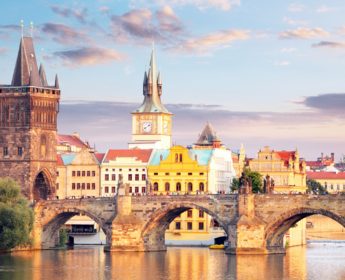 1. Prague, Czech Republic
Prague, the “City of a Hundred Spires,” its charm isn’t just in the monumental structures but in the way the Vltava River flows beneath the magnificent Charles Bridge, connecting the history-steeped Old Town to the majestic Prague Castle. While often grouped geographically with Central Europe, Prague is a non-negotiable stop among the best cities to visit in Eastern Europe for its deeply layered history, from the mystical alchemy of Rudolf II’s court to the defiance of the Velvet Revolution.
The atmosphere here is both bustling and wonderfully preserved, offering the kind of architectural grandeur that costs a fortune further west, but remains surprisingly accessible. Wandering the cobbled streets, past colorful buildings and ornate clock towers, you realize this city has been a crossroads of culture and power for centuries. It’s a place where you can find world-class opera one night and a cozy, traditional hospoda serving cheap, delicious pilsners the next.
Things to do:
- Walk across the Charles Bridge at sunrise to beat the crowds.
- Explore the massive Prague Castle complex.
- Watch the astronomical clock strike the hour (it’s cheesy but essential).
- Climb Petřín Hill for panoramic views.
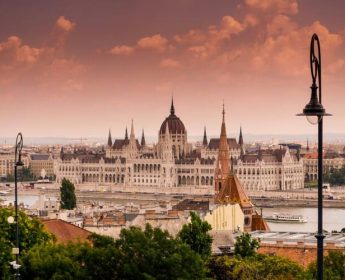 2. Budapest, Hungary
If Prague is the fairy tale, Budapest is the epic novel. Split by the Danube River into the hilly, historical Buda and the flat, buzzing Pest, this city offers two distinct vibes for the price of one. It is grand, imposing, and undeniably cool. The architecture ranges from Art Nouveau marvels to crumbling ruin bars – abandoned buildings turned into eclectic nightlife spots that are unique to this city.
Budapest is also the spa capital of the world. There is nothing quite like soaking in 100-degree thermal waters while surrounded by neo-baroque columns as snow falls around you. It’s affordable luxury at its finest.
Things to do:
- Soak in the Széchenyi or Gellért thermal baths.
- Party in a ruin bar like Szimpla Kert.
- Take a sunset cruise on the Danube to see the Parliament lit up.
- Hike up to Fisherman’s Bastion for the best Instagram shot.
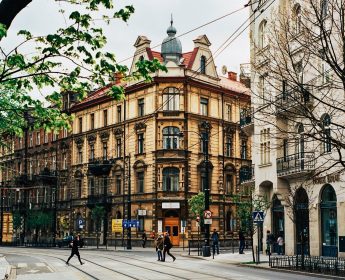 3. Krakow, Poland
Krakow feels like the Europe of your imagination. Unlike Warsaw, which was rebuilt after WWII, Krakow’s Old Town survived largely intact, preserving its medieval soul. The Main Market Square is the largest in Europe and hums with energy day and night. It’s a city deeply connected to history, both majestic and tragic, with Wawel Castle watching over the town and the shadow of Auschwitz nearby serving as a poignant reminder of the past.
But don’t mistake it for a museum. As a university town, Krakow has a youthful energy that spills out of its cellar bars and jazz clubs in the Jewish Quarter (Kazimierz). It’s incredibly wallet-friendly, allowing you to dine like royalty on pierogi and vodka without breaking the bank.
Things to do:
- Wander the massive Main Market Square and Cloth Hall.
- Visit Wawel Royal Castle and the fire-breathing dragon statue.
- Take a somber day trip to Auschwitz-Birkenau.
- Descend into the Wieliczka Salt Mine.
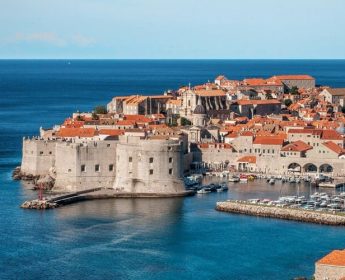 4. Dubrovnik, Croatia
Okay, Dubrovnik is not exactly a “hidden” gem anymore (thanks, Game of Thrones). Known as the “Pearl of the Adriatic,” this walled city jutting into the deep blue sea is breathtakingly beautiful. Walking the ancient city walls gives you a view of terracotta rooftops against the shimmering water that feels almost surreal.
While it is one of the pricier stops on this list, you can manage costs by visiting in the shoulder season (May or September). The history here is palpable in the white limestone streets, which have been polished to a shine by centuries of footsteps.
Things to do:
- Walk the full circuit of the City Walls.
- Take the cable car up Mount Srđ for sunset views.
- Explore the Fort Lovrijenac.
- Take a ferry to Lokrum Island for a swim.
- Get lost in the narrow side streets to escape the main crowds.
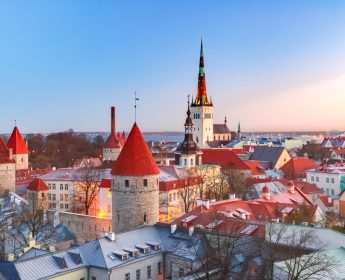 5. Tallinn, Estonia
Tallinn is where medieval meets modern in the most seamless way possible. The Old Town is a UNESCO World Heritage site that looks like it was plucked from a Hans Christian Andersen story, complete with turreted walls and cobblestone alleys. Yet, just a few blocks away, you’ll find a digital nomad paradise with sleek cafes and one of the world’s most advanced digital societies.
The city is compact and walkable, making it perfect for a short city break. It has a distinct Nordic feel without the Scandinavian price tag. In winter, the Christmas market here is legendary; in summer, the “White Nights” keep the city buzzing well past midnight.
Things to do:
- Explore the incredibly preserved Old Town walls and towers.
- Visit the Alexander Nevsky Cathedral.
- Check out the hipster Telliskivi Creative City.
- Climb the tower of St. Olaf’s Church.
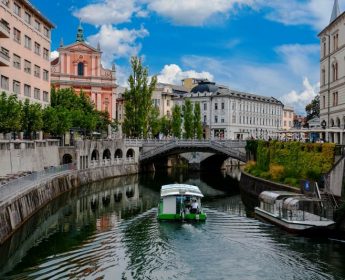 6. Ljubljana, Slovenia
If you hate chaotic, noisy cities, Ljubljana is your sanctuary. It is frequently voted the Green Capital of Europe, and the city center is entirely pedestrianized, filled with leafy banks along the Ljubljanica River. It feels more like a large, friendly village than a national capital.
The architecture is a whimsical mix of Baroque and Art Nouveau, much of it designed by the famous architect Jože Plečnik. You can sip coffee by the river, spot the dragons on the Dragon Bridge, and just enjoy the remarkably chilled-out vibe. It’s also the perfect base for exploring Slovenia’s natural wonders.
Things to do:
- Take the funicular up to Ljubljana Castle.
- Stroll across the Triple Bridge and Dragon Bridge.
- Paddleboard or take a boat tour on the river.
- Visit the eccentric Metelkova Art Center.
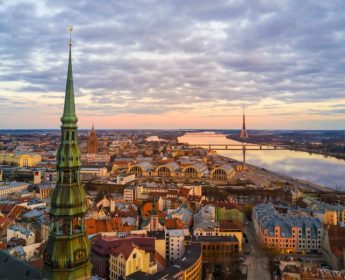 7. Riga, Latvia
Riga is the cosmopolitan heart of the Baltics. It is bigger and louder than Tallinn, with a skyline that tells a complex story of German, Swedish, and Russian influence. It is famous for having the highest concentration of Art Nouveau architecture in the world – seriously, look up when you walk down the street; the facades are mind-blowing.
The city has a roaring nightlife and a massive Central Market housed in old Zeppelin hangars. It’s gritty, fun, and authentic. The Old Town is charming, but the real Riga lives in the Centrs district and the hip Miera iela (Peace Street) area.
Things to do:
- Admire the Art Nouveau architecture on Alberta Street.
- Taste local delicacies at the Riga Central Market.
- Visit the House of the Blackheads.
- Take a canal boat tour.
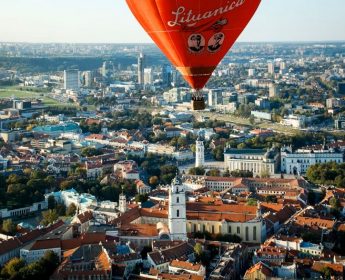 8. Vilnius, Lithuania
Rounding out the Baltic trio is Vilnius, the quirky underdog. It’s famous for its Baroque architecture and for the “republic” of Užupis – a bohemian neighborhood that declared itself an independent nation, complete with its own constitution (which includes rights like “A dog has the right to be a dog”).
Vilnius is incredibly green, affordable, and full of hidden courtyards. It doesn’t take itself too seriously, which is exactly why travelers fall in love with it. It’s one of the cheapest Eastern European cities to visit, offering great value for accommodation and food.
Things to do:
- Visit the independent Republic of Užupis and stamp your passport.
- Climb the Gediminas Castle Tower.
- Wander the glass-covered Hales Market.
- Explore the vast Old Town, one of the largest in Northern Europe.
- Take a day trip to Trakai Island Castle.
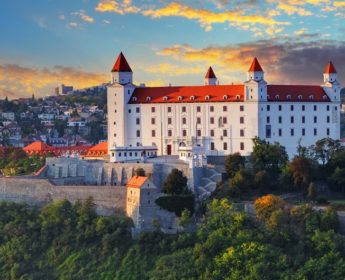 9. Bratislava, Slovakia
Poor Bratislava often gets skipped by travelers rushing between Vienna and Budapest, but that’s a mistake. Yes, it’s small, but that’s its charm. You can see the main sights in a day, but the relaxed atmosphere might make you want to stay longer. The “UFO” bridge adds a weird sci-fi touch to the skyline, while the Old Town is full of quirky statues (look for the man peeking out of a manhole).
It’s less touristy than its neighbors, meaning you get a more genuine slice of Central European life. Plus, the beer is excellent and cheaper than water in Vienna.
Things to do:
- Climb up to the white-walled Bratislava Castle.
- Have a drink at the UFO observation deck.
- Hunt for the quirky bronze statues in the Old Town.
- Visit the Blue Church (Church of St. Elizabeth).
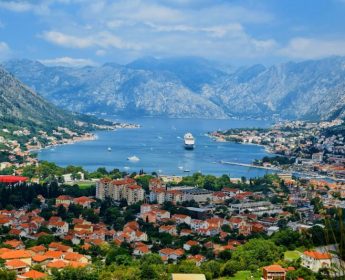 10. Kotor, Montenegro
Imagine Norwegian fjords dropped into the Mediterranean, and you have the Bay of Kotor. This fortified town is enclosed by towering limestone cliffs and medieval walls that zig-zag up the mountain. It is stunningly dramatic. The Old Town is a maze of marble streets, Venetian palaces, and hundreds of cats (which are the unofficial mascots of the city).
Kotor is smaller and slightly less chaotic than Dubrovnik but equally beautiful. The climb to the fortress above the city is a thigh-burner, but the view of the bay is one of the best you will ever see in your life.
Things to do:
- Hike the ancient walls up to the Castle of San Giovanni (Kotor Fortress).
- Wander the Old Town and explore the Maritime Museum.
- Take a boat trip to Our Lady of the Rocks, an artificial island church.
- Dine at a local restaurant overlooking the main square, enjoying fresh Adriatic ingredients.
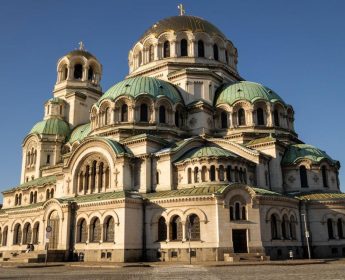 11. Sofia, Bulgaria
Sofia is one of Europe’s most underrated capitals. It’s not polished, but it has a fascinating layers-of-history vibe. You can see Roman ruins next to a mosque, next to a synagogue, next to a Soviet Army monument. The backdrop of Vitosha Mountain, which is accessible for skiing or hiking just 30 minutes from the center, adds a unique outdoor element to a city break.
As one of the cheapest Eastern European cities to visit, your budget will stretch for miles here. It’s rough around the edges but incredibly authentic and welcoming.
Things to do:
- Visit the massive Alexander Nevsky Cathedral.
- Walk along Vitosha Boulevard for shopping and coffee.
- See the Roman ruins in the Serdica subway station.
- Hike or ski on Vitosha Mountain.
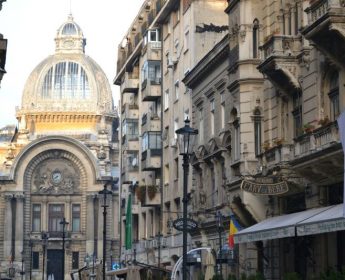 12. Bucharest, Romania
Once called “Little Paris” for its elegant architecture, Bucharest today is a mix of French neoclassicism, communist brutality, and modern grit. The Palace of the Parliament is the second-largest building in the world (after the Pentagon) and is a staggering monument to dictator Ceaușescu’s ego.
But the real magic is in the Old Town (Lipscani), which transforms into a huge open-air party at night. Bucharest has an infectious energy, great specialty coffee, and some of the best parks in the region. It’s a city of contrasts that never gets boring.
Things to do:
- Tour the immense Palace of the Parliament (the heaviest building in the world).
- Stroll through the historic and vibrant Old Town (Centrul Vechi).
- Visit the beautiful Stavropoleos Monastery, a gem of Romanian Orthodox architecture.
- Explore the Village Museum, an open-air museum showcasing traditional Romanian village life.
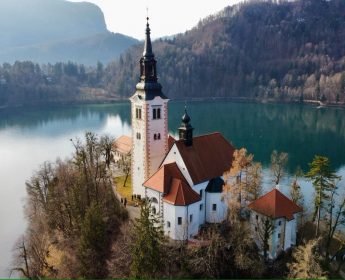 13. Lake Bled, Slovenia
You’ve seen the picture: a tiny church on an island in the middle of a turquoise lake, with a medieval castle clinging to a cliff and the Alps in the background. It looks fake, but it’s real. Lake Bled is Slovenia’s crown jewel and a must-visit for nature lovers.
It’s peaceful, romantic, and offers plenty of outdoor activities like rowing, hiking, and cycling. It’s close enough to Ljubljana for a day trip, but staying overnight lets you see the sunrise over the lake, which is magical.
Things to do:
- Take a pletna boat ride to Bled Island and ring the wishing bell.
- Hike up to Bled Castle for the quintessential lake view.
- Rent a rowboat to explore the lake at your own pace.
- Walk the perimeter of the lake for stunning views from all angles.
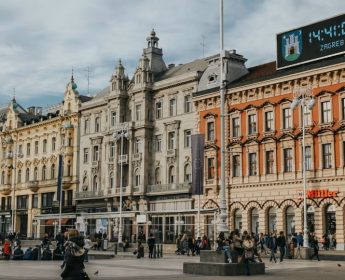 14. Zagreb, Croatia
Zagreb often gets skipped for the coast, but it is a capital with a great vibe. It has a distinct Austro-Hungarian feel, similar to Vienna but smaller and quirkier. The city is famous for its outdoor coffee culture – locals will sit for hours sipping espresso on Saturday mornings (the “špica”). It is also home to one of the most unique museums in the world: the Museum of Broken Relationships.
Zagreb feels authentic and approachable, a place where local life still dominates over tourism. It’s a fantastic spot to enjoy Croatian culture, cuisine, and history without the seasonal crowds of the coast, offering a more intimate and down-to-earth experience.
Things to do:
- Visit the Museum of Broken Relationships (bring tissues).
- Walk through the Stone Gate to see the shrine.
- Admire the colorful tiled roof of St. Mark’s Church.
- Wander the Upper Town (Gornji Grad) at dusk.
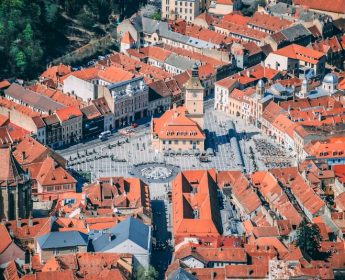 15. Brasov, Romania
Brasov is the gateway to Transylvania. Surrounded by the Carpathian Mountains, it combines medieval Saxon charm with easy access to nature. The town square is bustling, and there’s a giant Hollywood-style “BRASOV” sign on the mountain above.
It’s the perfect base for hunting vampires – Bran Castle (Dracula’s Castle) and Peles Castle are just a short drive away. The town itself has a cozy, mountain-town feel that is perfect for any season.
Things to do:
- Visit the gothic Black Church, the largest church in Transylvania.
- Take the cable car up Tâmpa Mountain for panoramic views.
- Explore the narrowest street in Europe, Rope Street (Strada Sforii).
- Take day trips to Bran Castle (Dracula’s Castle) and Peles Castle..
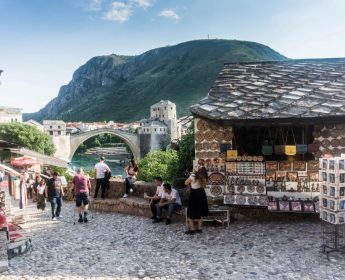 16. Mostar, Bosnia & Herzegovina
Mostar is defined by its bridge, the Stari Most. Destroyed during the war in the 90s and painstakingly rebuilt stone by stone, it is a symbol of resilience and reconciliation. The city is a blend of Ottoman and Austro-Hungarian cultures, with mosques and church spires sharing the skyline.
Watching the local divers jump off the 24-meter-high bridge into the freezing Neretva River is a heart-stopping tradition. The old bazaar is vibrant, smelling of coffee and grilled meat.
Things to do:
- Watch the famous local divers jump from the Stari Most into the Neretva River.
- Explore the Kujundžiluk (Old Bazaar) and sip traditional Bosnian coffee.
- Visit the Koski Mehmed Pasha Mosque for a great view of the bridge.
- Take a day trip to the stunning Kravica Waterfalls.
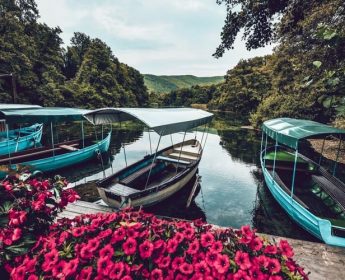 17. Ohrid, North Macedonia
Lake Ohrid is one of Europe’s deepest and oldest lakes, and the city of Ohrid is a UNESCO World Heritage site known for its rich collection of ancient churches and monasteries – 365 of them, legend says. The town is built into the hillside, offering stunning views across the water to the rugged mountains beyond. It is also consistently listed among the cheapest Eastern European cities.
The atmosphere is peaceful and spiritual, particularly around St. John at Kaneo Church, which sits dramatically on a cliff overlooking the lake. It’s a perfect destination for travelers seeking a slower pace, beautiful nature, and deep historical roots.
Things to do:
- Visit the iconic St. John at Kaneo Church, perched above the lake.
- Walk along the boardwalk over the water to the Old Town.
- Explore Tsar Samuel’s Fortress for panoramic views.
- Take a boat trip to the Monastery of Saint Naum.
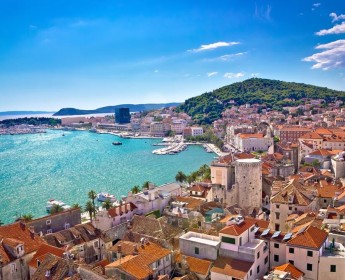 18. Split, Croatia
While Dubrovnik handles the Baroque and medieval grandeur, Split offers the living heart of the Dalmatian coast. Its entire Old Town is built within the walls of a genuine Roman ruin: Diocletian’s Palace. This 4th-century palace is a breathing, bustling central city district where locals live and work alongside tourists.
Split’s energy is magnetic, combining the buzz of a modern port city with the weight of ancient history. You can literally walk through Roman tunnels, shop in the Emperor’s chambers, and grab a coffee in the Peristyle, all before heading to the nearby beaches.
Things to do:
- Wander through the ancient streets and cellars of Diocletian’s Palace.
- Climb the bell tower of the Cathedral of St. Domnius for views.
- Stroll along the Riva promenade, the heart of the city’s social life.
- Hike or cycle through Marjan Forest Park for natural tranquility.
 19. Tirana, Albania
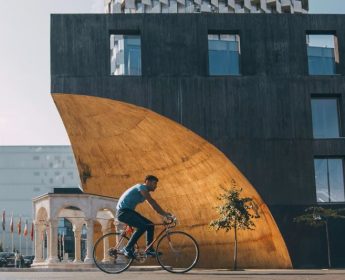
Tirana is a riot of color. After the fall of communism, the mayor (an artist) decided to paint the grey concrete buildings in bright, wild colors to lift morale. It worked. Today, Tirana is chaotic, loud, and incredibly friendly. The Blloku neighborhood, once restricted to the communist elite, is now the trendy heart of nightlife and cafe culture.
Albania is still a bit of a wild card for many travelers, making Tirana an exciting frontier. It is safe, the food is fresh and cheap, and the bunker museums provide a fascinating glimpse into its paranoid past.
Things to do:
- Explore the Bunk’Art museums, housed in former massive Communist bunkers.
- Visit the National History Museum in Skanderbeg Square.
- Walk the Blloku district and enjoy the vibrant nightlife and cafes.
- Take the Dajti Ekspres cable car for mountain views.
 20. Wroclaw, Poland
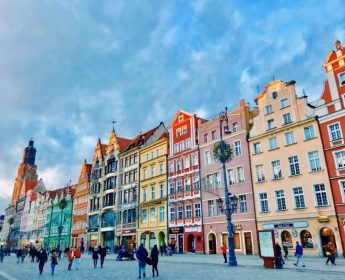
We’re ending with a charmer. Wroclaw (pronounced Vrots-wav) is built on 12 islands connected by over 100 bridges. It has a stunning market square with colorful row houses and a Gothic town hall.
But the most fun part? The gnomes. There are over 600 small bronze gnome statues hidden all over the city. Hunting for them is a great way to explore. It’s a student city with a vibrant atmosphere and fewer tourists than Krakow or Prague.
Things to do:
- Try to spot all the tiny bronze gnome statues hidden around the city.
- Visit Ostrow Tumski, the oldest part of the city, known as Cathedral Island.
- Explore the magnificent Market Square and the Gothic Old Town Hall.
- Relax on the banks of the Oder River.
How to Plan Your Eastern Europe Itinerary
Eastern Europe is ideal for multi-country trips. For a meaningful experience, we recommend a minimum of 10 to 14 days. This allows for a focused itinerary, such as hitting the three classic Imperial cities: Prague, Krakow, and Budapest, spending roughly 3-4 days in each, with one travel day in between. For a more comprehensive tour that incorporates the Balkans or the Baltics, you should aim for 3 to 4 weeks.
The Imperial Triangle (10–14 Days)
This classic route focuses on history and elegance.
Route: Prague (4 days) → Train/Bus to Krakow (3 days + 1 day for Auschwitz) → Overnight Train/Bus to Budapest (4 days).
Pro Tip: This route maximizes efficiency and introduces you to some of the best cities to visit in Eastern Europe.
The Balkan Coast & Culture (14–21 Days)
A perfect blend of history, hiking, and sun.
Route: Fly into Zagreb (2 days) → Bus to Split (3 days) → Bus/Ferry to Dubrovnik (3 days) → Bus to Kotor (3 days) → Bus to Mostar (2 days) → Fly out of Tirana or Skopje.
Pro Tip: Focus on local bus services in the Balkans; they are often the most direct and affordable way to travel between countries.
Baltic & Beyond (10 Days)
Ideal for those who love medieval history and digital culture.
Route: Fly into Tallinn (3 days) → Bus/Train to Riga (3 days) → Bus/Train to Vilnius (4 days).
Pro Tip: These countries are linked by highly efficient, comfortable bus services like Lux Express, which make travel seamless.
For all routes, utilizing low-cost airlines (like Wizz Air or Ryanair) can save significant time over large jumps, while overnight train or bus travel is an excellent way to save a night of accommodation cost and cover ground while you sleep.
Budget Tips for Your Eastern European Trip
One of the greatest appeals of traveling across Eastern Europe is the incredible value. You can often travel for half the cost of Western Europe while experiencing just as much. Here are a few essential budget tips:
- Mind the currency
While many countries (like Slovenia, Slovakia, Latvia, Lithuania, and Estonia) use the Euro (€), many of the Eastern Europe cities (like Prague, Budapest, Krakow, Bucharest, Sofia) use their own currencies (Czech Koruna, Hungarian Forint, Polish Zloty, Romanian Leu, Bulgarian Lev). Always pay in the local currency to avoid bad exchange rates from your bank or local vendors.
- Embrace local transit & foot power
Instead of pricey taxis, use the excellent tram, metro, and bus systems. Many cities offer day passes for just a few Euros. In most Old Towns, walking is the only way to genuinely explore.
- Seek out budget-friendly food
Skip the tourist traps directly on the main squares. Look for local institutions:
Milk Bars (Bar Mleczny) in Poland (extremely cheap, traditional Polish food).
Local Kafanas or Gostilnas in the Balkans/Slovenia (traditional taverns).
Markets: Shopping for produce, cheese, and baked goods at local markets (like Riga Central Market or Budapest’s Great Market Hall) is cheap and delicious.
- The cheapest cities
For travelers prioritizing budget, focus your trip on the southern and eastern extremes. Cities like Sofia (Bulgaria), Skopje (North Macedonia), Tirana (Albania), Wroclaw (Poland), and the smaller Hungarian towns outside Budapest are generally more budget-friendly than places like Prague or Dubrovnik.
Frequently Asked Questions
Q: What is the best country to visit in Eastern Europe?
If you are seeking dramatic coastal scenery combined with history, Croatia is unbeatable, especially if you venture beyond Dubrovnik to places like Split and Zagreb. For classic European elegance, history, and superb value, Hungary (Budapest) and Poland (Krakow/Wroclaw) are often cited as the overall best Eastern European countries to visit by first-timers.
Q: Is Eastern Europe safe for tourists?
Yes, generally Eastern Europe is very safe for tourists. Petty crime like pickpocketing can occur in major tourist centers like Prague or Budapest, but violent crime against tourists is extremely rare. Exercise the same caution you would in any large European city.
Q: What is the best time of year to visit Eastern Europe destinations?
The late spring (May and early June) and early autumn (September and early October) are the best times. The weather is pleasant, the crowds are manageable, and prices are lower than peak summer. For the coastal best places to visit in Eastern Europe (like Croatia and Montenegro), shoulder season travel is highly recommended.
Q: How do you get around Eastern Europe?
Trains, buses, and budget flights make regional travel straightforward and affordable.

There are no comments.