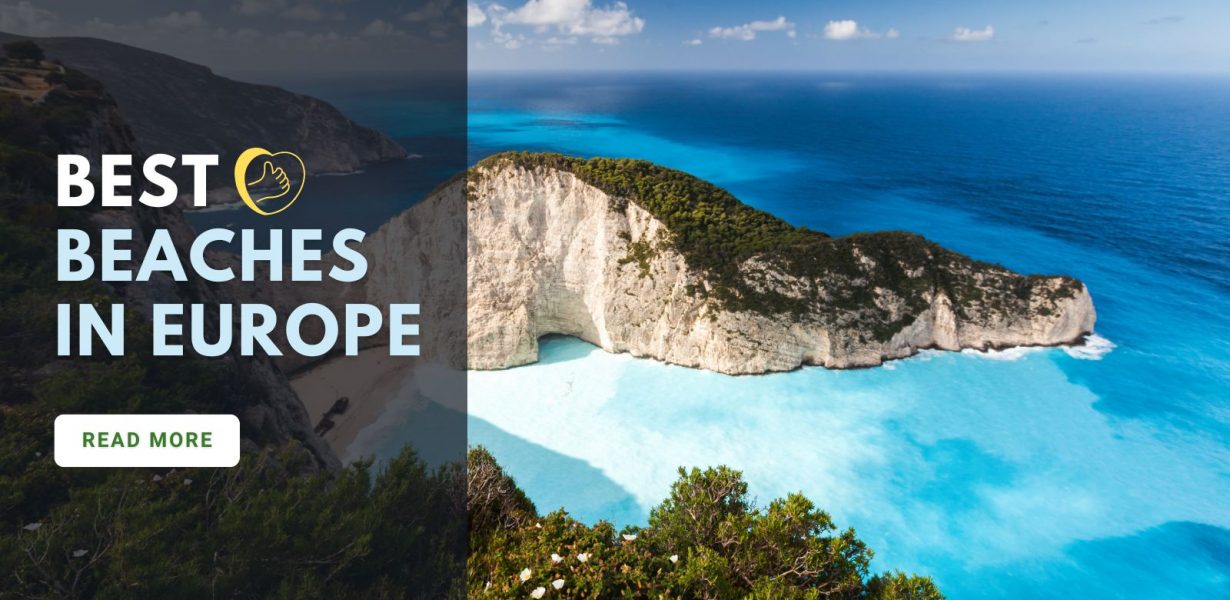

Along with its ancient cities, rolling vineyards and majestic mountains, Europe has another dazzling facet: a coastline with some of the most breathtaking beaches on the planet. Imagine sinking your toes into the powder-white sand as turquoise Mediterranean waves gently lap the shore, or discovering a hidden cove, a secret that only seasoned travelers whisper about. A European beach vacation is much more than just sunbathing, it also includes rich cultural experiences, delicious seaside cuisine, and memories that shine even after you’ve worked up a tan.
This guide to the best beaches in Europe covers hidden gems, family-friendly shores, and postcard-perfect towns. From the turquoise waters of the Mediterranean to the wild Atlantic coastlines, we’ve rounded up 15 of the best destinations to help you plan the ultimate beach vacation.

15 Best Beaches in Europe for a Perfect Vacation
- Cala Goloritzè, Sardinia, Italy
- Navagio Beach (Shipwreck Beach), Zakynthos, Greece
- Balos Lagoon, Crete, Greece
- Rabbit Beach (Spiaggia dei Conigli), Lampedusa, Italy
- Reynisfjara, Vik, Iceland
- Praia da Marinha, Algarve, Portugal
- La Pelosa, Sardinia, Italy
- Playa de Rodas, Cíes Islands, Spain
- Ses Illetes, Formentera, Spain
- Calanque d’En-Vau, Cassis, France
- Durdle Door, Dorset, England
- Elafonissi Beach, Crete, Greece
- Zlatni Rat, Brač Island, Croatia
- Paleokastritsa, Corfu, Greece
- Nugal Beach, Makarska, Croatia
Cala Goloritzè, Sardinia, Italy
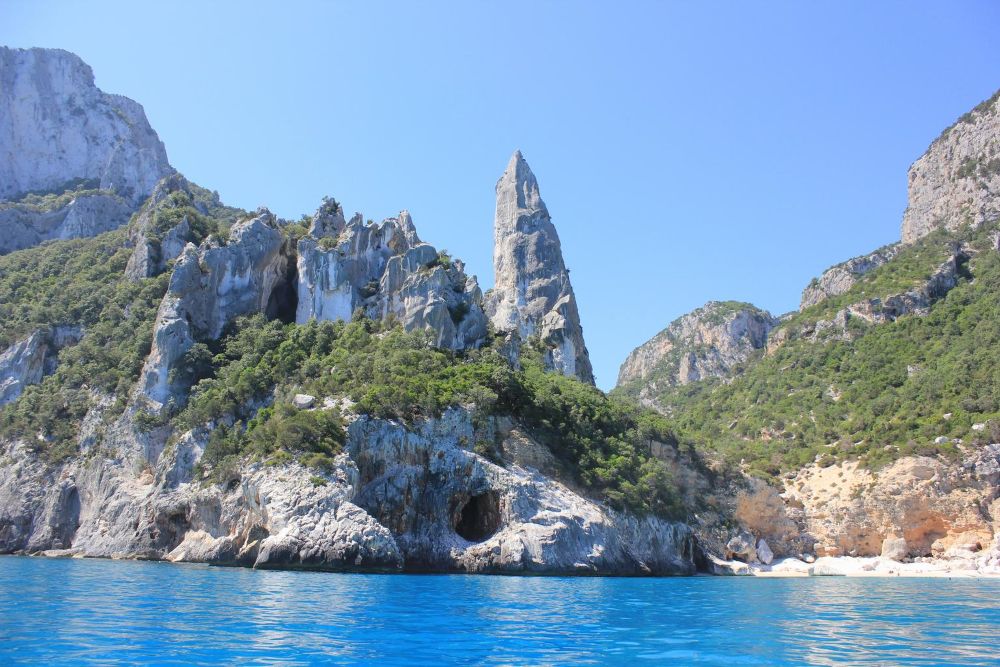
A UNESCO World Heritage site famed for its dramatic 143-metre limestone pinnacle, Aguglia a Tramontana, piercing the sky, and startlingly clear turquoise waters.
Cala Goloritzè is a masterpiece of nature, a place where mountains and sea collide in spectacular fashion. This isn’t your average drive-up beach – reaching its pristine shores is an adventure in itself, typically involving a scenic, moderately challenging 1-1.5 hour hike down (and back up!) a well-marked trail through a limestone ravine, or arriving by boat from nearby ports like Cala Gonone or Santa Maria Navarrese. The effort is richly rewarded. The beach itself is a small arc of white pebbles and sand, lapped by waters so transparent they seem to glow. It’s one of the best beaches in Europe for swimming in truly unspoiled surroundings.
The dramatic beauty doesn’t stop at the water’s edge. The towering cliffs provide a stunning backdrop, and the famous limestone spire is a magnet for climbers and photographers alike. Snorkeling here is exceptional, with the clear waters offering great visibility of marine life. Remember, Cala Goloritzè is a protected area, so there are no facilities on the beach itself – pack in everything you need (water, snacks, sun protection) and, crucially, pack it all out to preserve its pristine condition. It’s a perfect example of hidden beaches in Europe, offering an escape into raw, natural beauty.
Best time to visit: Spring (May) and early Autumn (September-October) offer pleasant temperatures for hiking and fewer crowds. Summer (June-August) is prime for swimming but can be very hot and busy.
Where to stay: The closest towns with accommodation options are Baunei and Santa Maria Navarrese. Cala Gonone, a larger resort town to the north, is a popular base for exploring the Gulf of Orosei and offers a wide range of hotels, guesthouses, and holiday rentals.
Navagio Beach (Shipwreck Beach), Zakynthos, Greece
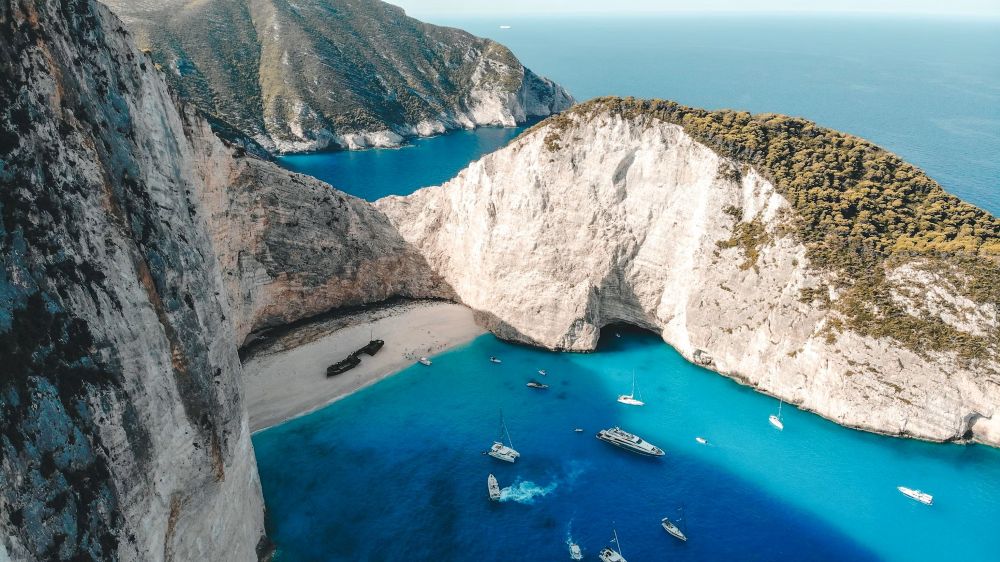
Home to the iconic, rusting MV Panagiotis shipwreck nestled on a white sandy cove, enclosed by towering vertical limestone cliffs and shimmering turquoise waters.
Navagio Beach, or Shipwreck Beach, on the Greek island of Zakynthos, is the stuff of postcards and undoubtedly one of the most instantly recognizable beach destinations in Europe. This small, secluded cove is famed worldwide for the dramatic sight of a freighter, the MV Panagiotis, which ran aground in 1980 and now rests majestically on the white sands. The contrast of the rustic shipwreck against the brilliant white pebbles and sand, the impossibly turquoise waters, and the colossal sheer cliffs that embrace the bay creates a scene of breathtaking, almost surreal beauty.
Access to Navagio Beach is exclusively by boat, with numerous tours departing from various points on Zakynthos like Porto Vromi, Agios Nikolaos, or Zakynthos Town. For an equally stunning, if not more encompassing, perspective, visit the clifftop viewing platform near Anafonitria. From here, you can capture that iconic bird’s-eye photograph. While the beach can get crowded with tour boats, especially mid-day in summer, the sheer spectacle of the location makes it an unforgettable stop. Swimming in its luminous waters with the dramatic backdrop is an experience you won’t soon forget.
Best time to visit: May-June and September-October for pleasant weather and fewer crowds. July and August are peak season with many boat tours. Visit early morning or late afternoon for better photo opportunities and a slightly less crowded experience on the beach itself.
Where to stay: Accommodation is not available at Navagio itself. Most visitors stay in popular resort towns around Zakynthos like Laganas, Tsilivi, Kalamaki, or Alykes, or find quieter villas and guesthouses in the northern, more traditional villages like Volimes or Anafonitria, which are closer to the viewpoint and boat departure points for the beach.
Balos Lagoon, Crete, Greece
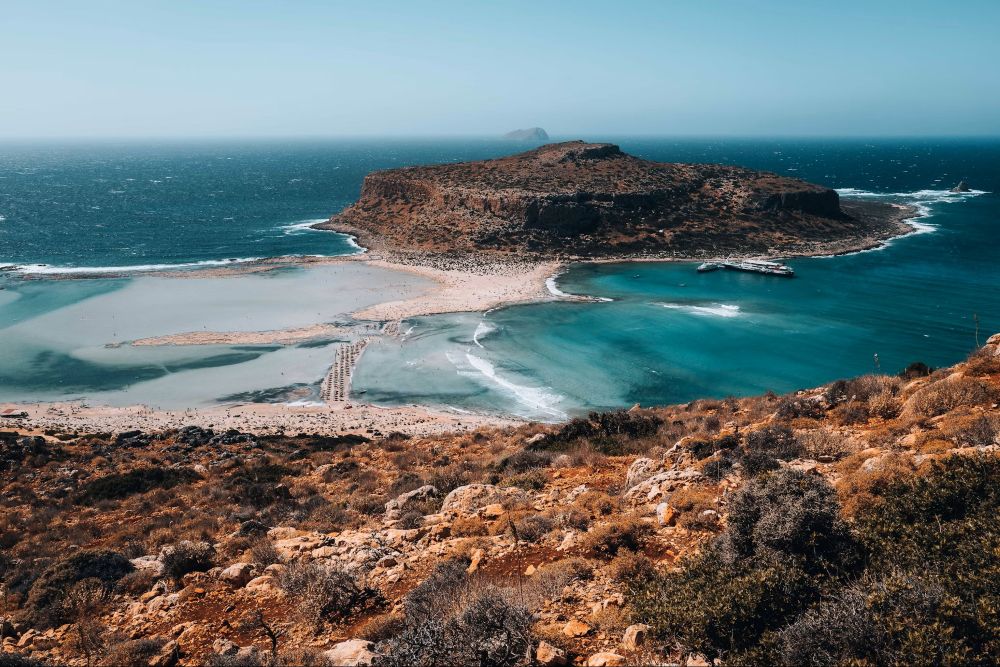
A stunningly beautiful and wild lagoon featuring vast expanses of fine white and pinkish sand, shallow, warm turquoise waters, and rugged Cape Tigani creating a natural pool.
Balos Lagoon, located on the northwestern tip of Crete‘s Gramvousa peninsula, is a vision of raw, exotic beauty. This is where breathtaking shades of blue and turquoise blend with stretches of powdery white and rosy-pink sand (from crushed shells), creating a photographer’s dream.
The lagoon is formed between the mainland and Cape Tigani, a rocky outcrop that you can wade or walk to, offering spectacular views back over the shimmering, shallow waters. It’s ideal for couples seeking a romantic and dramatic landscape. However, given its protected status, facilities are minimal, so pack your essentials.
Best time to visit: May-June or September-October to avoid the intense summer heat and peak crowds, while still enjoying warm waters.
Where to stay: There’s no accommodation directly at Balos Lagoon. Most visitors stay in or around Kissamos (Kastelli), a small town with a good range of hotels and apartments, which is also the departure point for ferries. Chania, a larger and very charming city, is about an hour’s drive from Kissamos and serves as a popular base for exploring western Crete.
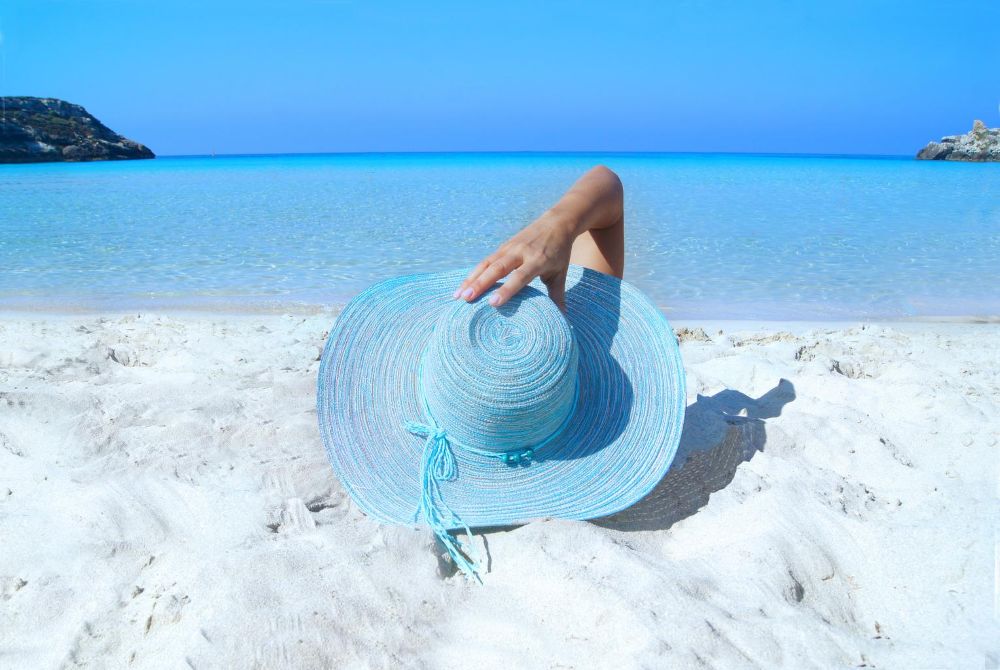
Rabbit Beach (Spiaggia dei Conigli), Lampedusa, Italy
Consistently voted one of the world’s most beautiful beaches, featuring dazzling white sands, exceptionally clear turquoise-to-azure waters, and a protected bay that is a vital nesting site for loggerhead sea turtles.
Spiaggia dei Conigli, or Rabbit Beach, on the small island of Lampedusa (Italy‘s southernmost point, closer to Africa than mainland Europe), is a truly special place. It’s a paradise where nature’s artistry is on full display. The bay is a vision of perfection: fine white sand slopes gently into some of the clearest, most vividly coloured turquoise and blue waters imaginable. The Isola dei Conigli (Rabbit Island) sits just offshore, and you can sometimes wade or swim to it through the shallow, crystalline waters.
This beach is part of the “Riserva Naturale Orientata Isola di Lampedusa,” a protected marine area, crucial for the nesting of loggerhead sea turtles (Caretta caretta). This protection helps maintain its unspoiled character. Access to the beach involves a scenic 15-20 minute walk down a natural path, which helps to preserve its secluded feel. There are limited facilities, emphasizing its natural state. It’s an absolute must for those seeking beach destinations in Europe for sheer, unadulterated beauty and an important natural habitat.
Best time to visit: Late spring (May-June) and early autumn (September-October) are ideal for warm weather, comfortable swimming temperatures, and fewer crowds. July and August are very popular. Turtle nesting season is generally June-August.
Where to stay: Most accommodation is found in Lampedusa town, which offers a variety of hotels, B&Bs, and self-catering apartments. From town, you’ll likely need to take a bus, scooter, or taxi to the Rabbit Beach access point.
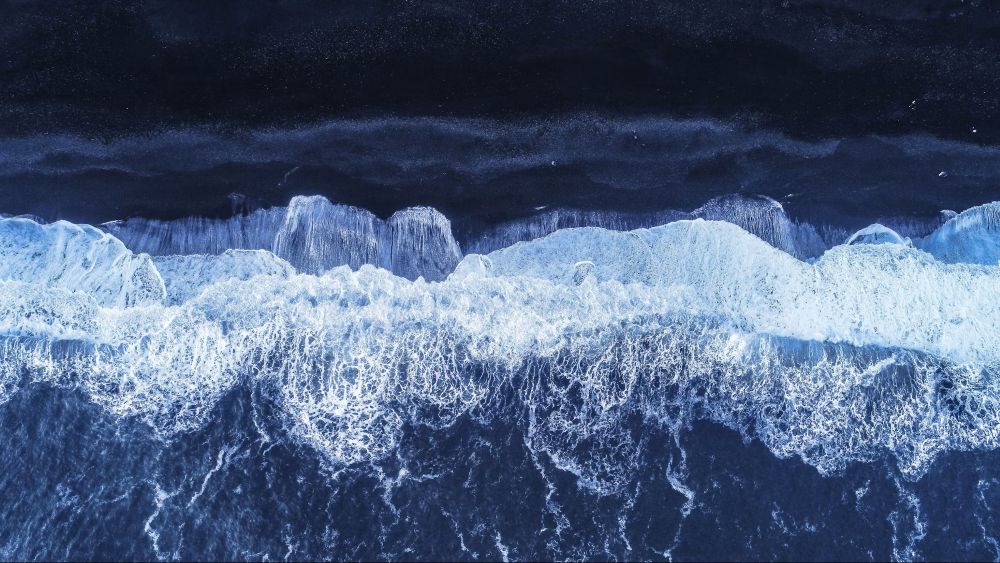
Reynisfjara, Vik, Iceland
A world-famous black volcanic sand beach featuring imposing hexagonal basalt columns (Gardar), dramatic sea stacks (Reynisdrangar), and powerful Atlantic waves.
Reynisfjara is not your typical sunbathing beach. Instead, it offers a strikingly dramatic and powerful experience, showcasing the raw, volcanic beauty of the island. The vast expanse of jet-black sand, formed from eroded volcanic rock, creates a stunning contrast with the white surf of the churning Atlantic waves. Towering basalt columns, resembling a giant’s causeway, provide a unique geological backdrop, and offshore, the jagged Reynisdrangar sea stacks rise from the ocean, steeped in local folklore.
Visitors should be extremely cautious of the “sneaker waves” here, which are deceptively powerful and can sweep people off their feet unexpectedly – always keep a safe distance from the water’s edge and never turn your back on the sea. Despite the dangers, Reynisfjara’s otherworldly beauty is mesmerizing. It’s a place for contemplative walks, incredible photography, and witnessing the sheer force of nature.
Best time to visit: Year-round for its dramatic beauty. Summer (June-August) offers milder temperatures, longer daylight (midnight sun), and easier access. Winter (October-April) can bring snow, dramatic storms, and the chance to see the Northern Lights.
Where to stay: The village of Vík í Mýrdal is the closest settlement and offers several hotels, guesthouses, and campsites. Accommodation along the South Coast can be limited and books up quickly, so plan well in advance. Other options can be found in towns further east or west, like Skógar or Kirkjubæjarklaustur.
Praia da Marinha, Algarve, Portugal
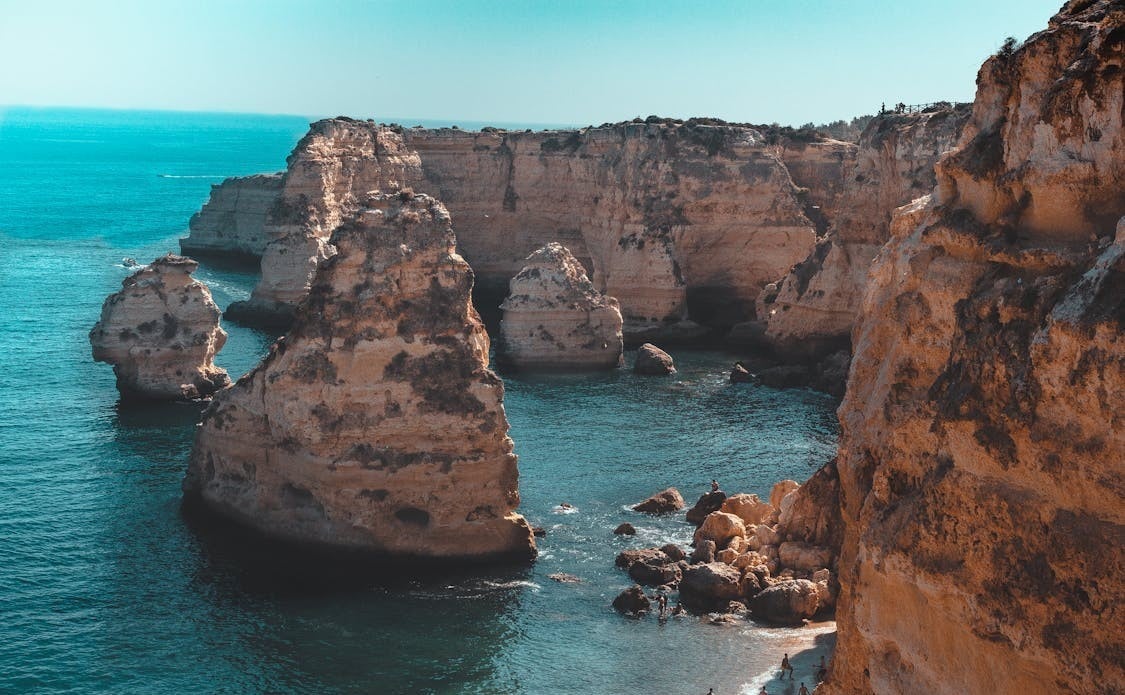
Famous for its stunning ochre-coloured limestone cliffs, natural arches (like the iconic “M” rock or “Heart Rock”), sea stacks, and crystal-clear turquoise waters.
Praia da Marinha is consistently ranked not only as one of the best beaches in Europe but also among the most beautiful in the world, and it’s easy to see why. Located in the heart of the Algarve, this beach is a postcard come to life. Access is via a flight of steps leading down from a clifftop parking area, and as you descend, the breathtaking views unfold. The golden sands are framed by imposing, sculpted cliffs that have been weathered by the elements into fantastical shapes.
The water here is exceptionally clear and calm, making it ideal for swimming and snorkeling, especially around the rock formations where marine life is abundant. At low tide, you can explore hidden coves and walk through natural tunnels to adjoining small beaches. Praia da Marinha is also a starting (or ending) point for the spectacular Seven Hanging Valleys Trail, a clifftop hike offering incredible views of the coastline. While there’s a restaurant/cafe near the entrance, the beach itself retains a relatively natural feel.
Best time to visit: April to October. For fewer crowds and pleasant hiking weather, aim for April-May or September-October. Summer months are perfect for beach weather but busier.
Where to stay: The closest towns are Lagoa and Carvoeiro, offering a range of hotels, resorts, and villas. Further afield, towns like Armação de Pêra, Albufeira, and Lagos provide extensive accommodation and amenities.
La Pelosa, Sardinia, Italy
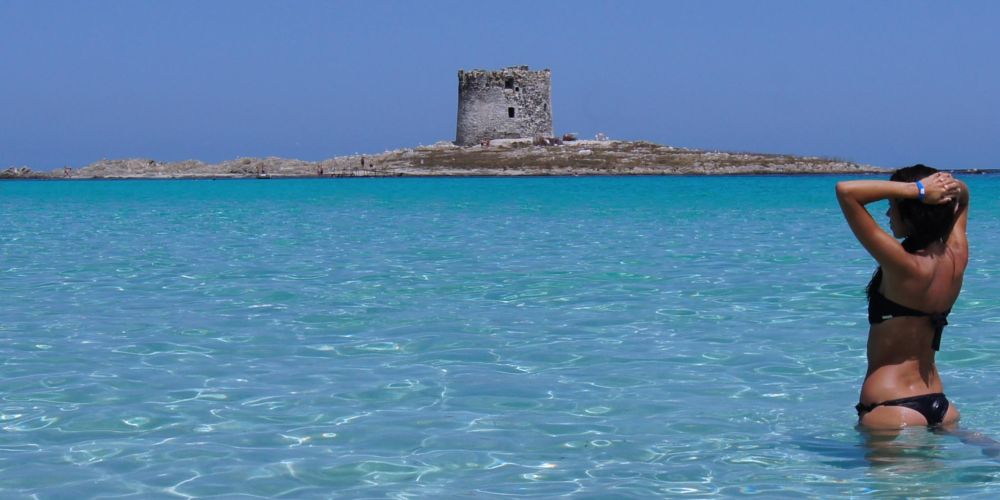
Famous for its incredibly shallow, calm, and brilliantly turquoise waters that resemble a tropical lagoon, fine white sand, and the picturesque 16th-century Aragonese watchtower on an islet just offshore.
La Pelosa, located on the northwestern tip of Sardinia near Stintino, is a beach of almost surreal beauty. Its fame comes from its extraordinarily clear and shallow turquoise waters, which can be just knee-deep for a considerable distance from the shore, making it feel like a vast natural swimming pool. The sand is powdery white, and the view is dominated by the ancient Torre della Pelosa, perched on a tiny island you can sometimes wade or swim to. Another small island, Isola Piana, frames the bay.
Due to its immense popularity and fragile ecosystem, access to La Pelosa beach is often restricted during the summer months, requiring pre-booked tickets and adherence to specific rules (like using mats under towels) to help preserve its beauty. Despite these measures, its allure is undeniable. It’s a perfect spot for families with young children due to the shallow waters and one of the best beaches in Europe for swimming in an almost impossibly beautiful setting. The efforts to protect it ensure that it remains one of Sardinia’s and Europe’s coastal crown jewels.
Best time to visit: May-June or September-October to enjoy warm weather and stunning water clarity with fewer people than in July and August.
Where to stay: The town of Stintino is the closest and offers various hotels, holiday apartments, and B&Bs. Many people also visit as a day trip from larger towns in northern Sardinia like Alghero or Sassari.
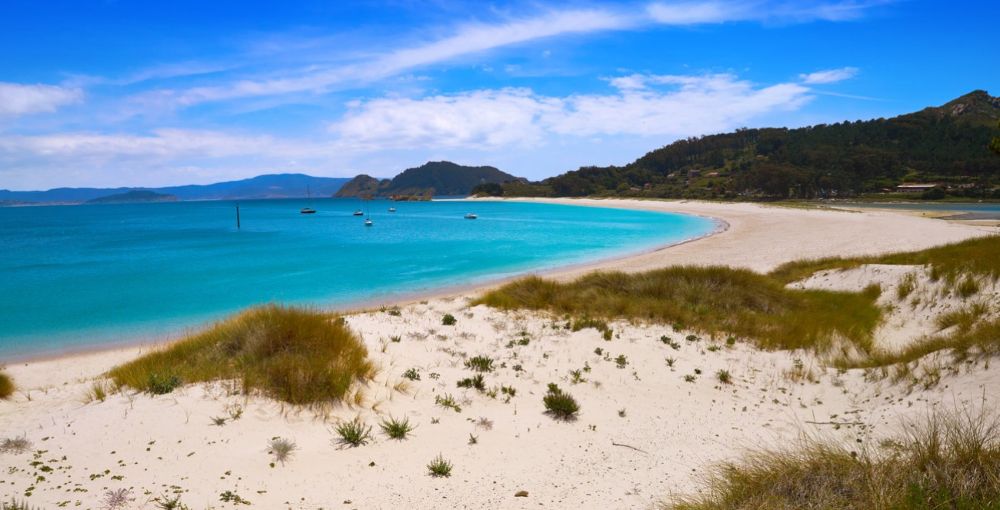
Playa de Rodas, Cíes Islands, Spain
Frequently lauded as one of the world’s most beautiful beaches, this crescent of fine white sand connects two of the three Cíes Islands, backed by a calm lagoon and pine trees, with astonishingly clear, albeit chilly, Atlantic waters.
Often compared to Caribbean shores, Playa de Rodas in the Cíes Islands, part of the Atlantic Islands of Galicia National Park, is a showstopper. This spectacular beach is a kilometre-long arc of powdery white sand that links the islands of Monteagudo and Faro. The sand is soft underfoot, and the waters are a mesmerizing shade of turquoise, though their Atlantic origins mean they’re refreshingly cool, even in summer! Behind the beach lies Lago dos Nenos (Children’s Lake), a calm, shallow saltwater lagoon perfect for families and observing marine life.
The Cíes Islands are a protected natural paradise, meaning visitor numbers are limited daily to preserve their pristine condition, so booking your ferry (from Vigo, Baiona, or Cangas) and park permit in advance is essential, especially in high season. Activities here revolve around appreciating nature: swimming, sunbathing, hiking the various trails that offer stunning views (including up to the lighthouses), and birdwatching – the islands are home to a large colony of yellow-legged gulls. There are basic facilities including a campsite (the only accommodation on the islands), a couple of restaurants, and an information point. It’s a perfect choice for families looking for natural beauty and gentle waters in the lagoon.
Best time to visit: Summer months (June to September) for the warmest weather and best ferry services. June and September offer a good balance with fewer crowds than July and August.
Where to stay: The only option on the islands is the Cíes Islands campsite, which must be booked well in advance. Otherwise, the city of Vigo is the main departure point and offers a full range of hotels and apartments. Baiona and Cangas also have good accommodation choices.
Ses Illetes, Formentera, Spain
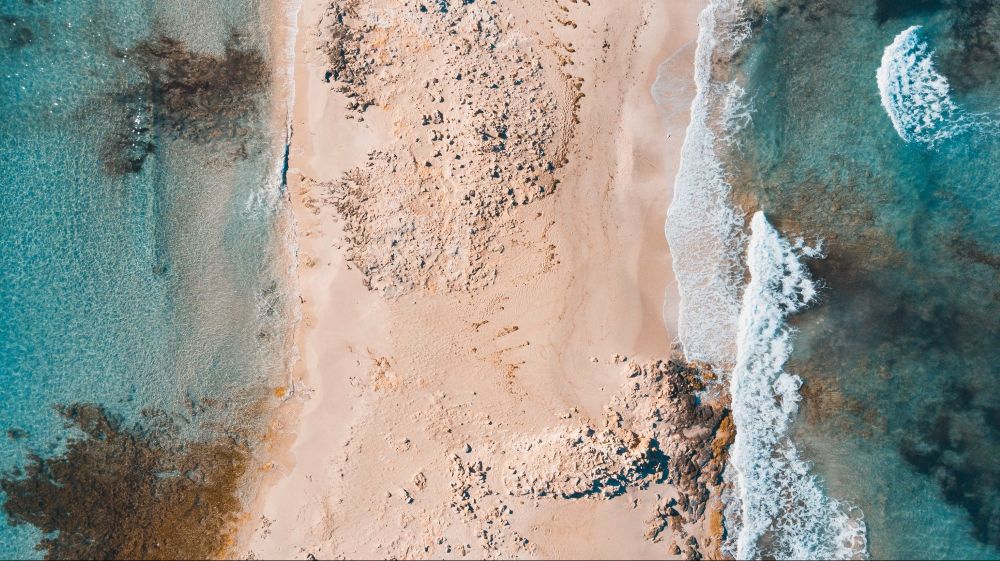
Often ranked among the world’s best beaches, Ses Illetes boasts long stretches of dazzling white sand and incredibly shallow, calm, turquoise waters that evoke the Caribbean. It’s part of the Ses Salines Natural Park.
Step onto Playa de Ses Illetes, and you’ll be forgiven for thinking you’ve been teleported to a Caribbean postcard. Here, the gentle lapping of waves provides the soundtrack to pure relaxation. Choose your vista: the calm, shallow bay perfect for wading into blissful oblivion, or the slightly more open, yet equally inviting, sea on the other side. While its soul is wild and development is refreshingly minimal, a few chic ‘chiringuitos’ (beach restaurants) offer delightful (if sometimes indulgent) seaside lunches.
To preserve this slice of paradise, vehicle access is often limited during peak season, encouraging a mindful approach to your visit. Whether you’re seeking serene sunbathing, a refreshing swim in liquid crystal, or perhaps a touch of wind-driven excitement for kitesurfers, Ses Illetes delivers. It’s a jewel among the best beach destinations in Europe for honeymoon escapes or an unforgettable day trip from bustling Ibiza.
Best time to visit: May, June, September, and October offer a fantastic balance of warm, sunny weather, pleasant sea temperatures, and fewer crowds.
Where to stay: Es Pujols is Formentera’s main tourist resort and offers a range of hotels and apartments. Sant Francesc Xavier, the island’s capital, provides a more local feel. Other areas like Playa Migjorn also offer accommodation. Formentera is small, so most places are relatively accessible.
Calanque d’En-Vau, Cassis, France
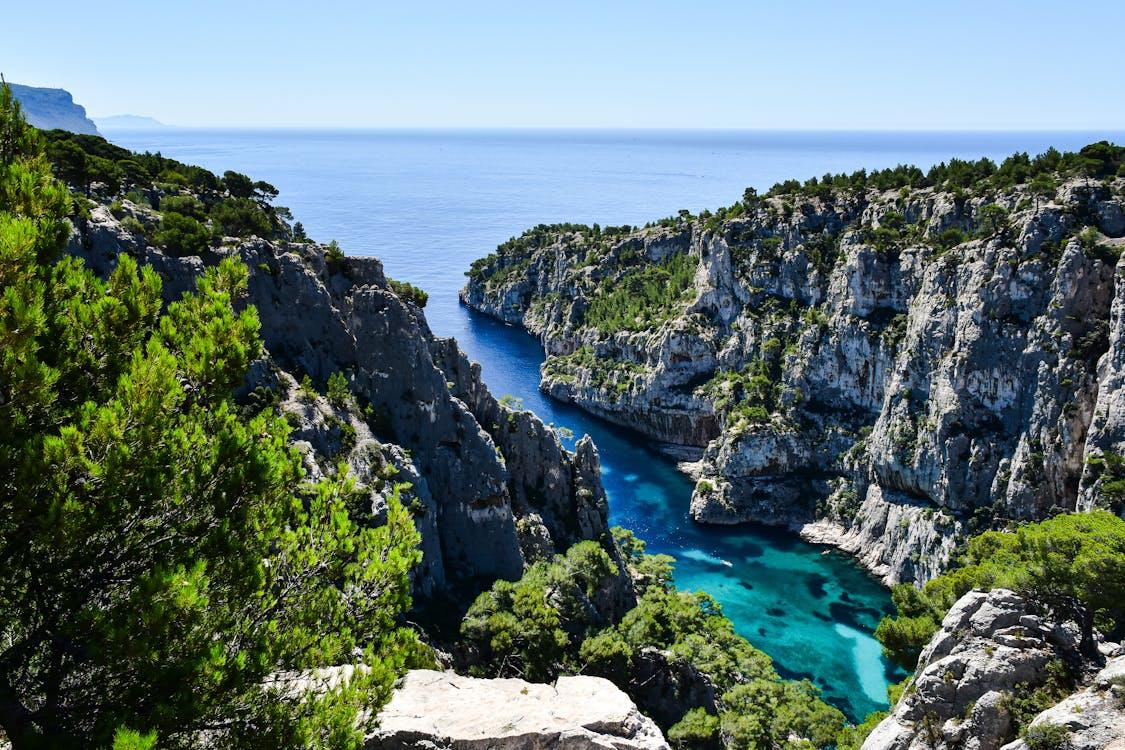
A breathtakingly deep inlet flanked by towering white limestone cliffs, with a stunning pebble beach and incredibly clear, turquoise waters. Often described as one of the most beautiful Calanques.
The Calanques National Park, stretching between Marseille and Cassis, is a string of dramatic fjord-like inlets, and Calanque d’En-Vau is arguably its most spectacular jewel. Reaching this secluded paradise is part of the adventure. You can hike in from near Cassis (the Port Miou trailhead is common) or from the Col de la Gardiole – a rewarding trek with stunning viewpoints. Alternatively, arrive by kayak or a boat tour from Cassis or Marseille for a different perspective of the majestic cliffs.
The beach itself is a small stretch of white pebbles, contrasting beautifully with the vibrant turquoise of the water. The towering cliffs on either side create a sense of being in a natural cathedral, sheltering the cove and making the water calm and inviting for a swim. Its wild, rugged beauty and the effort required to reach it make it one of the best hidden beaches for nature lovers and adventurers.
Best time to visit: Spring (April-May) and early autumn (September-October) are ideal for hiking and avoiding extreme heat and crowds. Note: hiking trails can be closed in summer due to fire risk.
Where to stay: The charming fishing port of Cassis is the closest town and offers a good selection of hotels, apartments, and guesthouses. Marseille, a larger city, provides more extensive options and is also a departure point for boat tours. Exploring the best beach towns in Europe like Cassis adds to the overall trip.
Durdle Door, Dorset, England
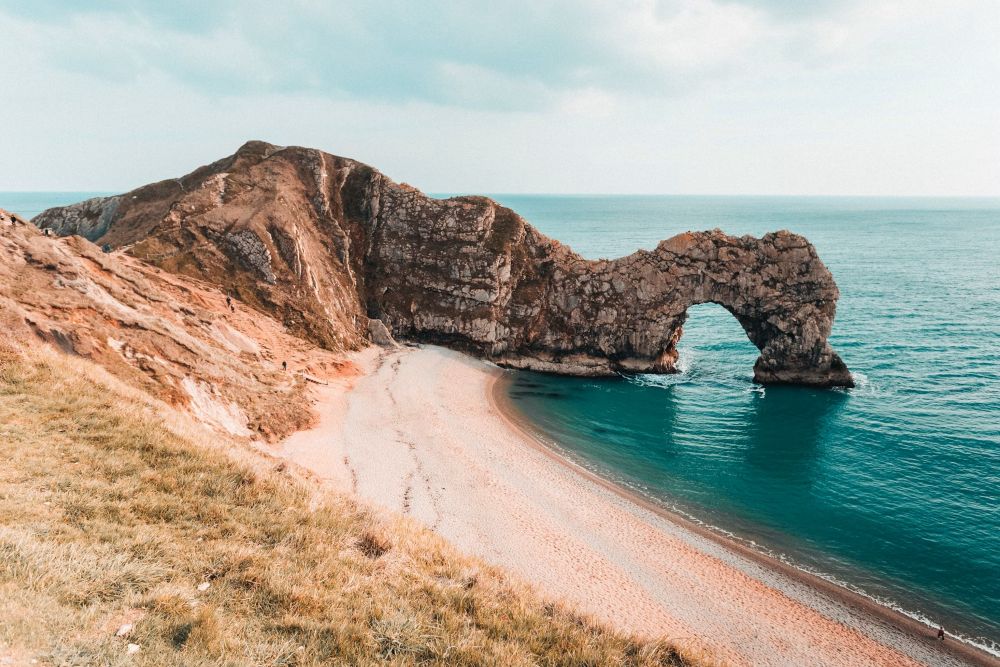
Home to one of England‘s most famous natural landmarks, the magnificent Durdle Door limestone arch, set on a picturesque shingle beach along the dramatic Jurassic Coast UNESCO World Heritage Site.
Durdle Door is a geological wonder and an icon of the English coastline. This majestic natural arch, formed by the sea piercing through a band of Portland limestone, stands proudly against the backdrop of the English Channel. The adjacent beach, a sweep of shingle and sand, offers fantastic views of the arch and the surrounding white chalk cliffs. It’s a key feature of the Jurassic Coast, renowned for its rich fossil heritage.
Access to the beach is via a steep footpath and steps from the clifftop car park at Durdle Door Holiday Park. The walk itself offers stunning views. While swimming is possible, the water can be cold and the beach shelves steeply in places. It’s a fantastic spot for photography, picnicking, and coastal walks – the South West Coast Path runs along the clifftop, offering routes to nearby Lulworth Cove.
Best time to visit: Late spring (May) or early autumn (September) for pleasant weather, fewer crowds, and good light for photography. Summer (June-August) is popular but can be very busy.
Where to stay: Lulworth Cove and the nearby village of West Lulworth offer a range of B&Bs, guesthouses, and holiday cottages. Durdle Door Holiday Park has static caravans and touring pitches. Larger towns like Weymouth or Wareham provide more extensive options.
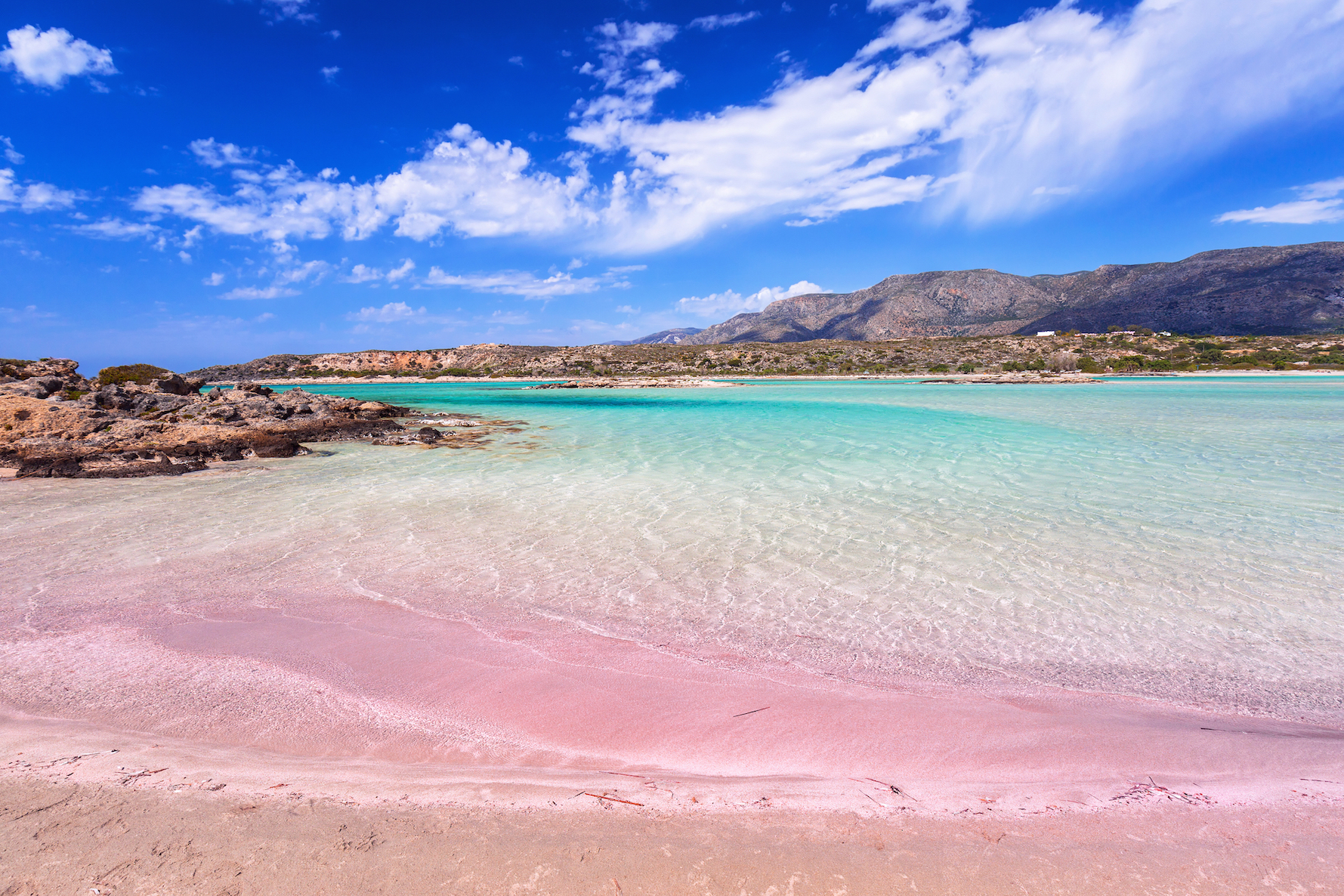
Elafonissi Beach, Crete, Greece
Famous for its stunning pink-tinged sand (created by crushed shells), shallow turquoise lagoon, and a small island connected to the mainland by a sandbar you can walk across.
Elafonissi Beach, located on the southwestern tip of Crete, is a protected nature reserve renowned for its unique pink sand that glows in the sunlight and its incredibly shallow, warm, crystal-clear turquoise waters. A shallow lagoon separates the mainland beach from Elafonissi islet, and you can easily wade across – the water is often only knee-deep. This makes it one of the best beaches for families with young children.
The islet itself has small coves, dunes, and unique flora. While the main beach area can get crowded, especially near the sunbeds and umbrellas for rent, a short walk along the lagoon or onto the islet can lead you to quieter spots. It’s perfect for paddling, swimming in the gentle waters, and simply soaking up the unique atmosphere.
Best time to visit: May-June and September-October to enjoy warm weather with fewer crowds. July and August are very popular and can be extremely busy.
Where to stay: Accommodation directly at Elafonissi is limited. Many visitors come on day trips from Chania (around 1.5-2 hours drive). Nearby villages like Chrysoskalitissa offer some guesthouses and rooms. For more choice, consider staying in Paleochora or Kissamos and driving over.
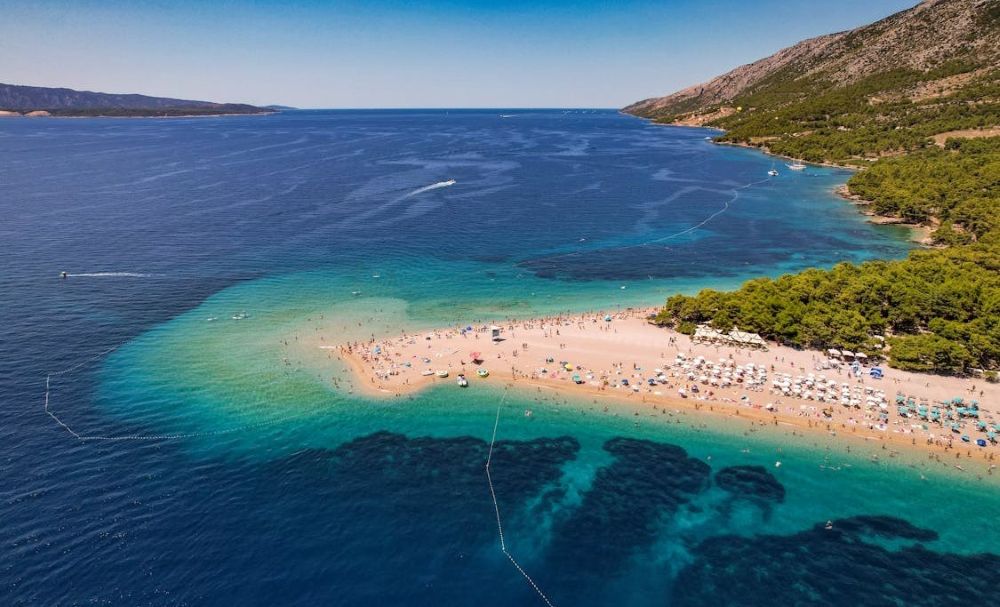
Zlatni Rat, Brač Island, Croatia
A unique, horn-shaped pebble beach that juts out into the Adriatic Sea, its tip famously changing shape with the winds and currents. Surrounded by pine trees and clear blue waters.
Often referred to as the Golden Horn or Golden Cape, Zlatni Rat is one of Croatia‘s most iconic and photographed beaches. Located near the town of Bol on the island of Brač, this stunning spit of land extends nearly half a kilometre into the turquoise sea. The beach is composed of smooth white pebbles that shift with the prevailing winds and currents, meaning its distinctive V-shape is ever-changing. This makes it not only beautiful but also fascinating.
The beach is fringed by pine trees offering welcome shade, and the waters are crystal clear, perfect for swimming. Zlatni Rat is also a renowned windsurfing destination due to reliable afternoon maestral winds. There are ample facilities, including sunbed and umbrella rentals, cafes, and watersport centres. A paved promenade connects the beach to the charming town of Bol (about a 20-minute walk). Its unique geography and vibrant atmosphere ensure its place among the best beach towns in Europe to visit.
Best time to visit: Late spring (May-June) or early autumn (September-October) for pleasant weather, warm seas, and fewer crowds. Peak season (July-August) is lively but very busy.
Where to stay: Bol is the main resort town near Zlatni Rat and offers a wide array of accommodation, from luxury hotels to family-run guesthouses and self-catering apartments.
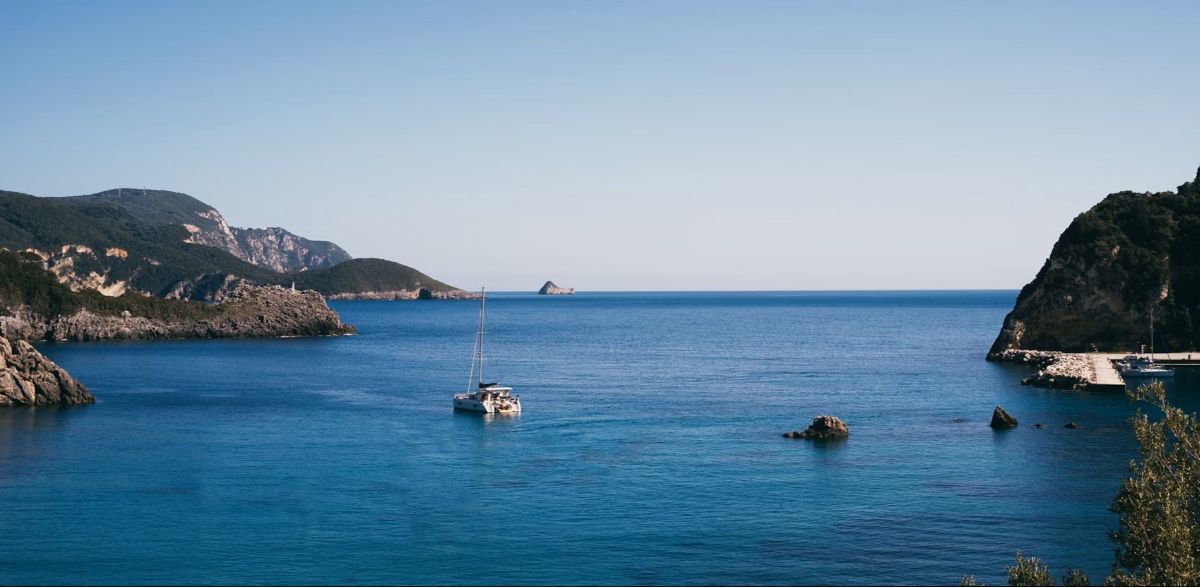
Paleokastritsa, Corfu, Greece
A breathtakingly beautiful area on Corfu’s west coast, featuring a series of deeply indented bays with crystal-clear emerald and turquoise waters, dramatic cliffs, and hillsides covered in olive groves and cypress trees.
Paleokastritsa is not just a single beach but a stunning collection of coves and bays, each with its own unique charm, making it one of the most picturesque spots in the Ionian Islands. The main beaches like Agios Spyridon, Agios Petros, and Alipa are popular and well-organized, offering sunbeds, umbrellas, and watersports. However, the true magic of Paleokastritsa lies in exploring its coastline by boat. You can hire a small boat or take a water taxi to discover secluded coves, sea caves (like Nafsika Cave or Blue Eye Cave), and quieter stretches of sand or pebble.
The water here is exceptionally clear and often a bit cooler than other parts of Corfu, making it incredibly refreshing for swimming and snorkeling. High above the main bay, the 13th-century Theotokos Monastery offers panoramic views over the coastline. With its stunning scenery, numerous coves to explore, and excellent tavernas overlooking the sea, Paleokastritsa is undeniably one of the best beach destinations in Europe, particularly for those who love exploring varied coastal landscapes.
Best time to visit: May to October. June and September offer a great balance of warm weather, pleasant sea temperatures, and fewer crowds than July and August.
Where to stay: Paleokastritsa itself has a good range of hotels, apartments, and studios, many offering spectacular sea views. Due to its hilly terrain, some accommodations involve steep walks. Nearby villages also offer quieter options.
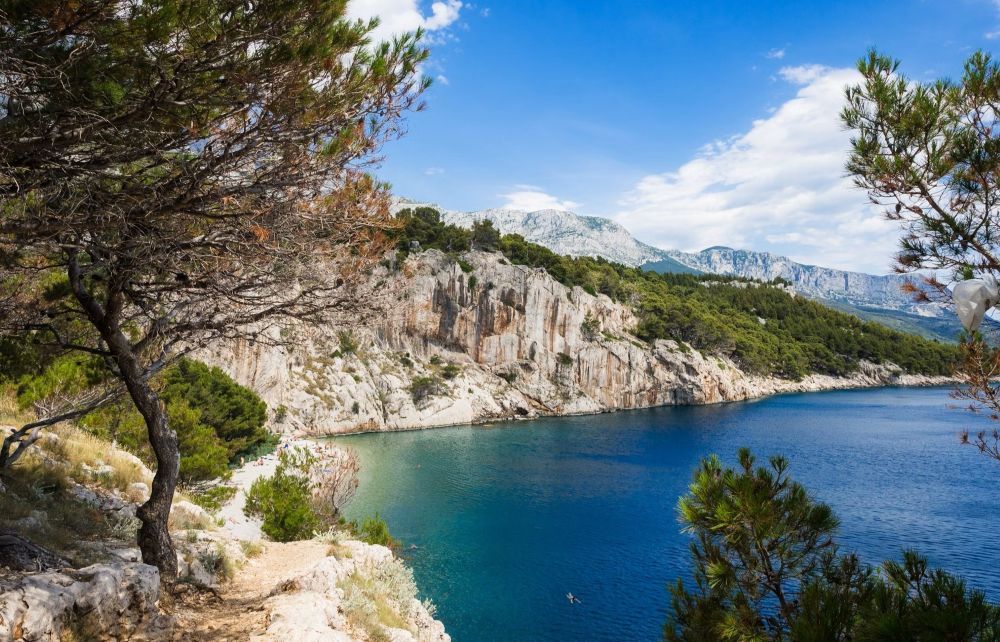
Nugal Beach, Makarska, Croatia
A stunningly beautiful and secluded pebble beach nestled at the foot of towering reddish-brown cliffs, often frequented by naturists, and accessible via a scenic forest path.
Nugal Beach is a true haven for those seeking tranquility and unspoiled natural beauty. This is one of Croatia’s best hidden beaches in Europe, primarily because it’s only accessible by a pleasant 30-40 minute walk through the Osejava forest park from Makarska or Tučepi, or by boat. There are no roads leading directly to it, which preserves its serene and untouched atmosphere.
The beach is a picturesque crescent of smooth pebbles, lapped by the crystal-clear turquoise waters of the Adriatic. The dramatic, almost vertical cliffs that frame the beach provide a breathtaking backdrop and a sense of seclusion. A small waterfall sometimes cascades down the cliff face after rains. While Nugal is well-known as a clothing-optional (FKK) beach, textile bathers are also welcome, particularly outside of peak season. It’s an idyllic spot for swimming, sunbathing, and simply connecting with nature in a spectacular setting.
Best time to visit: May-June or September-October for warm, sunny weather and fewer people. July and August can be hot, and while still secluded, more people may make the trek.
Where to stay: The nearby towns of Makarska and Tučepi offer a wide range of accommodation, from hotels and resorts to private apartments and guesthouses. From these towns, you can access the walking trails to Nugal Beach.
Planning Your Beach Vacation in Europe
A little planning goes a long way in ensuring your European beach escape is smooth sailing.
Here are a few tips:
- Book ahead, especially for peak season:Popular beach destinations in Europe and accommodations get booked up months in advance, especially for July and August.
- Consider shoulder seasons:May, June, September, and even early October often offer fantastic weather, warmer seas (especially in autumn), and significantly fewer crowds than peak summer. Prices for flights and accommodation can also be lower.
- Research local transport:Will you rent a car? Rely on public transport? Some of the best hidden beaches in Europe might require a car or even a boat trip to access.
- Embrace beach etiquette:Topless sunbathing is common and accepted on many European beaches, but full nudity is usually confined to designated naturist beaches.
- Stay sun safe:The Mediterranean sun can be intense. Pack high-SPF, reef-safe sunscreen, a wide-brimmed hat, and sunglasses. Stay hydrated!
- Currency and payments:While credit cards are widely accepted in tourist areas, it’s always wise to have some local currency (Euros in most Western European destinations, but check for specific countries like Croatia, Albania, UK etc.) for smaller purchases, local markets, or tips.
Essential packing list:
- Swimsuits (pack a couple!)
- Beach cover-up or sarong
- Lightweight clothing: shorts, t-shirts, sundresses, linen trousers
- A light sweater or jacket for cooler evenings
- Comfortable walking shoes or sandals (many beach towns in Europe have cobbled streets)
- Water shoes or sturdy sandals for pebble beaches or rocky coves
- Sun hat and sunglasses
- High-SPF reef-safe sunscreen and after-sun lotion
- Beach bag
- Reusable water bottle
- Travel adapter and power bank
- Beach towel (quick-dry ones are great for travel)
- Any necessary medications
- A good book!
Frequently Asked Questions
Which country in Europe has the best beaches?
The truth is, amazing beaches are scattered all across the continent! Greece is famous for its idyllic islands and diverse beaches like Navagio, Balos, and Elafonissi; Italy boasts stunning coastlines in Sardinia (Cala Goloritzè, La Pelosa) and Lampedusa (Rabbit Beach); Spain offers everything from the wilder Atlantic shores like Playa de Rodas to the chic Balearic Islands (Ses Illetes); Portugal’s Algarve (Praia da Marinha) is renowned for its golden cliffs; Croatia has unique spots like Zlatni Rat and hidden gems like Nugal.
Are European beaches good for families?
Many European beaches are perfect for families, offering calm, shallow waters, sandy shores, and nearby amenities. Destinations like Elafonissi in Crete with its lagoon, Playa de Rodas with its sheltered lake, or La Pelosa with its vast shallow area are excellent choices. Always check specific conditions and facilities.
Which are the best hidden beaches in Europe?
Many beaches require a little extra effort to reach, which often makes them more special. On our list, places like Cala Goloritzè (Italy), Calanque d’En-Vau (France), and Nugal Beach (Croatia) qualify as some of the best hidden beaches in Europe due to their more remote locations or access requiring a hike or boat. Discovering these gems is part of the adventure!.
Where can I find the best beach towns in Europe?
Europe is dotted with charming beach towns. Think of places like Cassis in France (gateway to the Calanques), Bol in Croatia (home to Zlatni Rat), Positano on Italy’s Amalfi Coast (though not on this specific list, it’s iconic), or San Sebastián in Spain known for its city beaches and incredible food scene. Many of the best beach destinations in Europe are either in or near delightful towns.
What are the best beaches in Europe for couples or honeymooners?
Europe offers incredibly romantic beach destinations. The secluded beauty of Cala Goloritzè in Sardinia, with its dramatic cliffs and pristine waters, is perfect for an intimate escape. The picturesque coves of Paleokastritsa in Corfu, Greece, with their lush surroundings and charming boat trips, are incredibly romantic. Formentera, with its tranquil ambiance and stunning sunsets at Ses Illetes, is also a favorite for couples seeking a peaceful and beautiful retreat. The Algarve’s charming coastal towns paired with beaches like Praia da Marinha also provide a romantic setting.
Are there any beaches in Europe suitable for swimming?
For exceptional swimming, look for beaches with clear, calm waters and gentle slopes. Cala Goloritzè and La Pelosa in Sardinia, Italy, are renowned for their incredible clarity and inviting depths. Balos Lagoon and Elafonissi in Crete, Greece, offer warm, shallow waters perfect for a leisurely dip. Ses Illetes in Formentera, Spain, is also exceptional for its translucent, bath-like conditions.
When is the best time for a beach vacation in Europe?
Generally, May to October offers the best beach weather. July and August are the hottest and busiest. For a balance of good weather, warm seas, and fewer crowds, consider June or September. Shoulder seasons can also be great for exploring the best beach towns in Europe without the peak season rush.





There are no comments.