

French cities have a powerful appeal, after all, who wouldn’t want to visit Paris to see the Eiffel Tower or explore the world-class art collection at the Louvre? Or perhaps enjoy the beaches of the French Riviera. But if this isn’t your first trip to France, it’s time to set your sights on French towns. Small towns in France offer a completely different pace of life than cities, and if you want to experience authentic local culture, heading to the countryside is your best bet.
The French countryside is dotted with places so picturesque they look like they were pulled straight out of a storybook. We are talking about places with cobblestone streets, ancient stone bridges, ruined castles, and vibrant flower boxes spilling over windowsills. Do you crave a quiet afternoon wandering through narrow medieval alleys? Or maybe you want to sit at a family-run bistro eating food grown just a few miles down the road?
In this guide, we will look closely at the prettiest towns in France. Some cling to the sides of dramatic cliffs, others sit peacefully alongside slow-moving rivers, and a few are nestled deep within rolling hills of lavender and vineyards.
Most Beautiful Towns in France
Small towns in France each have their own unique character and atmosphere; in the north, you’ll find half-timbered houses and spectacular chalk cliffs. Down south, you get sun-baked stone, olive groves, and the scent of wild thyme in the air.
St Paul de Vence 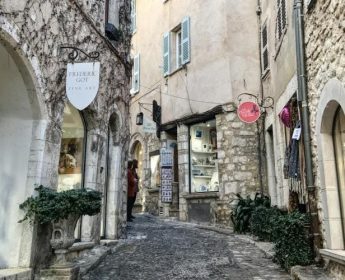
When you think of classic hilltop villages on the French Riviera, St Paul de Vence is likely the first image that comes to mind. This walled medieval town sits perched on a hill looking out over the Mediterranean Sea, and it has a long, rich history tied to the art world. Back in the 1920s, famous painters like Marc Chagall, Pablo Picasso, and Henri Matisse spent massive amounts of time here. They frequently paid for their drinks and meals at the local inn, La Colombe d’Or, with their paintings. Today, those same paintings still hang on the walls of the restaurant.
Especially if you’re an art lover, there are many galleries lining both sides of the narrow pedestrian street, and the town also features sculptures and handmade jewelry. And the 16th-century ramparts that surround the village provide incredible vantage points of the valleys below. Be sure to check out the local cemetery at the edge of town, where Marc Chagall is buried. The peaceful atmosphere there is deeply moving.
🚗How to Get There: If you’re departing from Nice, take bus 620 to Gare Cagnes-Sur-Mer, then transfer to bus 655 to the Saint Paul de Vence Village stop. If you choose to rent a car, the drive from Nice takes about 30 minutes. But keep in mind that parking spaces near the village entrance fill up quickly in the summer, so it’s best to arrive early in the morning.
Èze 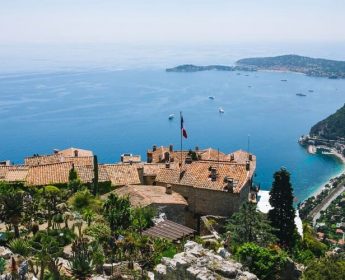
Eze, located on the coast between Nice and Monaco, offers absolutely breathtaking views thanks to its elevation of over 1,400 feet. At the very top of the village sits the Jardin Exotique. This botanical garden is built into the ruins of an old castle and is filled with towering cacti, succulents, and rare plants. It is absolutely worth the small entry fee, mainly because it offers the absolute best panoramic view of the coastline.
On a clear day, you can even see all the way to St. Tropez. Before you leave the area, drop by the Fragonard perfume factory located at the base of the village. You can take a free tour and learn exactly how they extract scents from local flowers.
🚗How to Get There: Take the train or bus No. 82 from Nice directly to Eze Village. You can also take the train from Nice to “Èze-sur-Mer” down on the coast. From the train station, you can either catch a connecting shuttle bus up the hill or hike the famous Nietzsche Path. The hike takes about an hour and a half and is quite steep, but it is incredibly rewarding if you are in good shape.
Menton 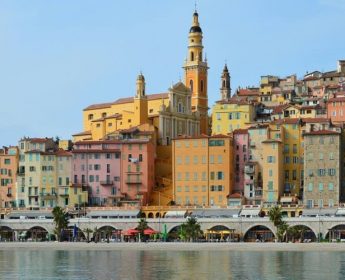
Located on the border between France and Italy, the town of Menton boasts the warmest climate of any town on the French Riviera, allowing its lemons, oranges, and gardens to thrive year-round. As one of France’s hidden gems, its laid-back atmosphere makes it the perfect destination for families.
The old town cascades down a hill toward the sea, featuring brightly colored buildings in shades of pastel yellow, peach, and terracotta. Walking through the streets feels like you have crossed into Italy, and the local food heavily reflects that influence. You will find incredible pizza, pasta, and seafood at the restaurants lining the harbor. If you visit in February, you will catch the famous Fête du Citron. During this event, the town builds massive, elaborate sculptures entirely out of citrus fruits. Make sure you stop by the Jean Cocteau Museum near the waterfront to see an amazing collection of the artist’s work.
🚗How to Get There: It takes about 40 minutes by train from Nice. Driving is also an option, taking the scenic Moyenne Corniche road, though parking can be expensive.
Fontaine-de-Vaucluse
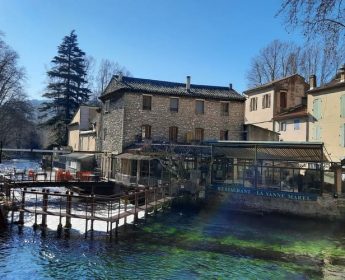
Known for its mysterious springs, natural scenery, and rich history, this town is one of the most unique tourist destinations in southern France. Fontaine-de-Vaucluse is built right over a massive spring, and the water gushing from the cave has a vivid emerald green hue.
The village itself is shaded by giant plane trees and filled with the sound of rushing water. It is the perfect place to sit at an outdoor cafe and eat a long, lazy lunch. You can walk the paved path right up to the mouth of the spring. Along the way, check out the old paper mill. They still make paper by hand using a traditional waterwheel, and you can watch the artisans at work. The 14th-century poet Petrarch lived here, and you can visit a small museum dedicated to his life and work.
🚗How to Get There: Public transportation to this area is limited, so the best way to get there is by renting a car, which allows you to drive through the French countryside. Of course, you can also take a train to nearby Avignon or the town of L’Isle-sur-la-Sorgue, and then take a local bus from there.
Moret-sur-Loing 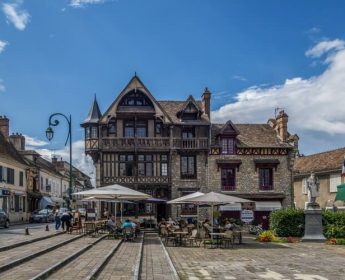
Moret-sur-Loing is located close to Paris, making it an ideal destination for a day trip from the city. Situated on the banks of the Loing River, this medieval town looks like an Impressionist painting come to life. In fact, the famous painter Alfred Sisley lived here for years and painted the town’s bridge and riverbanks over and over again.
The town still retains its massive medieval stone gates at either end of the main street. You can walk along the river, watch the ducks glide by, and admire the old watermills. Are you a fan of sweets? You must try the local specialty: sucre d’orge. This is a traditional barley sugar candy created by the local nuns in 1638. You can buy it in beautiful little tins at the local shops, and they make wonderful souvenirs.
🚗How to Get There: Take the RER D from Paris and get off at Melun Station; transfer to the TER train at Melun Station and get off at Moret – Veneux-les-Sablons Station. From there, it’s about a 20-minute walk.
Roussillon 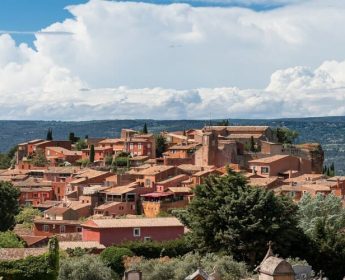
Although it’s located on a mountaintop in Provence, this place is a far cry from the traditional lavender-filled landscapes. This village is famous for its rich deposits of ochre. As a result, every single building in the town is painted in vibrant shades of red, orange, yellow, and pink. Against the backdrop of bright green pine trees and a clear blue sky, the contrast is absolutely visually stunning. It is widely considered one of the prettiest towns in France for photography.
The main attraction here is the Sentier des Ocres, where you can pay a small fee to walk through the old pigment quarries. The landscape features bizarre, towering pillars of red dirt and sand that look more like the American Southwest than southern France. Just be warned: the red dust will get on your shoes and clothes, so do not wear your finest white sneakers here! After your walk, grab some lavender ice cream in the village square and enjoy the sunset.
🚗How to Get There: The most practical way to visit is by renting a car. If you are staying in Avignon or Aix-en-Provence, the drive takes about an hour.
Gordes 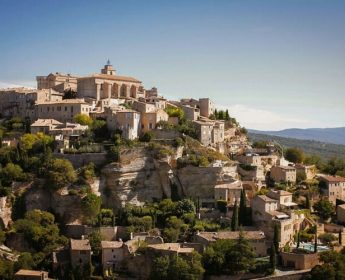
Right next to Roussillon, Gordes offers the most classic views of lavender fields. It is perched majestically on the edge of the Vaucluse Plateau. As you drive up the winding road toward the village, there is a specific lookout point where everyone stops to take photos. The sight of the white stone houses stacked up the hillside, crowned by a massive Renaissance castle and church, is simply spectacular.
The most famous attraction in the area is Sénanque Abbey, a monastery founded in the 12th century. It remains home to Cistercian monks to this day and is surrounded by vast fields of lavender; in the summer, you can see this gray-stone monastery encircled by blooming purple flowers.
🚗How to Get There: Like Roussillon, Gordes is best reached by car. It is about a 45-minute drive east of Avignon. If you do not want to rent a vehicle, your best alternative is booking a guided day tour out of Avignon or Marseille. Many of these tours group Gordes, Roussillon, and the nearby abbey together into one seamless trip.
Lourmarin 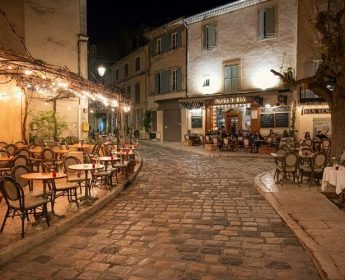
Situated on the southern slopes of the Luberon Mountains and surrounded by vast vineyards, olive groves, and lavender fields, it perfectly embodies the idyllic charm of Provence. Lourmarin is also home to a Renaissance castle, the Château de Lourmarin, which is well worth a visit. If you can, try to visit on a Friday morning. The Lourmarin Friday market is legendary in the region. You can buy everything from fresh goat cheese and cured meats to linen shirts and handmade soaps.
🚗How to Get There: Driving is still the best option, but if you need to take public transportation, you can take a bus from the city of Apt or Aix-en-Provence. You must check the timetables carefully as they run infrequently.
Maintenon 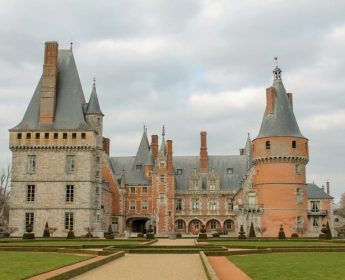
Château de Maintenon is the main reason people visit Maintenon, the castle possessing a royal history. This castle was purchased by Madame de Maintenon, who started as the governess to King Louis XIV’s illegitimate children and eventually became his secret second wife. The castle interiors are beautifully furnished, giving you a real sense of royal life in the 17th century.
🚗How to Get There: You can take a TER or Intercités train directly from Montparnasse in Paris; the journey takes roughly 50 minutes. The train station in Maintenon is a brisk 15-minute walk from the town center and the castle gates.
Chevreuse
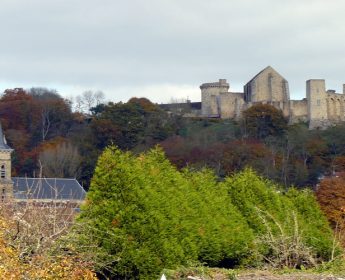
Another great option for a day trip from Paris, located in the heart of the Haute Vallée de Chevreuse Regional Nature Park, this town feels a million miles away from city life. It is nestled deep in a valley surrounded by dense forests and hiking trails.
The defining feature of Chevreuse is the Yvette River that runs right through the center of town. You can take a scenic walk called the Promenade des Petits Ponts. This path follows a small canal behind the stone houses, and you cross over dozens of tiny, flower-covered bridges. High on the hill overlooking the village sits the Château de la Madeleine, a fortress built in the 11th century. You can hike up the steep path from the village to the castle to enjoy an incredible view over the valley.
🚗How to Get There: From Paris, take the RER B line and get off at Saint-Rémy-lès-Chevreuse. Then take bus 5340 to the “Centre” stop and walk 100 meters.
Provins
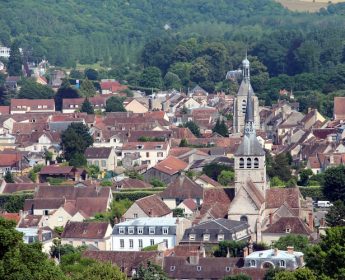
As one of France’s historic medieval towns, Provins was once a major trading hub where merchants from across Europe gathered to hold large-scale trade fairs. Thanks to this prosperous past, the town is still surrounded by well-preserved medieval walls and defensive gates.
Climb up the Tour César, a 12th-century tower, for sweeping views of the countryside. Wander through the subterranean galleries, a vast network of underground tunnels originally used to store goods. Provins is also famous for its roses. You will find shops selling rose petal jam, rose honey, and rose candy. From spring to fall, the town puts on live medieval shows featuring knights on horseback, jousting, and falconry. It is fantastic fun for families.
🚗How to Get There: You can take the Transilien P line directly from Gare de l’Est in Paris; the train ride takes about an hour and twenty-five minutes.
Étretat 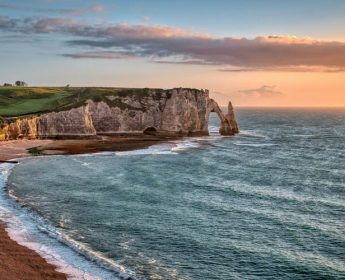
Étretat is a small coastal village in France where you can admire the magnificent coastline. The town is famous for its massive, white chalk cliffs that plunge directly into the roaring Atlantic Ocean. The ocean has carved massive natural arches into the stone, along with a towering rock spire known as the “Needle.”
The most popular activity here is hiking along the trails on either side of the beach and taking in the cliffside views. You can even visit the author Maurice Leblanc’s house, which is now a quirky museum. Treat yourself to a steaming pot of fresh mussels and some local hard apple cider before you leave.
🚗How to Get There: Depart from Gare Saint-Lazare in Paris, get off at Bréauté-Beuzeville, then take bus Line 24 and get off at Étretat. The trip will take about three hours.
Transportation Tips for Visiting French Towns
If you’re interested in visiting these fairytale-like towns, knowing a bit about transportation in France can make your trip easier and save you some time. While the TGV is ideal for traveling between hubs like Paris and Lyon, getting to remote towns or villages often requires a combination of regional transport and careful planning.
- Choosing Between Driving and Taking the Train: If your itinerary includes remote towns in regions like Provence, driving is the best option. Rent the smallest car possible, as SUVs have difficulty navigating the narrow streets of these towns. Remember to always carry your driver’s license and passport. Please note that “give way to the right” is a common rule in rural areas, and vehicles coming from side streets may have the right of way. For towns served by TER trains, please take the train. We recommend booking your ticket using the SNCF Connect app. Unlike TGV tickets, TER tickets are typically not reserved, so you can purchase them on the day of departure without incurring any additional fees.
- Market Day Disruptions: Many small towns host weekly markets, usually on Saturday or Sunday. While these are highlights to visit, they often lead to road closures and extremely limited parking. Arrive before 9:00 AM if you are driving.
- Note on Days off: Public transportation in rural France is virtually nonexistent on Sundays and public holidays. Plan to stay where you are, or make sure you have a rental car just in case.
- Cycling is Another Option: France has an incredible network of Véloroutes. Routes like the Loire à Vélo allow you to hop between châteaux and small towns with ease. Many TER trains allow you to bring your bike on board for free in designated areas.
FAQ
What is the main town in France?
Paris is the undisputed heart of France. It is not just a small town; it is a vast metropolis. Paris serves as a major hub for politics, culture, finance, and international travel. Most international flights arrive here, and it is the starting point for nearly every vacation.
What is the nicest town in France?
If you love flowers and canals, Colmar in the Alsace region is often ranked at the top. If you love mountains and pristine lakes, Annecy is frequently called the nicest. If you prefer sun-drenched stone and sweeping valleys, Gordes routinely wins awards for its beauty. You really cannot go wrong with any of the French countryside towns on this list.
What are France’s 10 major cities?
Ranked by population and economic influence, the cities are Paris, Marseille, Lyon, Toulouse, Nice, Nantes, Montpellier, Strasbourg, Bordeaux, and Lille.





.jpg)


There are no comments.